What Causes It Around Here
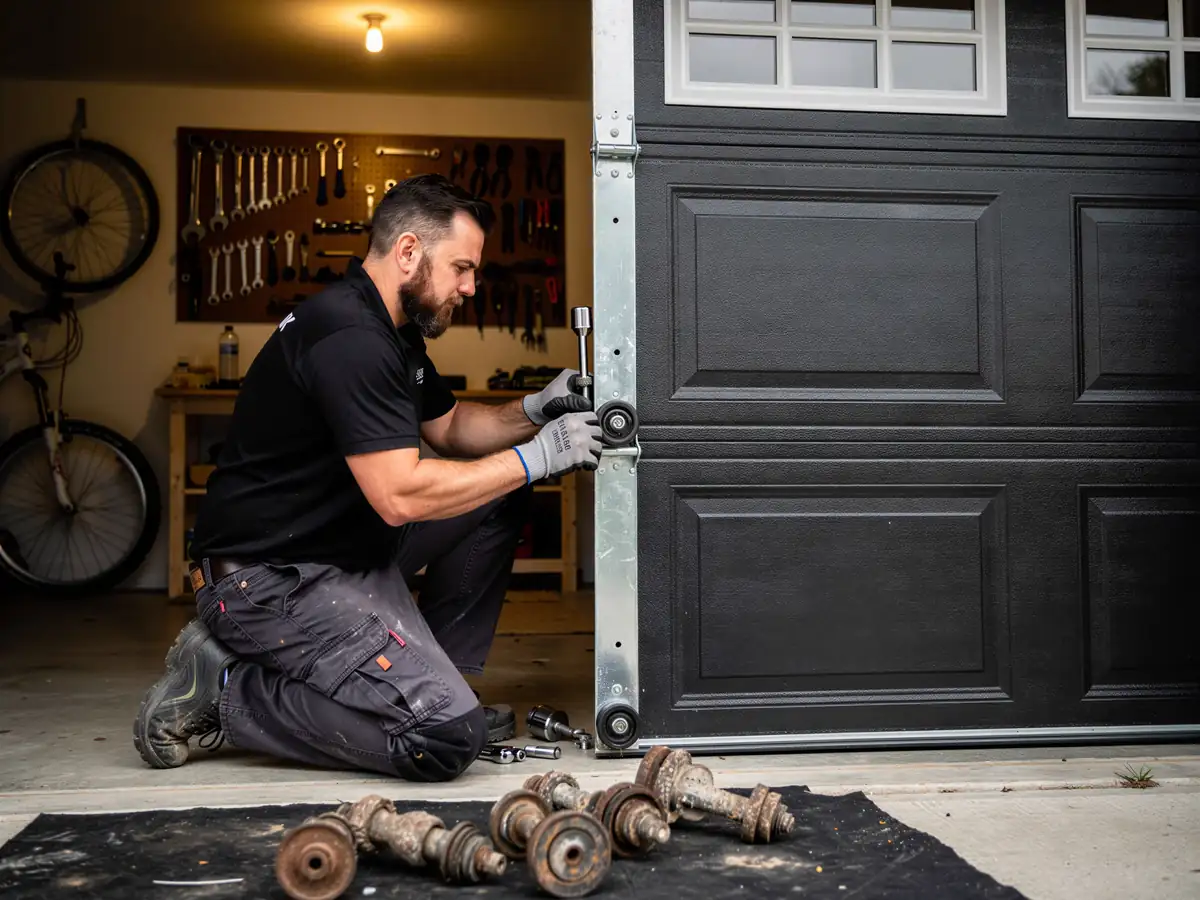
The area sits in a cold-moderate climate band, which means the garage swings through real freeze and real heat across a year, not a mild in-between. That cycle works on steel rollers two ways: the stem and bearing surface pick up moisture in winter and the metal contracts and expands enough, season over season, to loosen the fit in the roller bracket. On a door built in 1991 with the original steel rollers, thirty-plus years of that cycle is exactly what wears a roller stem down to a wobble. Nylon rollers handle the swing better since they don't rust, but even sealed ones lose their bearing grease over time and start grinding dry. Either way, the cold-moderate pattern here is doing steady, unglamorous damage - it's not one bad storm, it's a few hundred freeze-thaw cycles a decade.
The Complications
We run this job out of Waxhaw, about 3 miles up the road, so getting to a house in Mineral Springs isn't the issue. The complication shows up once we're in the garage. Original 1991-era track isn't always a clean match for current stock rollers - some of these older doors were set up with track spacing or bracket depth that current steel or nylon rollers need a shim or a bracket swap to fit properly. On a door that's never been touched, we're working with whatever the builder installed, not a part that's already been standardized by a prior repair. That's usually a straightforward fix, but it's a different job than pulling a modern roller off a modern track, and it's worth knowing before you order parts online expecting a drop-in fit.
How It Shows Up
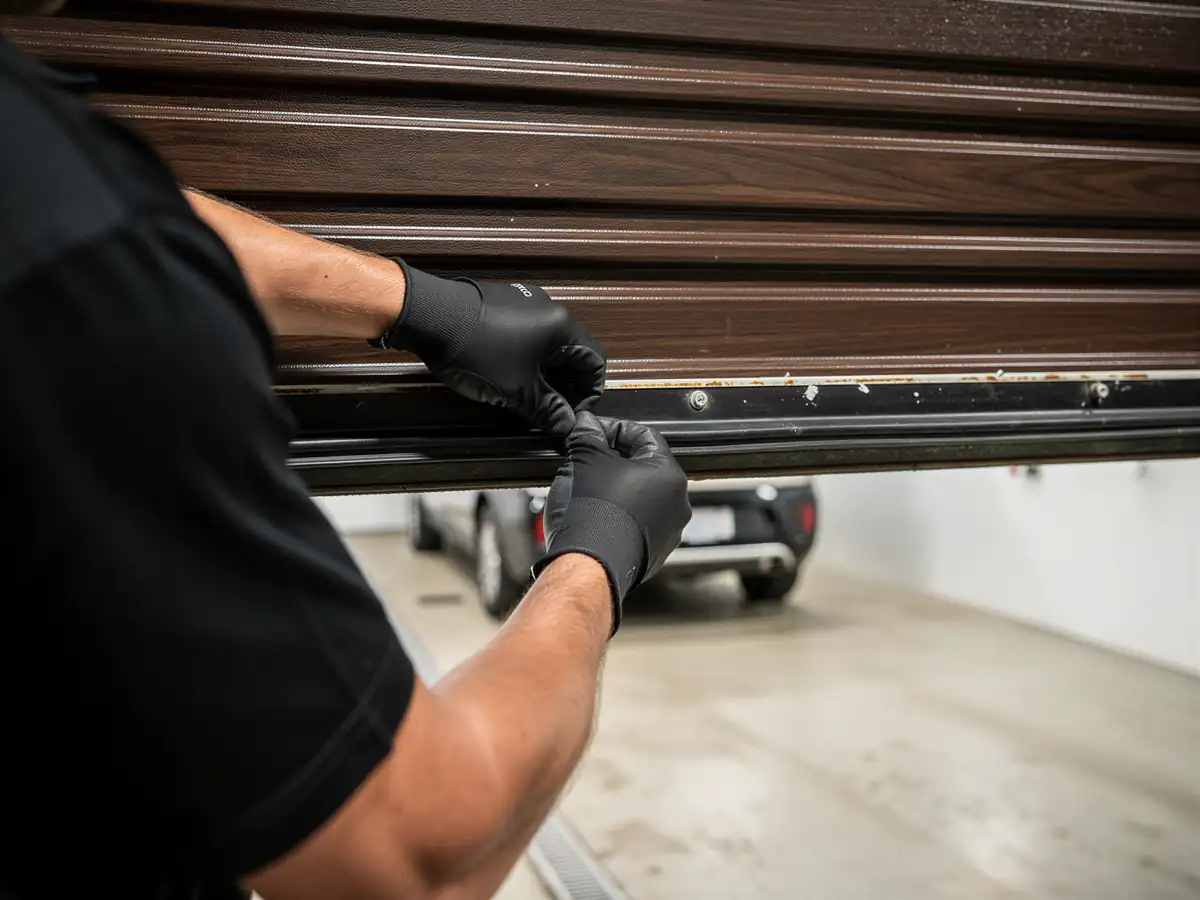
The door grinds or squeals as it opens, especially right at the top or bottom of the track where the roller's working hardest. Sometimes it's a rhythmic clunk, once per rotation of the wheel, which usually means a flat spot's worn into the roller itself. On older steel rollers you'll sometimes feel it before you hear it - the door catches or hesitates in one spot on the track instead of gliding. Left alone, a worn roller starts chewing at the track edge, which turns a $20-a-roller fix into a track replacement. If the door's binding on one side more than the other, that's often a roller near the bottom bracket that's finally given out.
The DIY Question
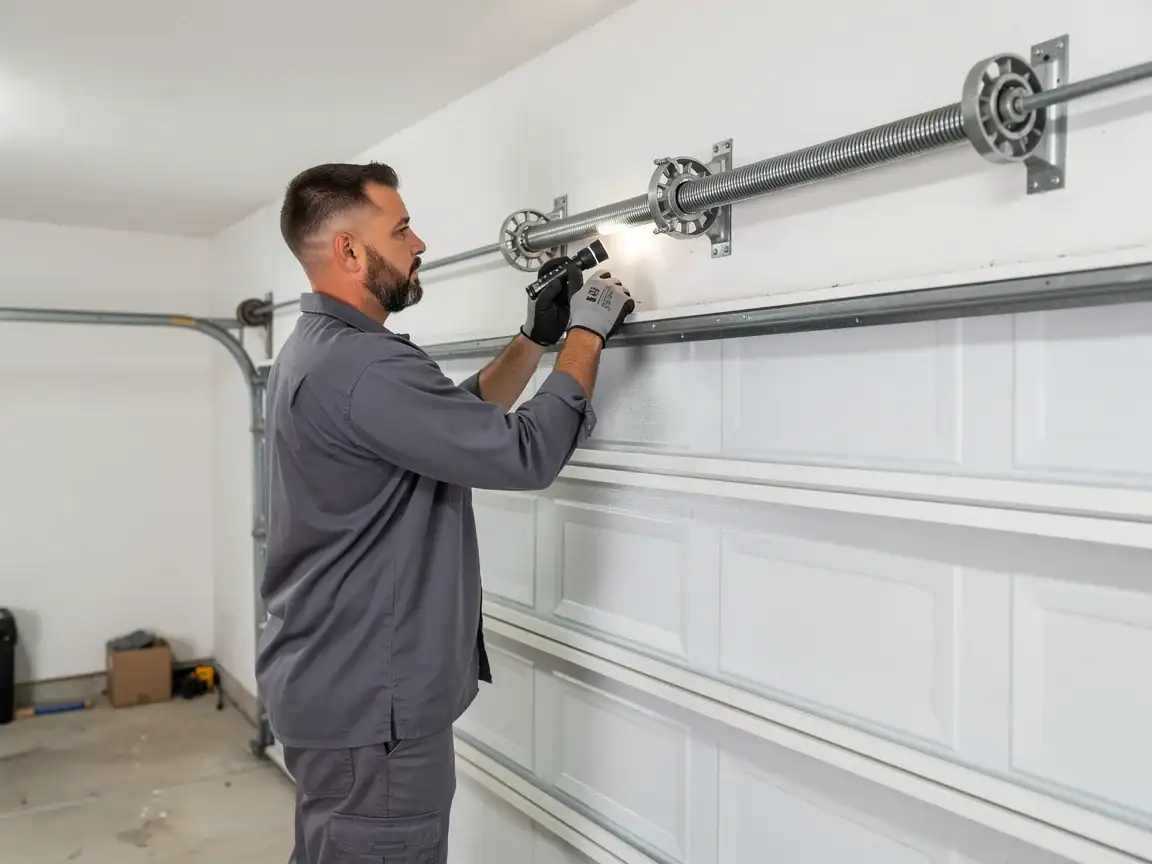
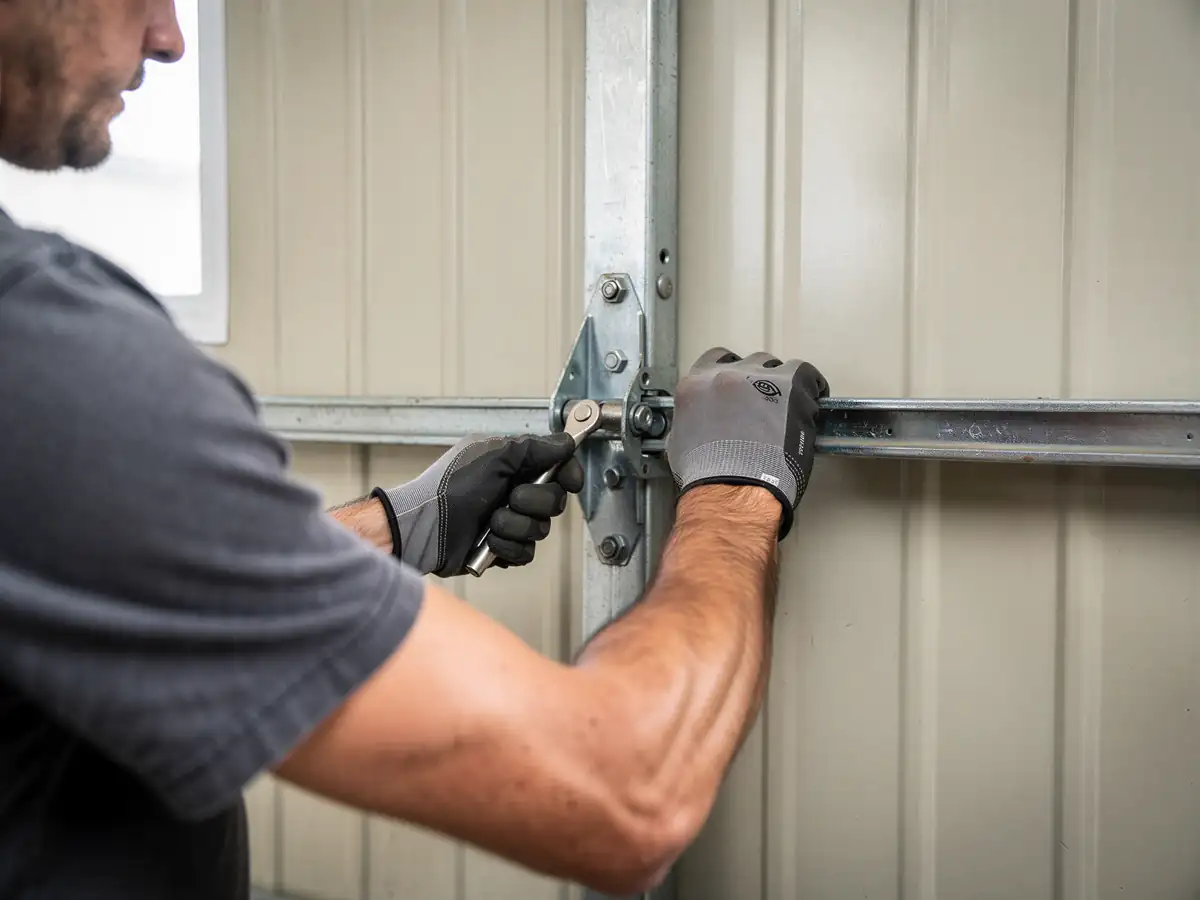
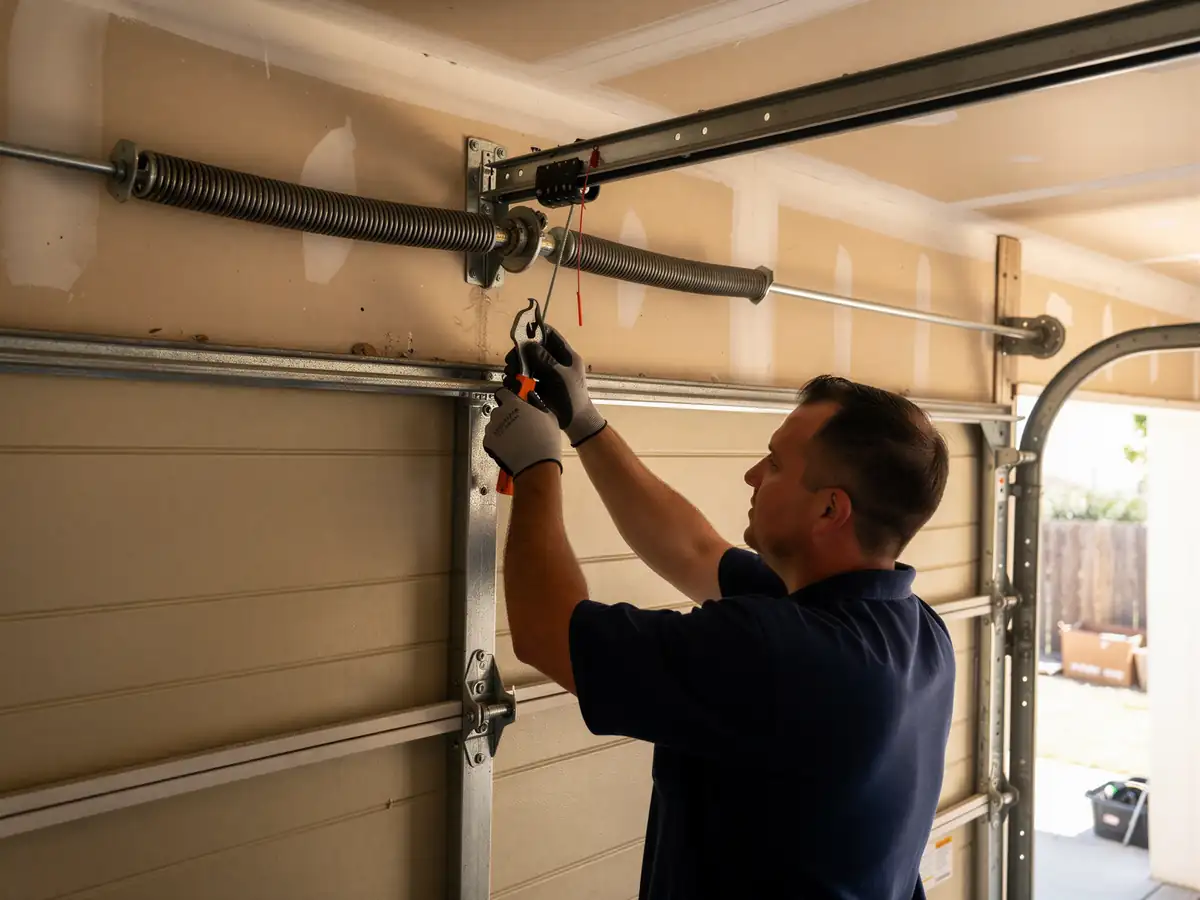
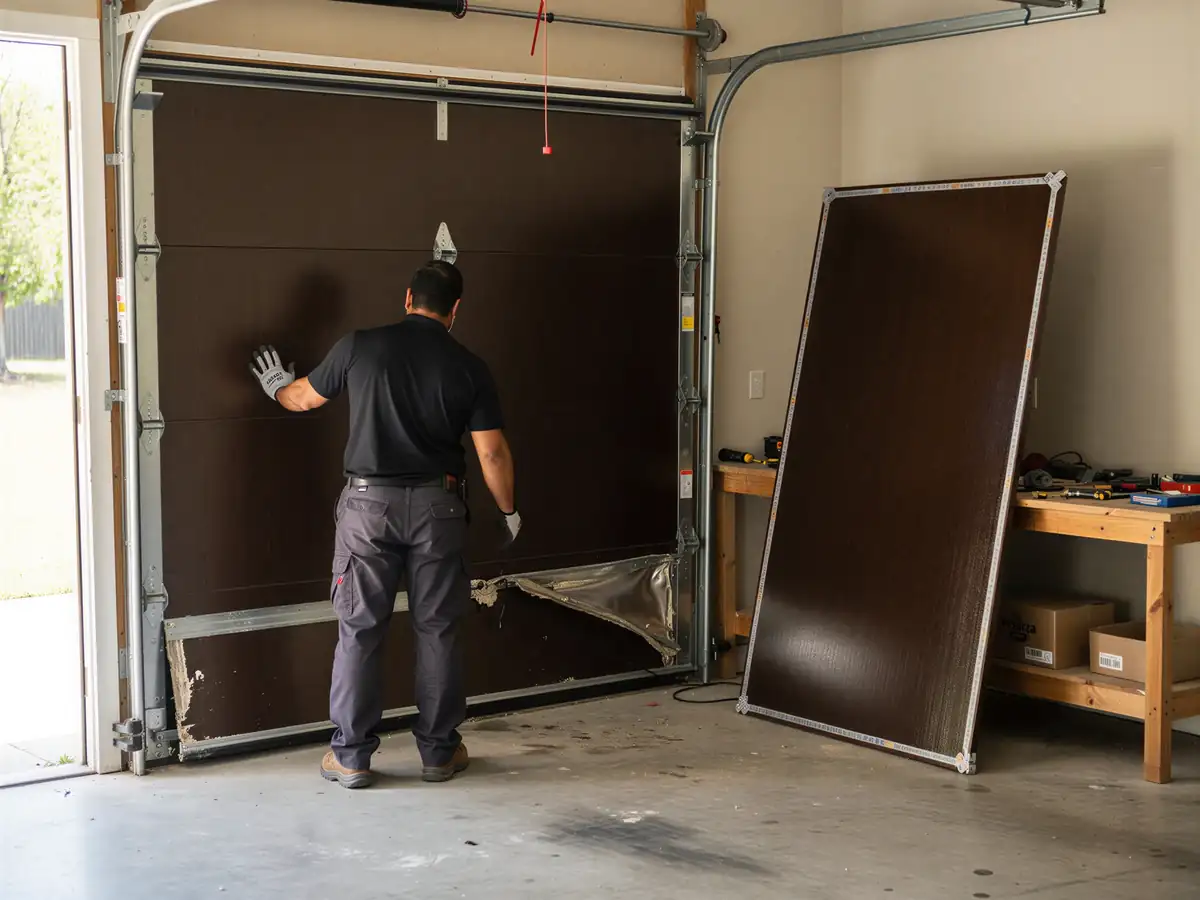
Replacing a bottom roller on an open track section is within reach for a careful homeowner with the door disconnected from the opener and propped safely. The rollers near the top, where the track curves into the horizontal run and the spring system is under tension, are a different matter - that's not a corner to cut, and we don't recommend it as a first repair. And if the issue turns out to be bent or misaligned track rather than the roller itself, that's a job that needs the door off its hinges, which isn't a one-person task. We'd rather tell you honestly that half this job is doable and half isn't, than have someone open a strained spring system solo.