What Those Garage Door Noises in Waxhaw Are Telling You
Most Waxhaw garages sit in houses built between 1974 and 2005, and the original springs and openers in that stock are aging out now, once winter cold sets in.
Most houses in Waxhaw went up between 1974 and 2005, with the median build year landing right around 1993. That's the era of steel torsion springs rated for a fixed number of cycles and openers with half-horsepower chain drives that were standard before belt drives took over. Across the nine areas that make up most of the local housing stock - mostly 1980s and 90s construction - that means a lot of garage doors are running on hardware that's now twenty to forty years old. The springs in those doors were never built to last forever; they were built to last a set number of open-close cycles, and houses from the 90s are well past that count by now. Add in a cold-moderate climate where steel contracts and lubricant thickens every winter, and you get doors that groan, stutter, or hang up at the worst possible time - usually a cold morning when you're already running late and don't have time to look at it.
The Problem
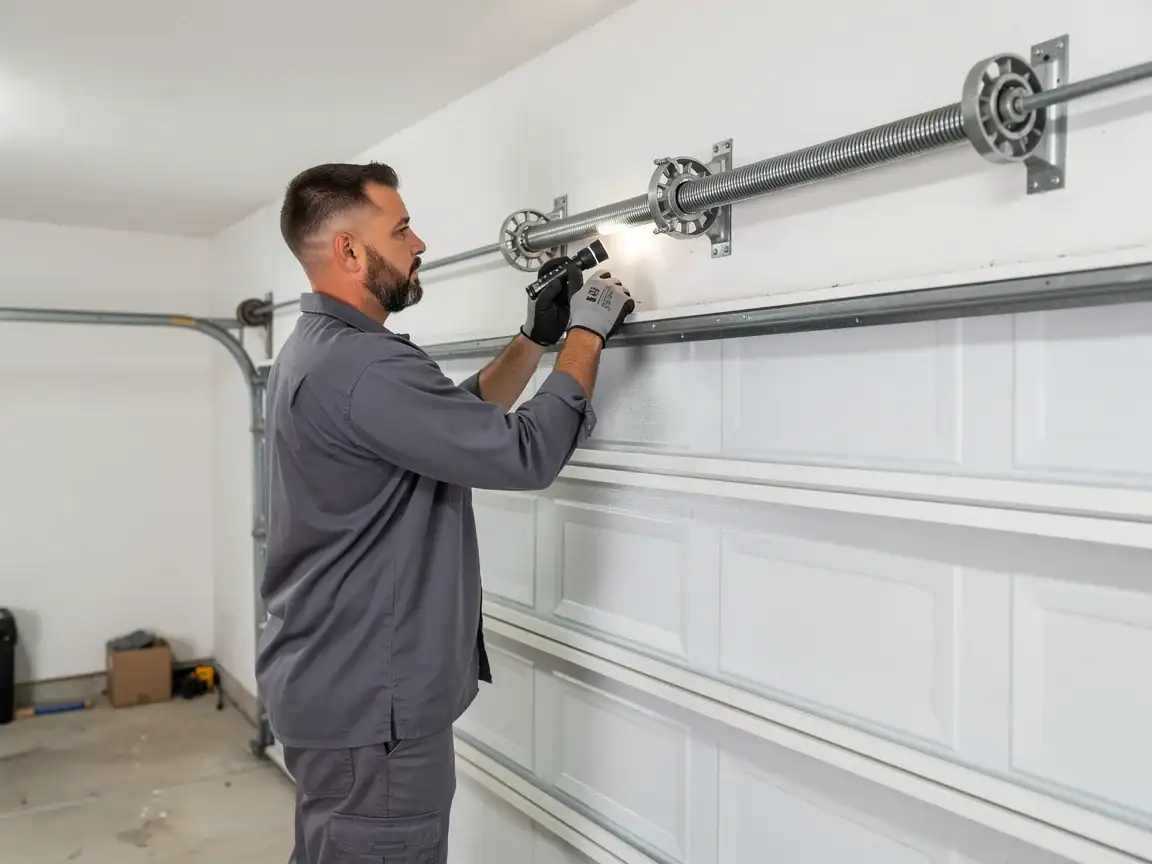
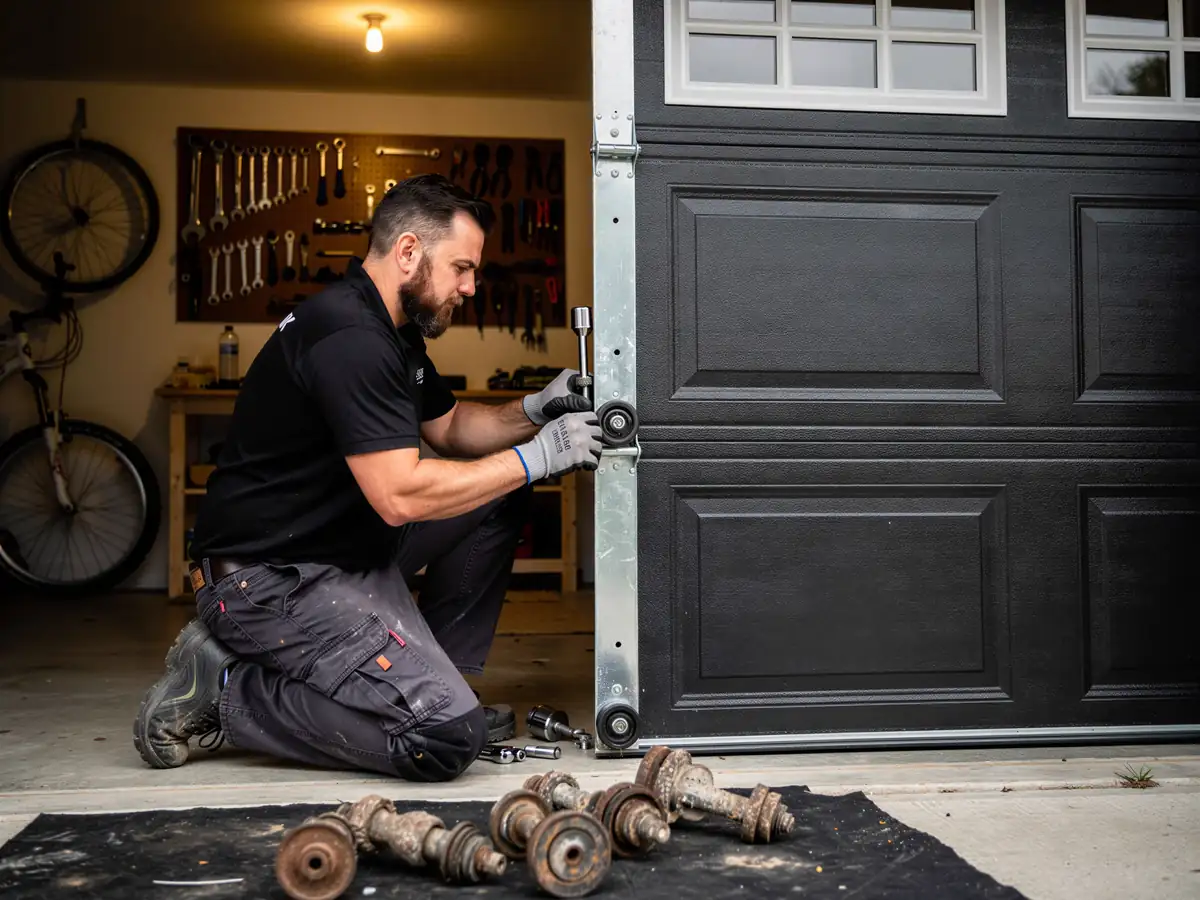
The symptom we hear about most isn't a dead door - it's a loud one. A door that bangs on the way down, grinds halfway up, or pops before it closes is telling you something specific: a spring that's lost tension, a roller worn past its bearing, or a cable starting to fray. Because so much of Waxhaw's housing dates to that 1974-2005 window, those original torsion springs and steel rollers are often the parts nobody's touched - the door still opens, so nothing gets replaced. That's the trap. A door can run on a weakening spring for months, even years, right up until the day it doesn't, and when a torsion spring lets go it does so all at once, under enough force to bend a bracket or drop a door on whatever's underneath it. We can't tell you the exact cycle count left on your spring without looking at it in person - that's not a fact we guess at, it's one we check on site before we say anything.
The Seasonal Bit
Waxhaw sits in a cold-moderate climate band, which means real winter cold but not the deep-freeze swings some regions get. That's actually harder on garage door hardware in one specific way: the metal expands and contracts enough, season after season, to work bolts loose and stiffen grease, but it never stays cold enough long enough for homeowners to think of their garage door as a winter problem. So the maintenance gets skipped. A torsion spring that's a touch tight in July can bind in January once the steel contracts a few thousandths of an inch - enough to throw off the balance point on a door that ran fine all summer. Openers feel it too: older chain-drive units built for 90s-era doors slow down measurably in cold weather as the gearbox grease thickens, and a door that used to close in six seconds now takes nine, or stalls partway and reverses.
Where People Go Wrong
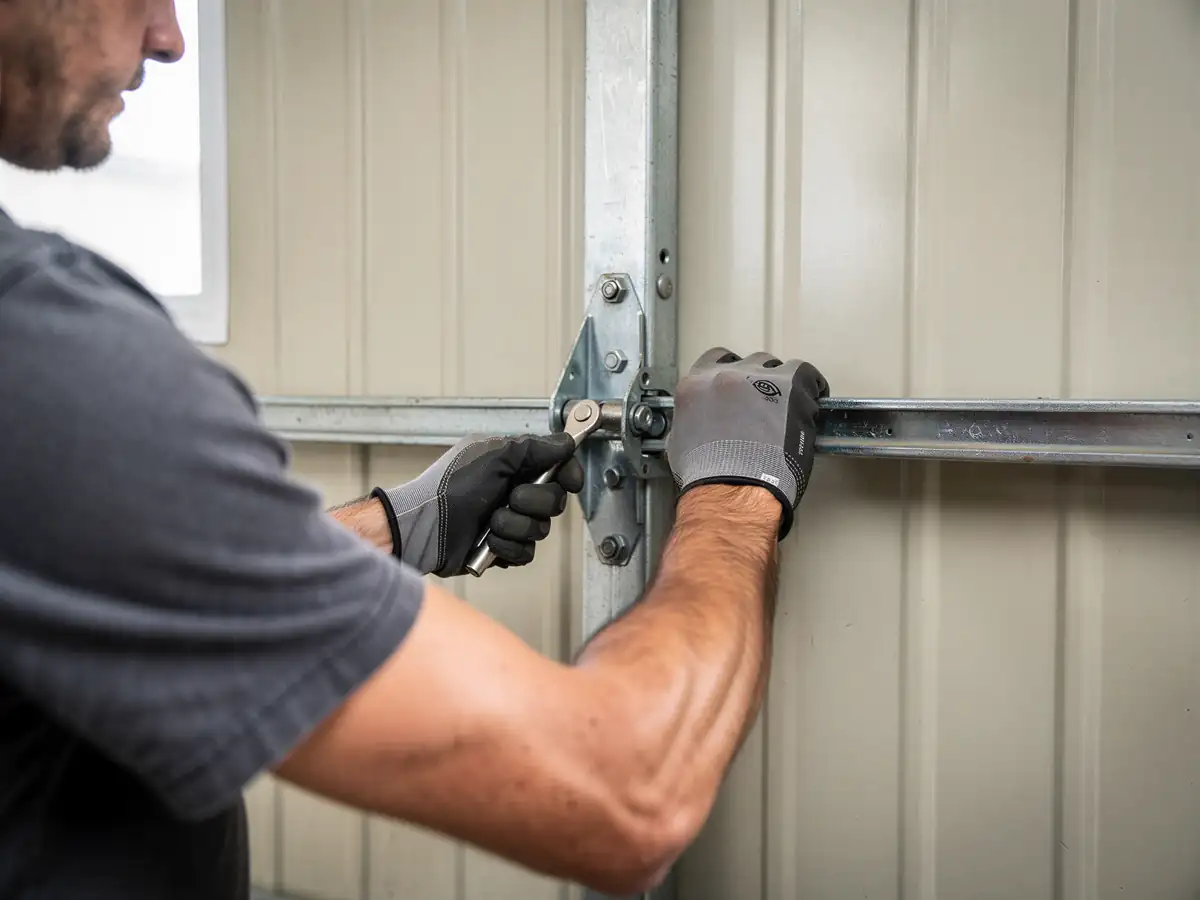
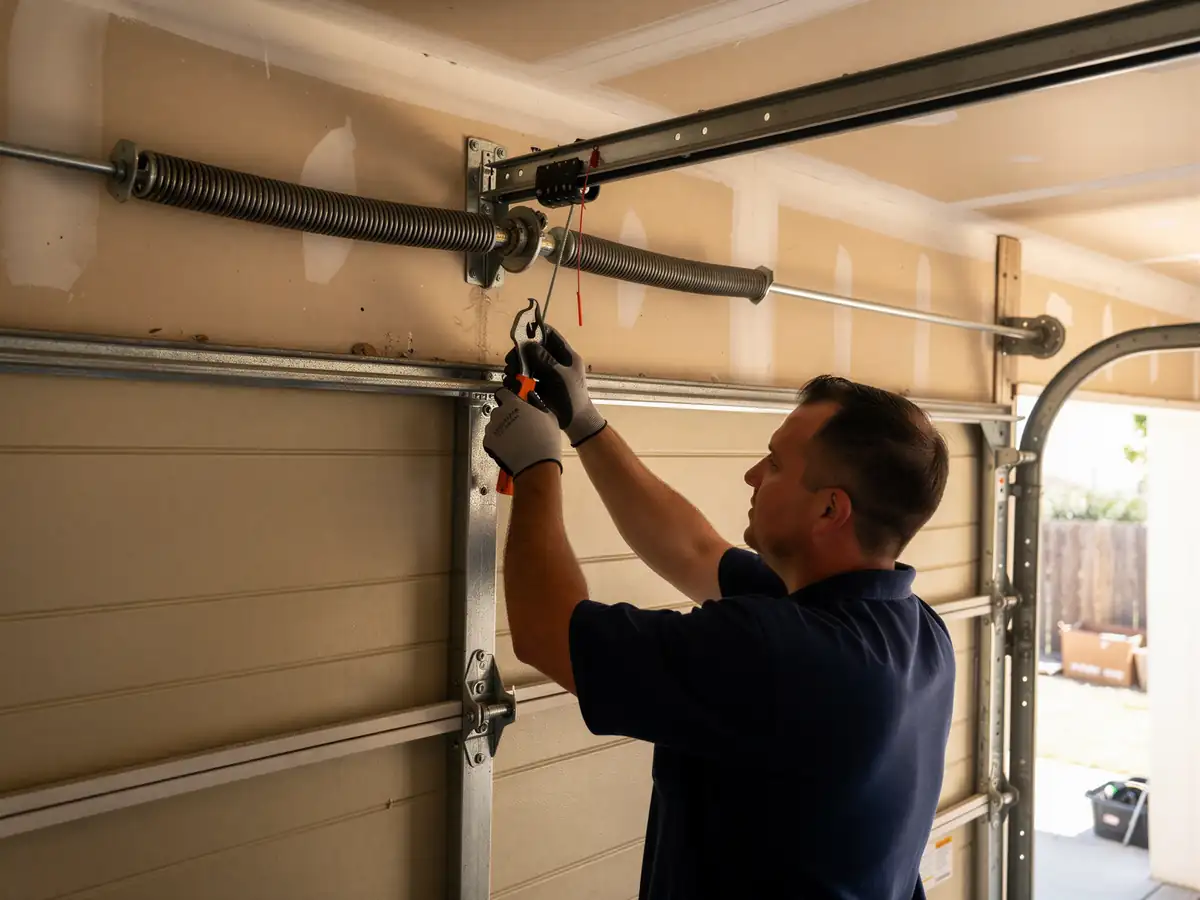
The most common mistake we see in houses built in that 1974-2005 stretch is spraying WD-40 on a noisy spring or track and calling it fixed. WD-40 is a solvent, not a lubricant - it strips the grease that's already there and leaves the metal drier than before. The second mistake is adjusting a torsion spring yourself. These springs are wound under several hundred pounds of tension, and loosening or tightening the set screws without the right bars and training is how people lose fingers, not a figure of speech. We won't walk a homeowner through that over the phone, and we don't recommend it as a weekend project no matter what a video makes it look like. The third mistake, and probably the most expensive one, is replacing an opener when the real problem is a failing spring - a motor that's been straining against an unbalanced door for years looks burned out, but the spring was the actual cause.
How it works
From “it’s stuck” to “it’s fixed”
01
Tell us what’s wrong
Describe the symptom - won’t open, loud bang, opener runs but the door won’t move.
02
On-site diagnosis
A technician tests the door under power and by hand and finds what actually failed.
03
Clear, up-front plan
You get the fix that’s needed and what drives the cost - before any work starts.
04
Repaired & tested
The repair is done, the door is set true and tested, and the work area left clean.
Not sure which repair your door needs in Waxhaw, NC? Describe what it’s doing - every job starts with a diagnosis.
Waxhaw's cold-moderate climate means steel springs and openers contract and thicken enough each winter to throw off a balance point that was fine all summer. It's not usually a new problem - it's an old spring or stiff gearbox grease finally showing itself once the temperature drops.
My house was built in the 90s - is my spring original?
A lot of Waxhaw homes date to that 1974-2005 stretch, and torsion springs from that era often haven't been touched if the door still opens. We can't tell you the exact age of your spring without looking at it, but if nobody's replaced it, there's a decent chance it's original.
Can I just spray lubricant on the track myself?
Spraying the track is fine with the right product - not WD-40, which strips grease rather than adding it. Adjusting the torsion spring itself is different and not something we'll talk a homeowner through by phone, since it's wound under real tension and the wrong move can hurt someone.
Do you work outside Waxhaw itself?
Yes, we cover the surrounding area including Mineral Springs, Wesley Chapel, Weddington, Marvin, along with the farther towns like Hemby Bridge, Pineville, Unionville, Wingate, Fairview.