What Causes It Around Here
Most of the garage doors we get called out for panel damage were hung somewhere between 1974 and 2005
With a heavy concentration of builds right around 1993. That matters because steel sectional panels from that stretch were made thinner than what you'd buy new today, and the foam-core insulation bonded to the back of them was never meant to flex forever. Across the nine main housing areas that make up this stock, the pattern repeats: a panel takes a hit from a trailer, a basketball, or just years of a misaligned roller grinding against the edge, and the steel gives before the frame does.
Waxhaw sits in a cold-moderate climate band
Which doesn't mean brutal winters, but it does mean real freeze-thaw cycling every year. Water gets into a seam or a scrape in the paint, freezes, expands the gap, and by the third or fourth winter that small dent has turned into a rust bubble working its way through the panel. On doors from the 1980s and 90s especially, the galvanizing on the steel wasn't as heavy as current code calls for, so once the coating is broken the clock starts running faster than most owners expect.
None of this is a defect unique to any one house
It's what happens when a few decades of the same building era meet an ordinary mid-Atlantic winter.
How It Shows Up
The first sign is usually cosmetic: a horizontal crease across one panel where something hit it, or a corner that's folded in and won't sit flush against the weatherstrip anymore. On doors built in the 1980s and 90s, that crease often lines up with a stiffening rib, which means the hit also bent the hinge mounting point behind it, not just the skin.
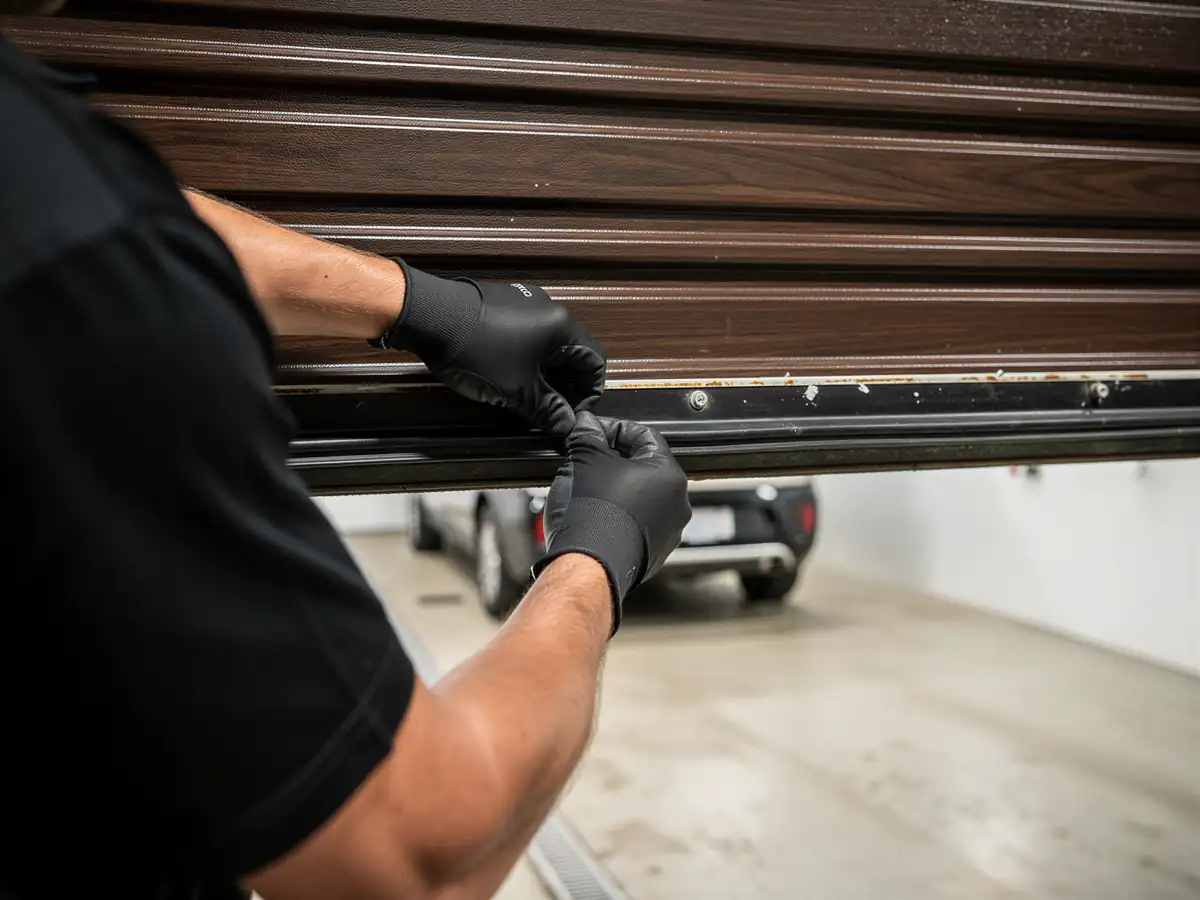
Rust shows up differently. It tends to start at the bottom panel first, right along the bottom edge where splash and standing moisture sit longest, and it spreads upward along any seam where the factory paint was thin. By the time you can see flaking paint from the outside, the backing material is often already soft.
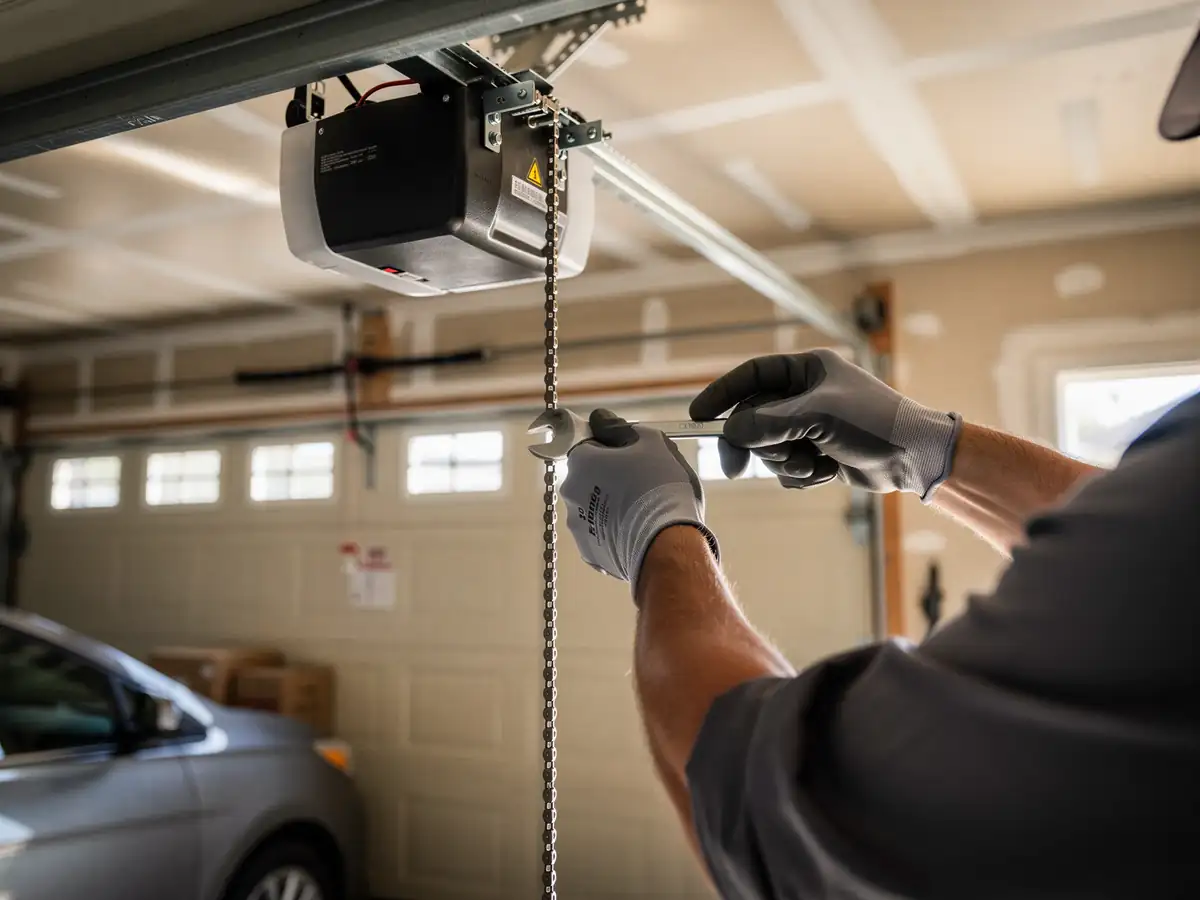
You'll also notice the door doesn't travel as smoothly. A bowed or dented panel throws off the curve the track expects, so the rollers bind slightly on that section every cycle. Owners usually describe it as a new noise, a hitch partway up, or the opener straining on one spot of the run. None of that is the opener failing. It's the panel no longer holding the shape the track was built around.
What the Fix Involves
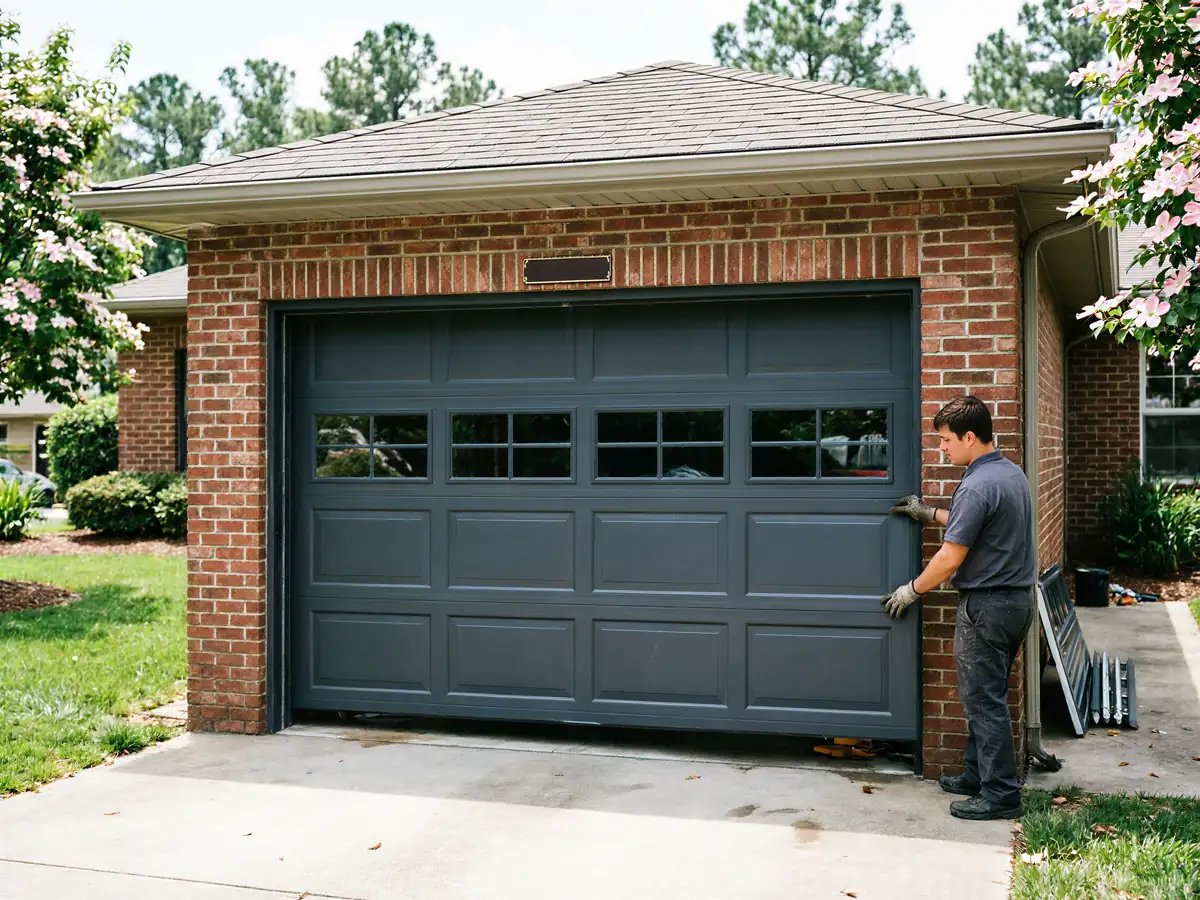
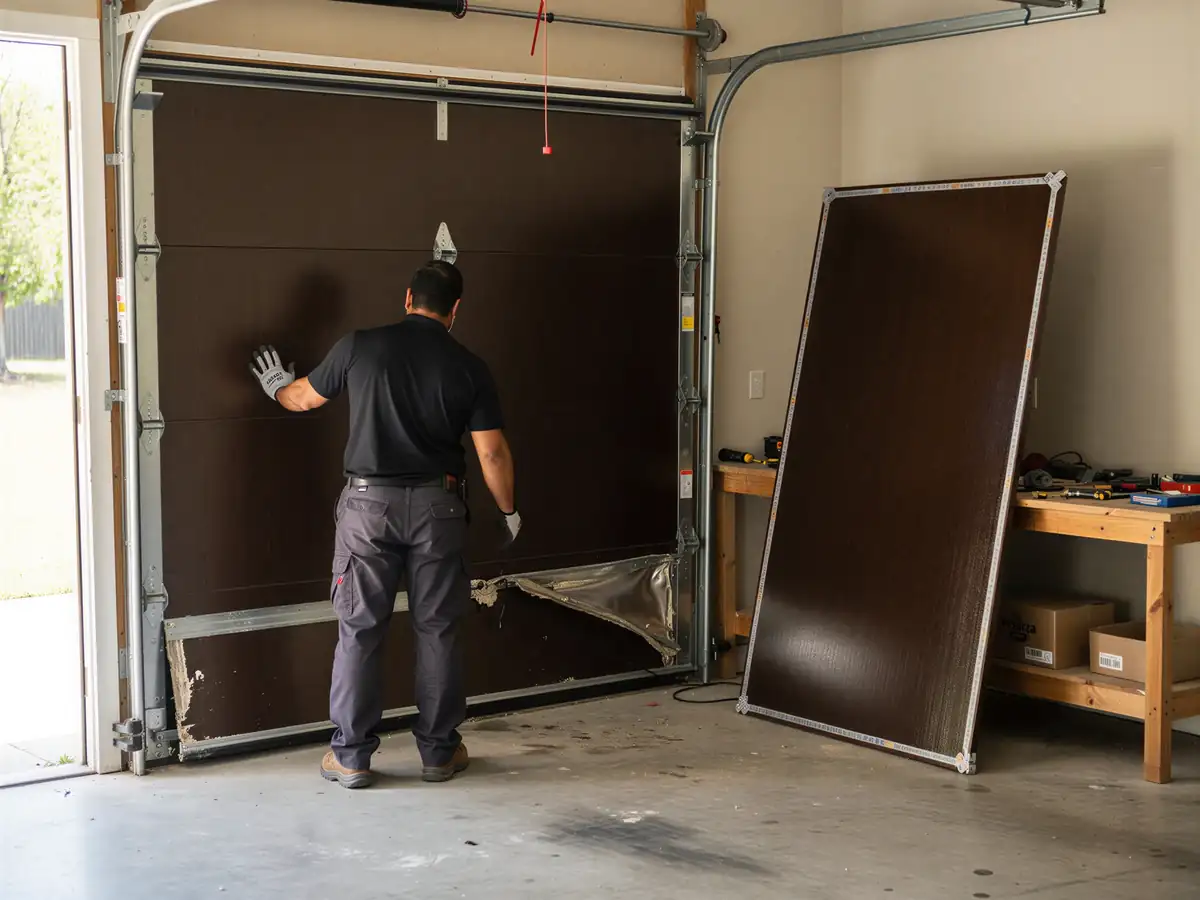
A single damaged panel can usually be replaced without touching the rest of the door, provided we can source a matching panel. On doors from the 1974-2005 era this is the real variable: profiles, rib spacing, and color coats from that period aren't all still in production, so the first step is identifying the exact panel style and checking what's available before quoting the job.
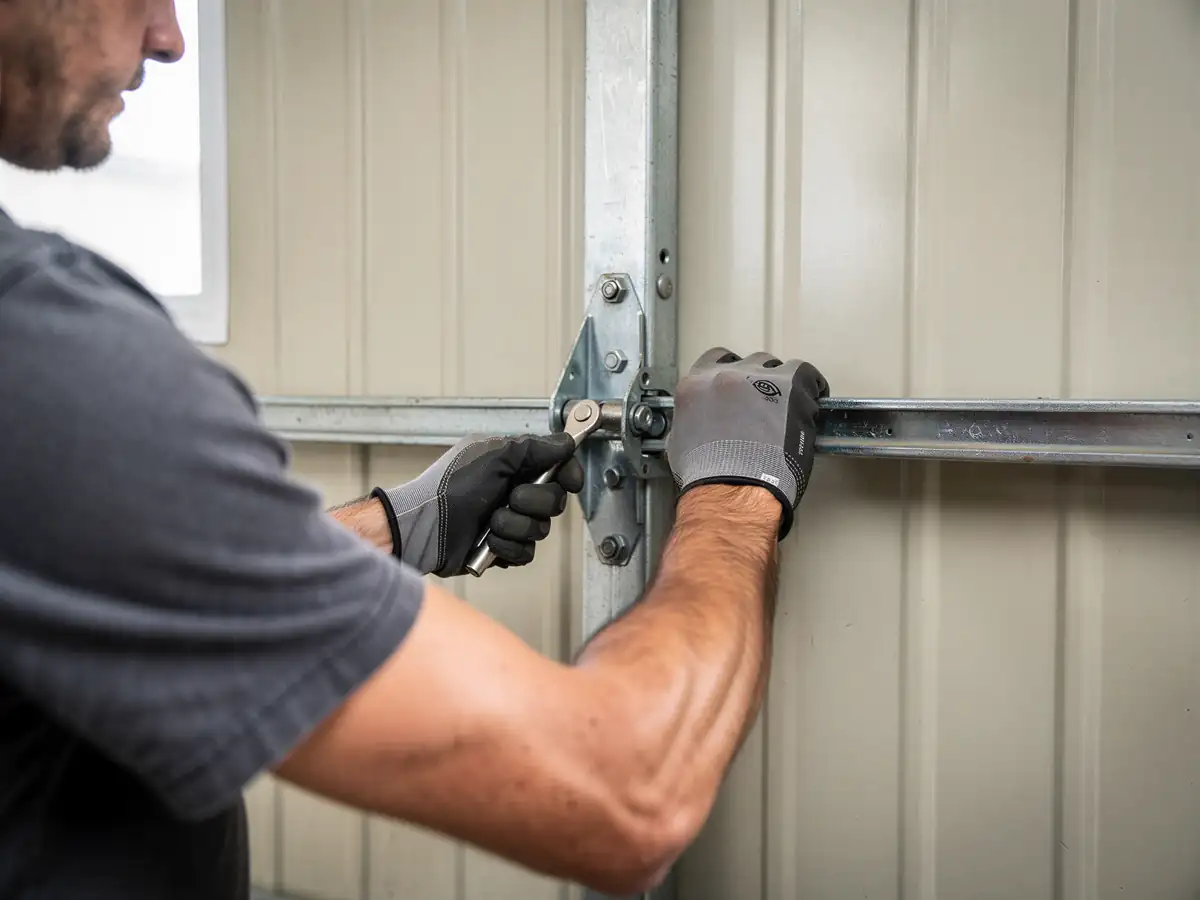
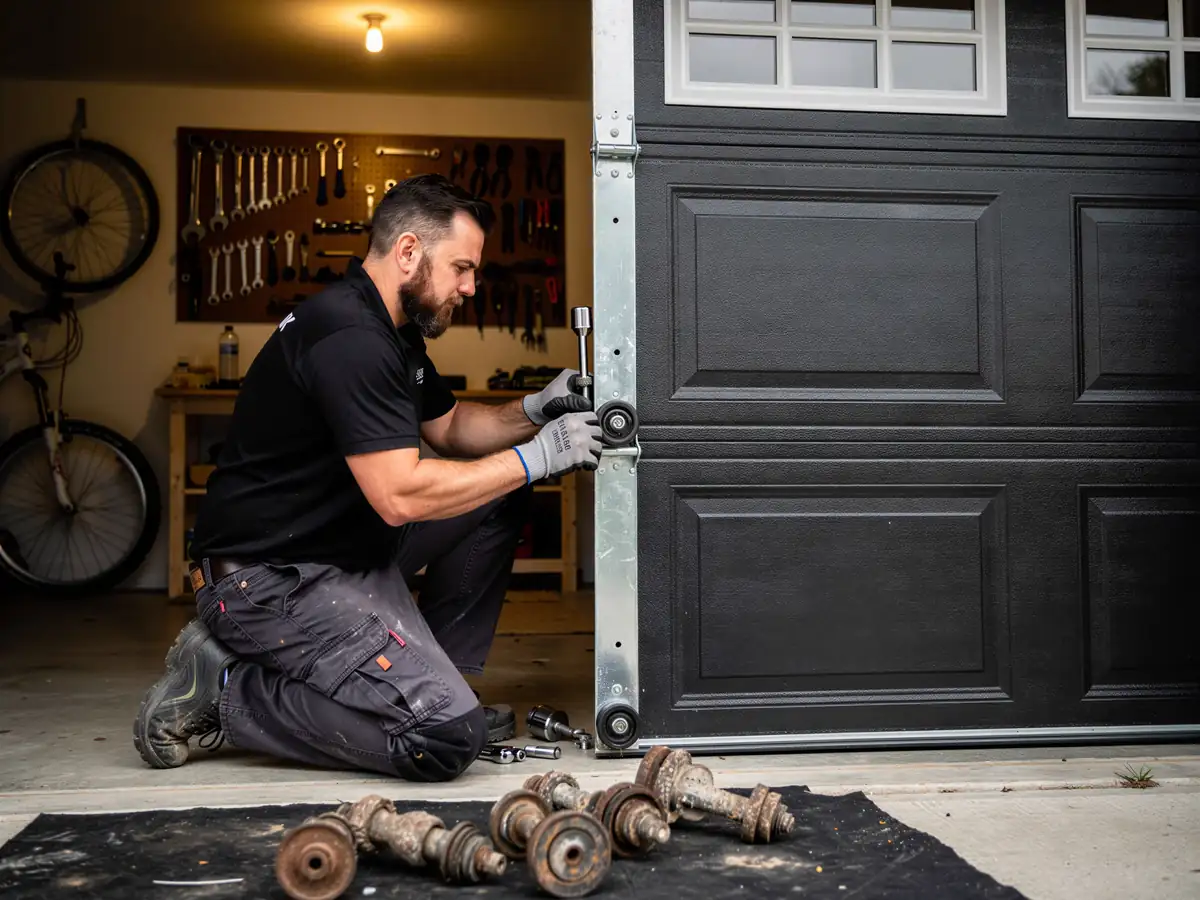
The mechanical part is straightforward. We pull the hinges off the damaged section, disconnect it from the panels above and below, and swap in the replacement, then reset hinge tension and check the track alignment on that run since a bowed panel can tweak the roller path over time. If the bottom panel is the one damaged, we also check the bottom bracket and cable drum, since those take the brunt of door weight and a dented bottom section is often a sign the door has been hit near the floor more than once.
For most households in this area, with a median income around $89,417, the draw of panel replacement over a full door swap is cost: you're fixing the one section that failed instead of paying for a door, springs, and hardware you didn't need touched.
The Complications
The honest limitation here is color and profile matching
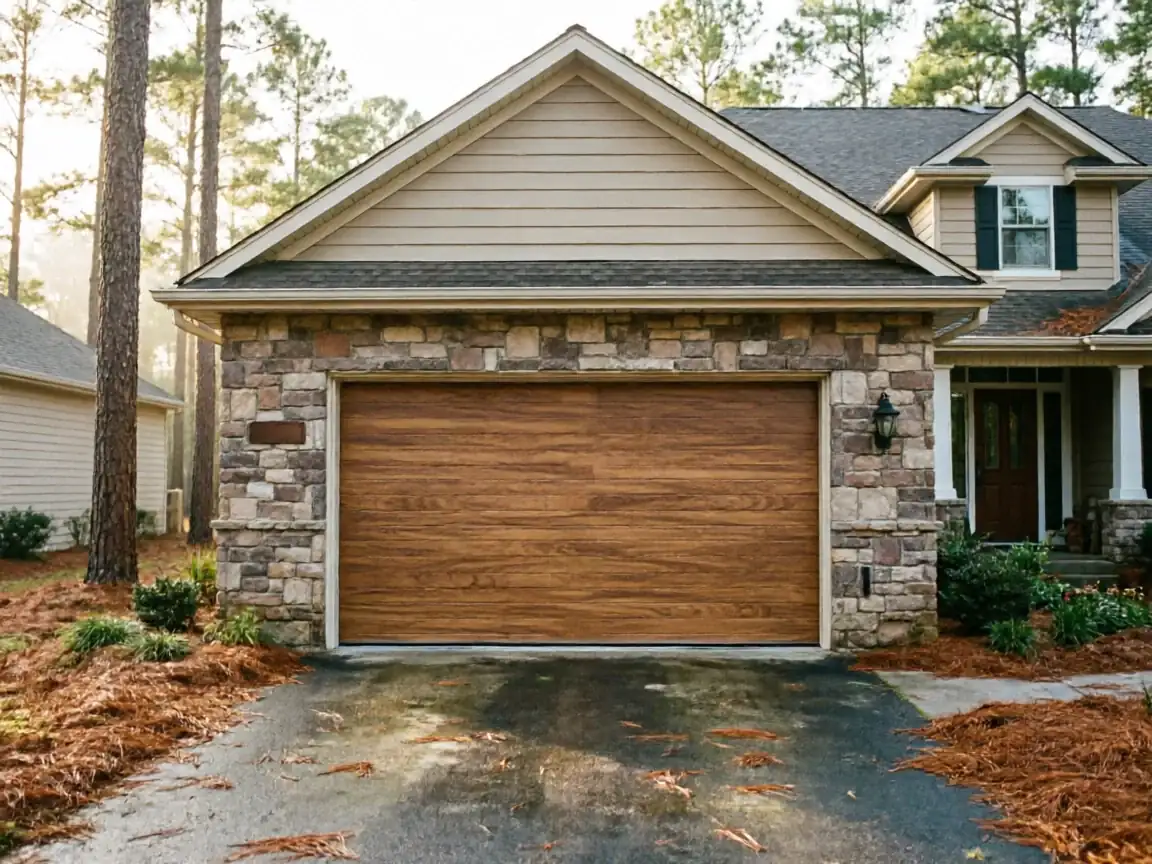
A lot of these doors were painted in shades that aren't standard anymore, and even when we find a compatible panel, an eighteen-year-old section next to a brand-new one can show a visible difference in finish until both weather in. We tell owners that upfront rather than promise an invisible match we can't guarantee.
We also run into doors where more than one panel has failed, usually because whatever caused the first dent
A trailer hitch, a basketball hoop mounted too close, years of a misaligned track - kept happening. At that point we'll say so: replacing two or three panels on an aging door sometimes costs close to what a full door replacement runs, and we'd rather tell you that than sell you parts for a door that's going to need the rest replaced in another year or two.
Sourcing is the other wall we hit
We cover ground from Mineral Springs out to Fairview, nineteen miles off, and panel styles common in one pocket of that area are sometimes already discontinued by the time we're called to match one somewhere else. When that happens, we'll tell you the realistic options instead of stalling.