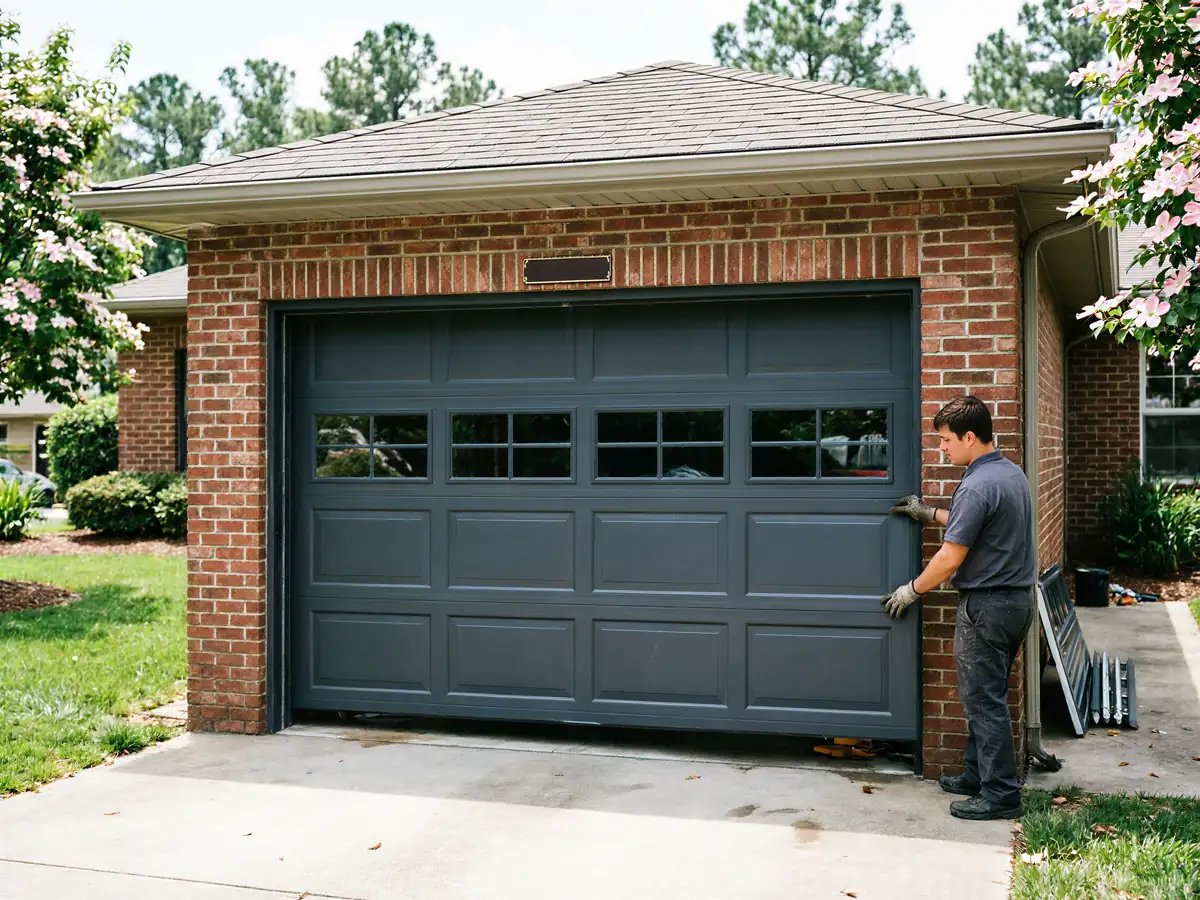
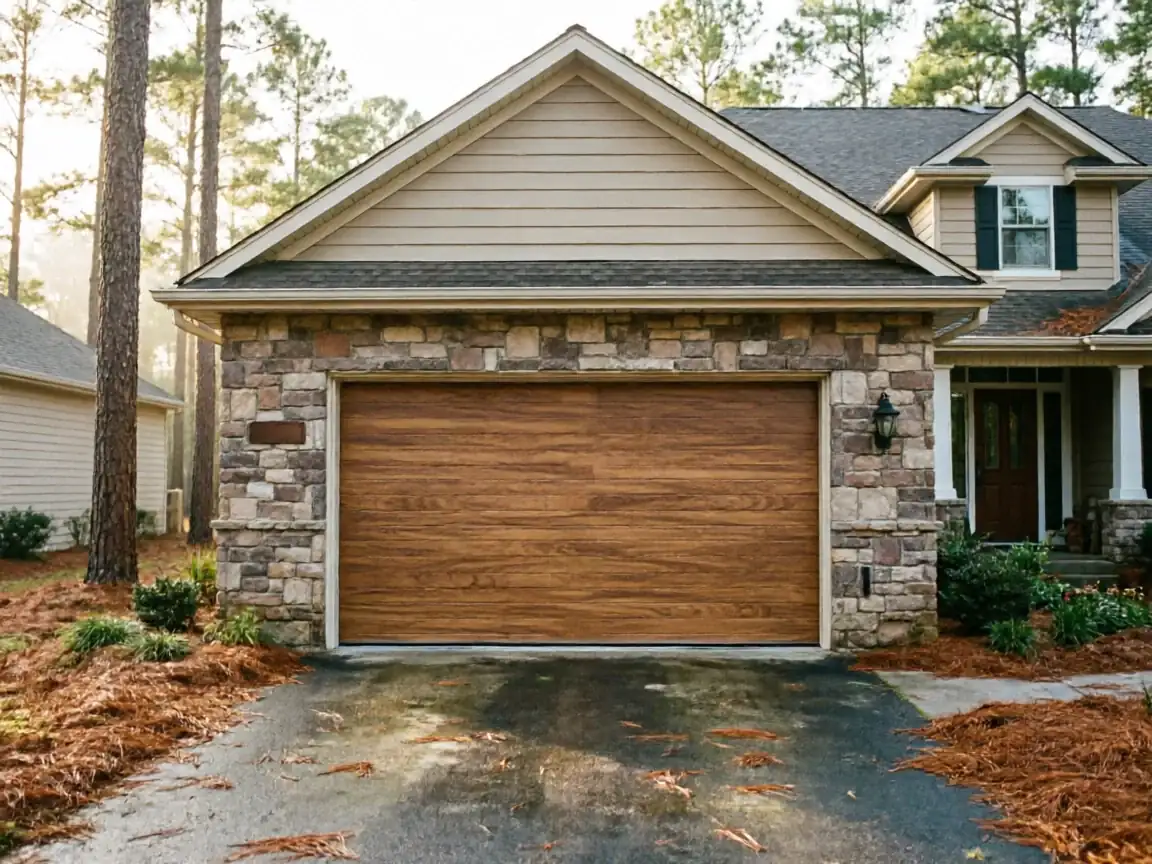
Most of the housing across this service area went up between 1974 and 2005, with the median build year sitting around 1993. That means a big share of the doors we get called on still have their original torsion or extension springs, or a first replacement set that's now been doing the lifting for twenty to thirty years. Springs are rated in cycles, not years, and a spring installed in the early 90s has usually paid that debt off long before anyone notices it's tired. Across the nine named pockets of 1980s and 90s-era stock in this area, we see the same pattern house after house: builder-grade springs sized for the door weight at install, never upgraded, now stretched or fatigued past the point of holding tension evenly. Add in a cold-moderate climate where steel contracts in winter and the garage sees real temperature swings between seasons, and you get metal fatigue working faster than it would somewhere milder. None of this is a defect in any one house. It's what happens when a whole area of homes crosses the same age threshold at roughly the same time.
How It Shows Up
The most obvious sign is a door that won't open at all, or one that slams down the last foot instead of lowering smooth. You might hear a loud bang from the garage - that's usually the spring letting go, not the opener. Short of a full break, look for a door that feels heavier than it used to when you lift it by hand with the opener disengaged, or an opener that strains and clicks but can't get the door past halfway. Cables that look loose or frayed near the bottom bracket often mean the spring they're paired with has already lost most of its tension, even if it hasn't snapped yet. On older 1980s and 90s installs especially, we also see one spring break months before its twin, since they're rarely replaced in pairs the first time around - which is exactly how a door that seemed fine starts dropping unevenly on one side.
What the Fix Involves
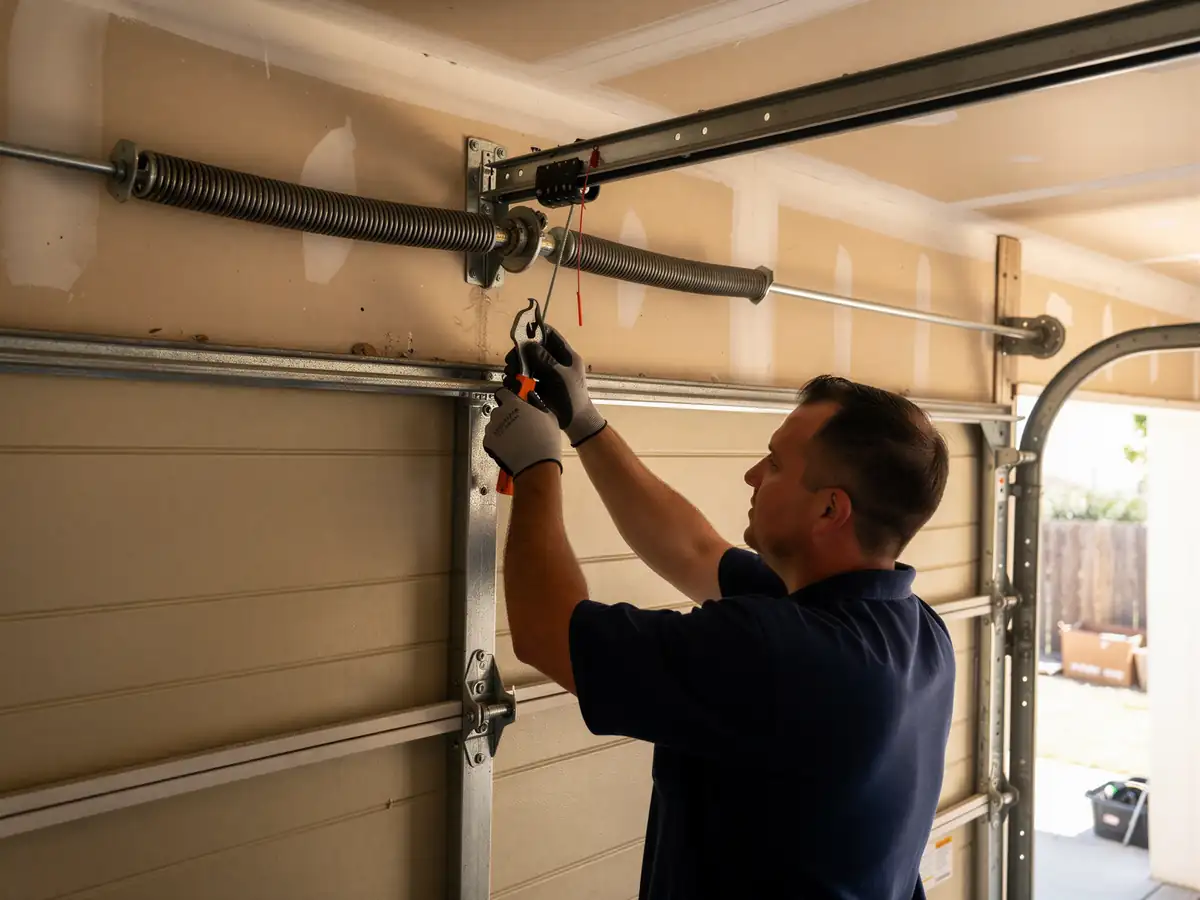
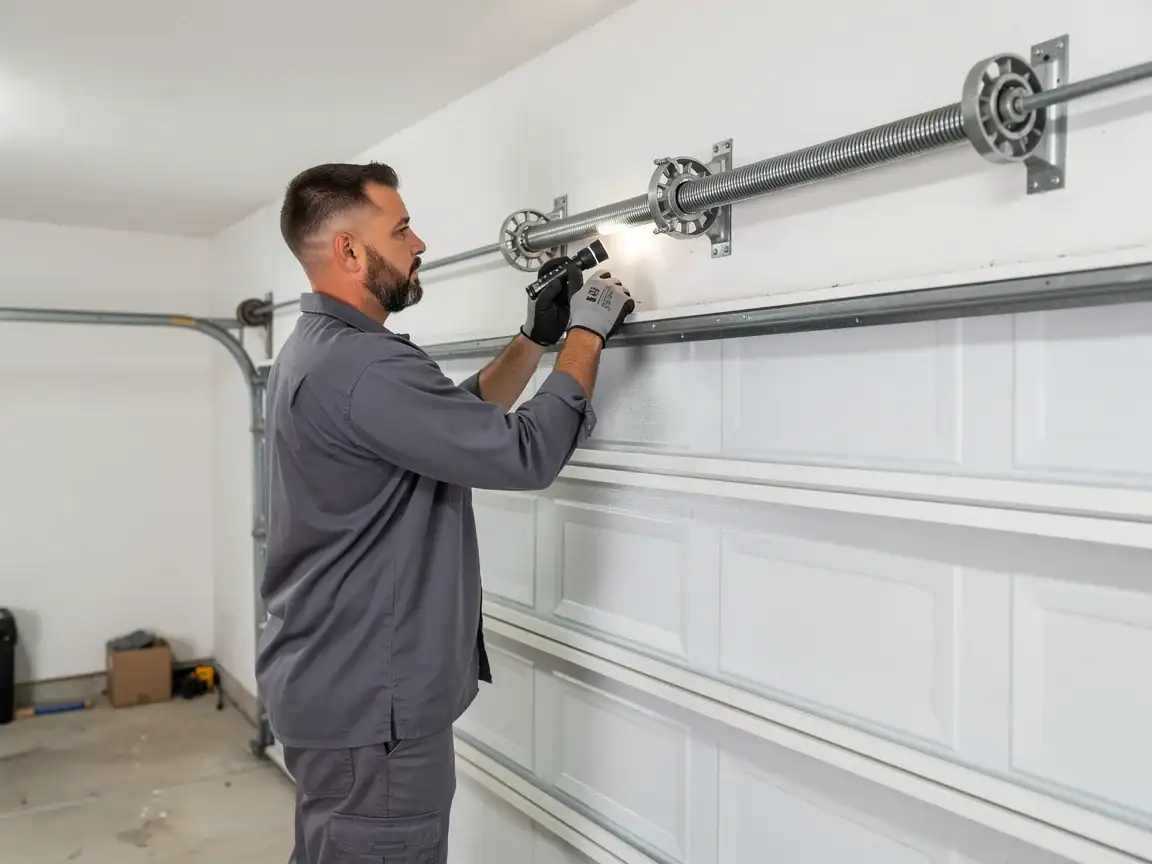
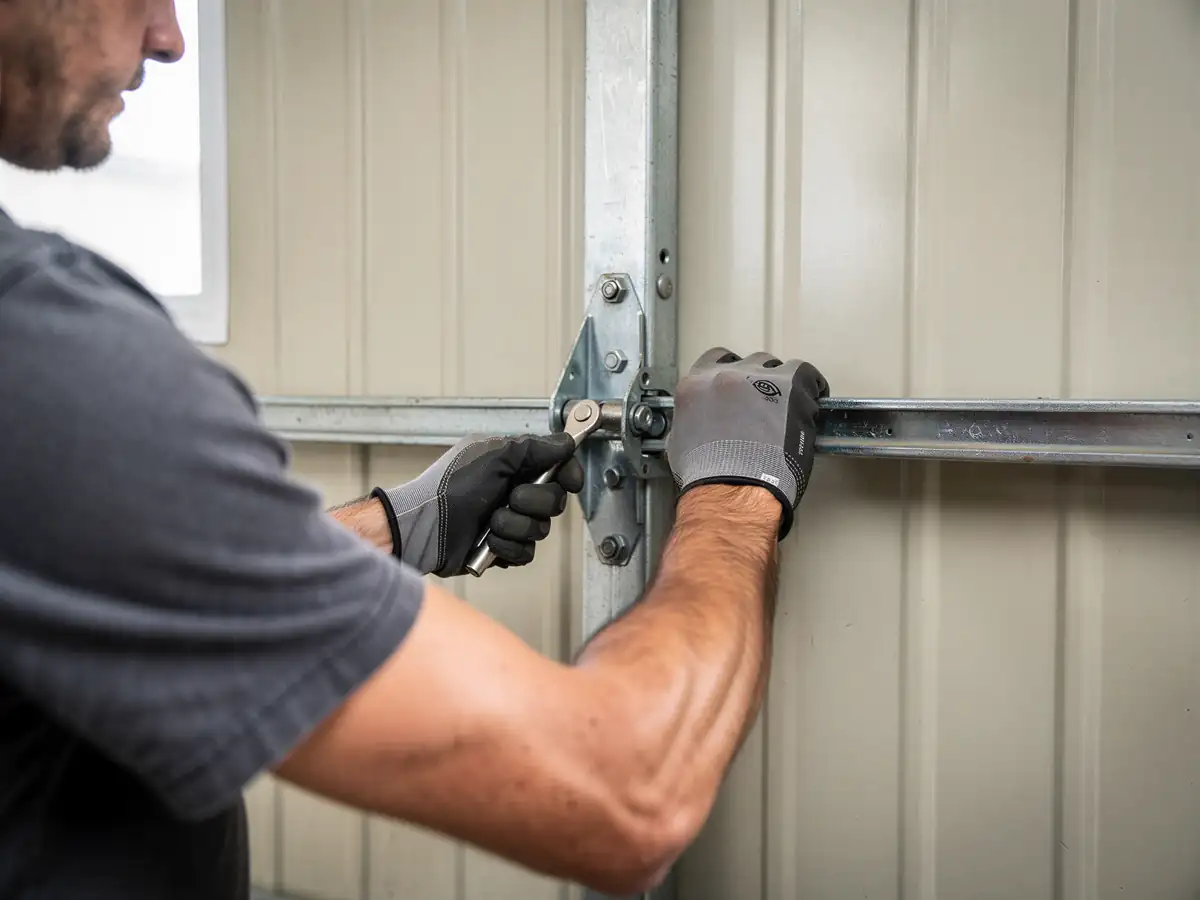
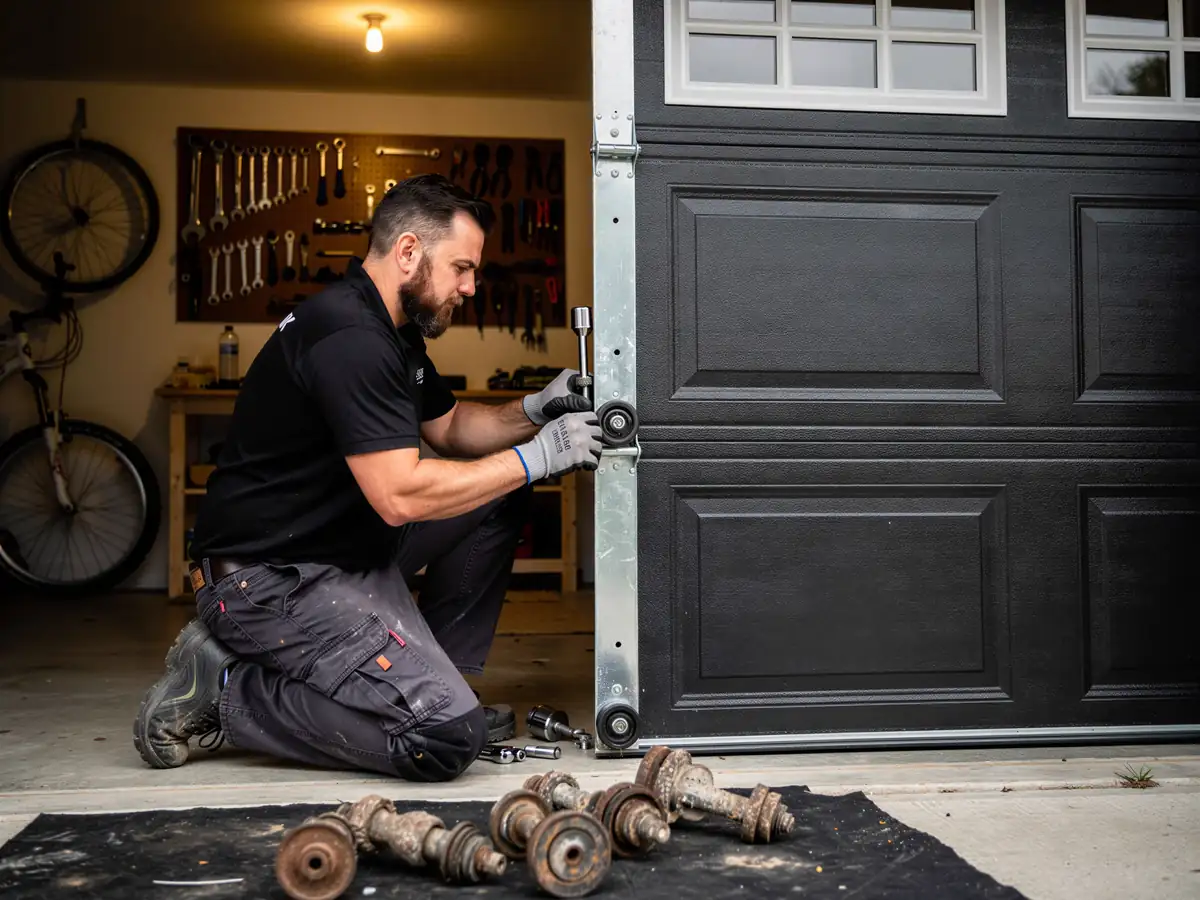
A spring repair means removing the broken or worn spring under controlled tension, matching the replacement to your door's actual weight and track setup, and winding it to the correct number of turns - not eyeballing it. On torsion systems we check the shaft, center bearing, and cable drums at the same time, since a spring failure often stresses those parts too. If your door is original to a house built in the 90s, we'll also check the other spring even if it hasn't failed yet; replacing both at once costs less in labor than a second visit six months later when the matching spring goes. We carry common torsion and extension sizes on the truck for the door weights typical of this area's housing stock. Where a door uses an unusual or discontinued spring size, parts can take longer to source, and we'll tell you that up front rather than quote a same-day fix we can't back up.
The Complications
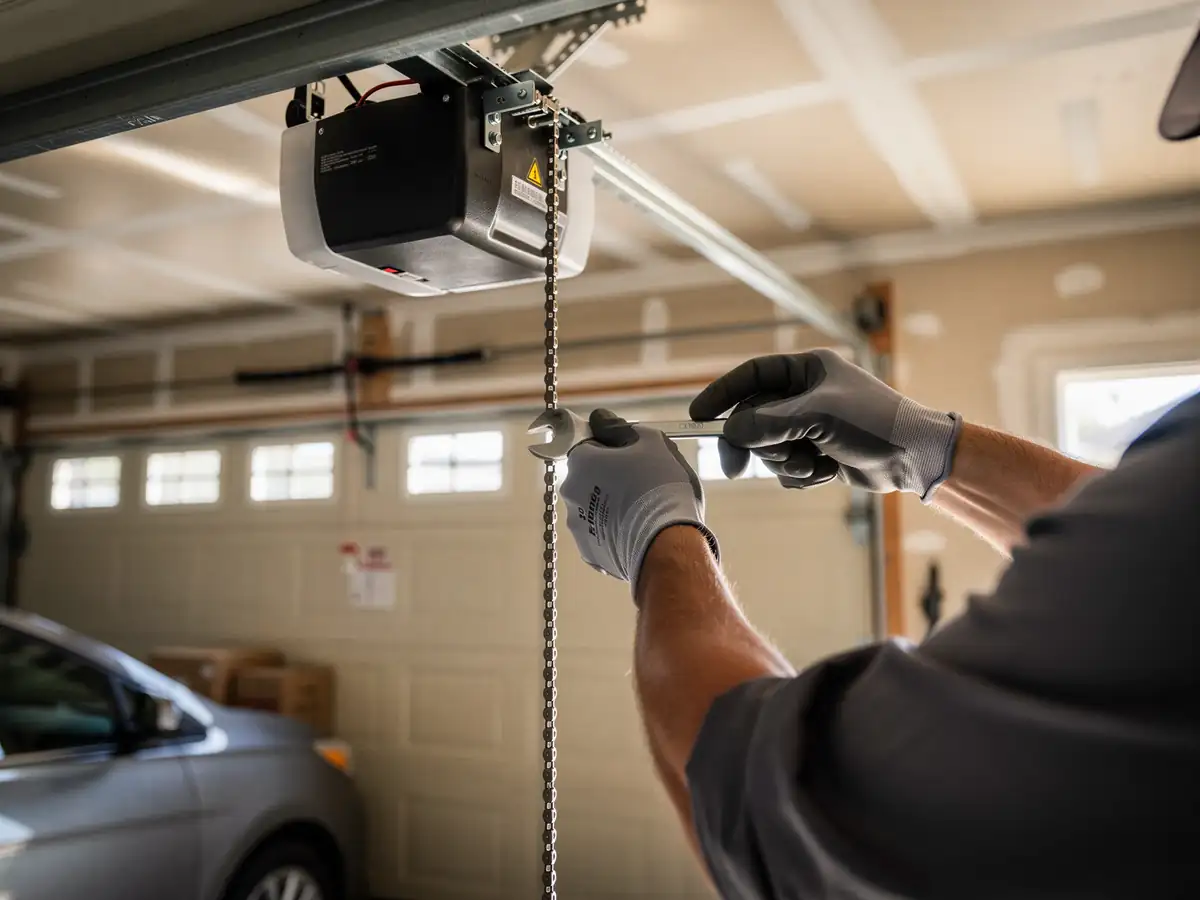
Not every spring job is a spring job. If the drums are cracked, the shaft is bent, or the track has been knocked out of alignment from the door dropping suddenly, those get addressed before we touch tension - otherwise the new spring just fails again under the same bad load. On double-wide doors, which carry more weight and more wear on each side, we size springs to the door, not to a generic chart, since an undersized spring on a heavier door burns out again within a year or two. One honest limit: if a door has had multiple part failures stacking up - springs, rollers, and opener strain all at once - replacement can end up cheaper than repair, and we'll say so instead of patching a door that's reached the end of its service life. We don't install openers or springs rated below what the door actually weighs just to hit a lower price.
How it works
From “it’s stuck” to “it’s fixed”
01
Tell us what’s wrong
Describe the symptom - won’t open, loud bang, opener runs but the door won’t move.
02
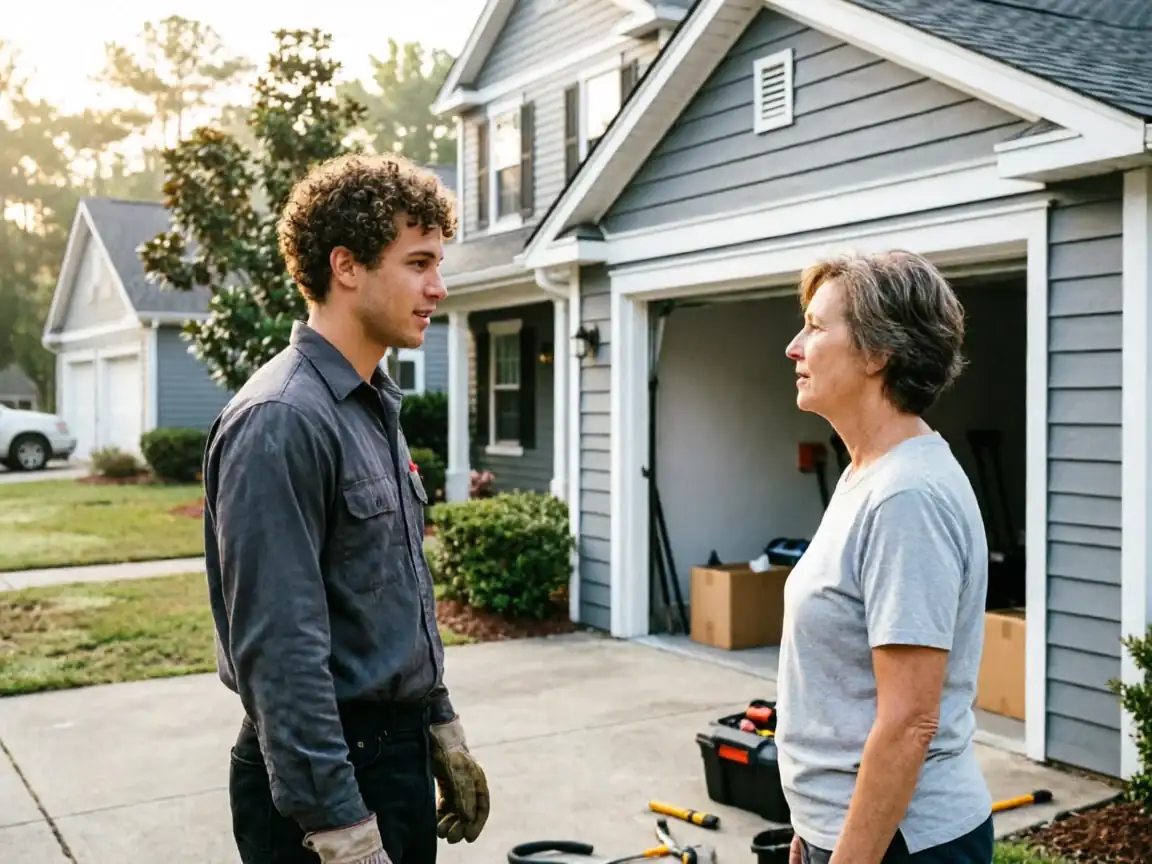
On-site diagnosis
A technician tests the door under power and by hand and finds what actually failed.
03
Clear, up-front plan
You get the fix that’s needed and what drives the cost - before any work starts.
04
Repaired & tested
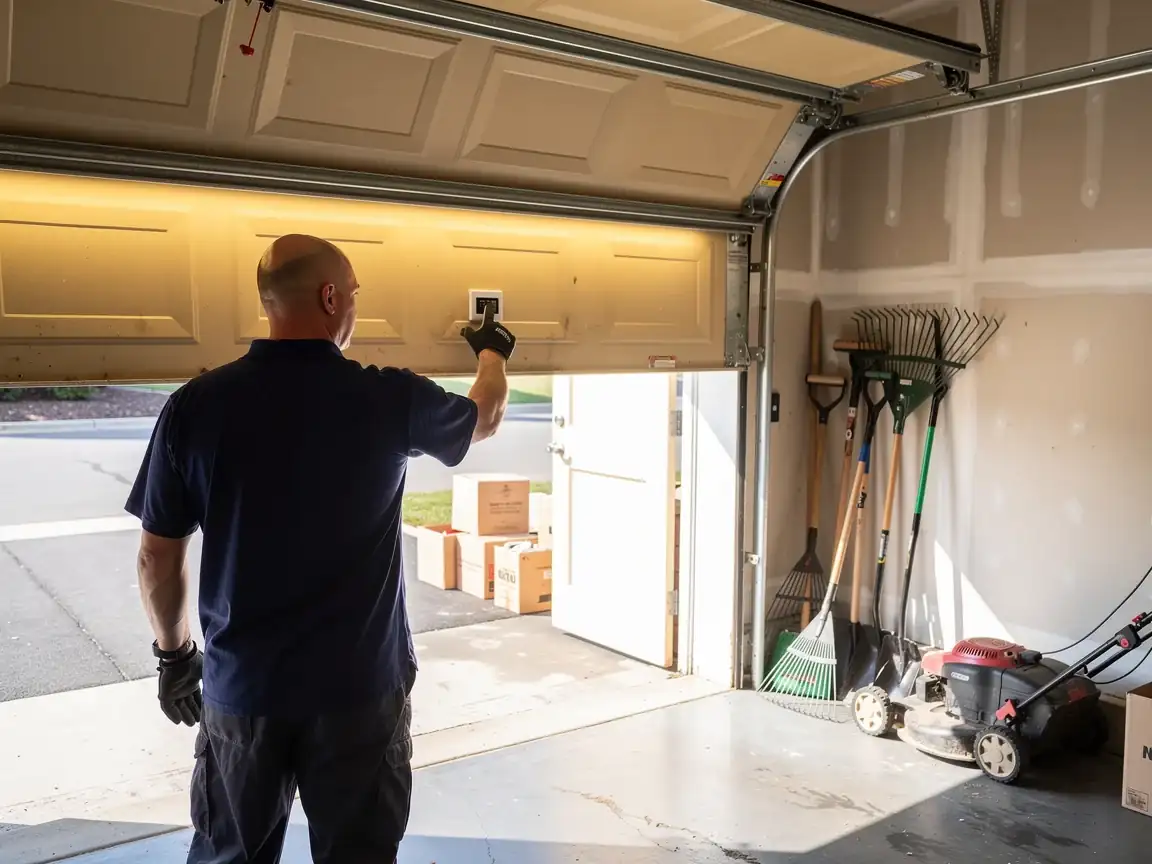
The repair is done, the door is set true and tested, and the work area left clean.
Not sure which repair your door needs in Waxhaw, NC? Describe what it’s doing - every job starts with a diagnosis.
How do I know if it's the spring and not the opener?
If the door won't budge even when you pull the release cord and try lifting it by hand, that points to a spring, not the opener motor. A healthy door should lift with moderate effort when disconnected from the opener. If it feels like dead weight or won't stay up on its own, the spring has lost its tension.
Why did my spring break with no warning?
Springs fail by cycle count, not age alone, so there's rarely a warning sign before the break. A lot of homes in this area still have original springs from builds in the 1980s through early 2000s, and those have simply used up their rated cycles.
Should I replace one spring or both?
If your door has two springs and one just broke, the other is usually close behind, especially on original hardware from a 1990s-era install. Replacing both at once avoids a second service call and keeps the door lifting evenly on both sides.
Does cold weather make springs worse?
Steel contracts in cold temperatures, which adds stress to a spring that's already fatigued. In a climate with real winter swings, that extra stress can be what pushes a weak spring from strained to broken.