What Causes It Around Here
Most of the service area around Waxhaw was built between 1974 and 2005
With the median build year landing around 1993. That's a specific problem for maintenance, because it means the bulk of garage door systems across the nine named areas we work in are running on original or first-replacement hardware that's now anywhere from 20 to 50 years old. Springs lose tension gradually and nobody notices until the opener is straining. Galvanized cable starts to fray where it rides the drum. Rollers made of hard nylon or steel wear flat spots into the track.
- 50 years
The climate band here is cold-moderate
Not the deep freeze you get further north, but enough seasonal swing that lubricant hardens, metal contracts, and condensation finds its way into bottom brackets and hinges over a winter. A door that was fine in October can bind, drag, or throw an opener code by February. None of this is dramatic. It's slow wear meeting a specific age bracket of hardware, which is exactly why a once-a-year check catches it before a spring snaps or a cable lets go under load.
Houses from the 1980s and 90s also tend to share the same handful of opener and track designs
Which means when one wears out, a neighbor's often isn't far behind.
How It Shows Up
The first sign is usually noise - a grinding or popping sound as the door travels, which almost always means a roller or hinge has gone dry or a track bolt has worked loose. Next is the door running unevenly, one side dropping ahead of the other, which points to spring wear or a cable starting to stretch unevenly on 1980s and 90s-era torsion setups that were never serviced.
On opener-side issues, homeowners notice the door reversing partway up or down, or the opener running longer than it used to before the door catches. That's often a sensor misaligned by seasonal settling, or a chain/belt that's stretched past its adjustment range - common on units installed when a house was built in the 1980s through early 2000s and never touched since.
In winter, stiffness on the first cycle of the day is common. Grease that worked fine in August gets thick in the cold-moderate swing we get here, and a door that drags on the first open of the morning but loosens up by afternoon is telling you the lubrication schedule needs resetting, not that something's broken yet.
What the Fix Involves
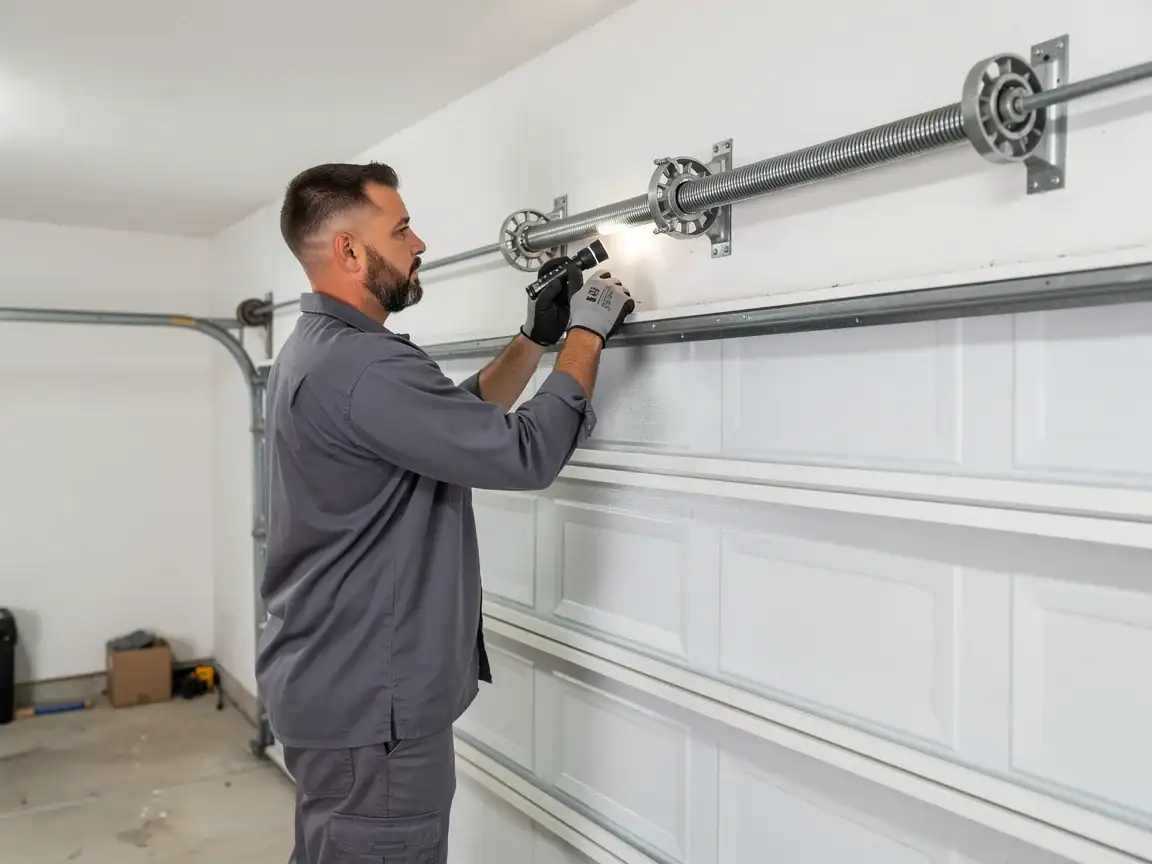
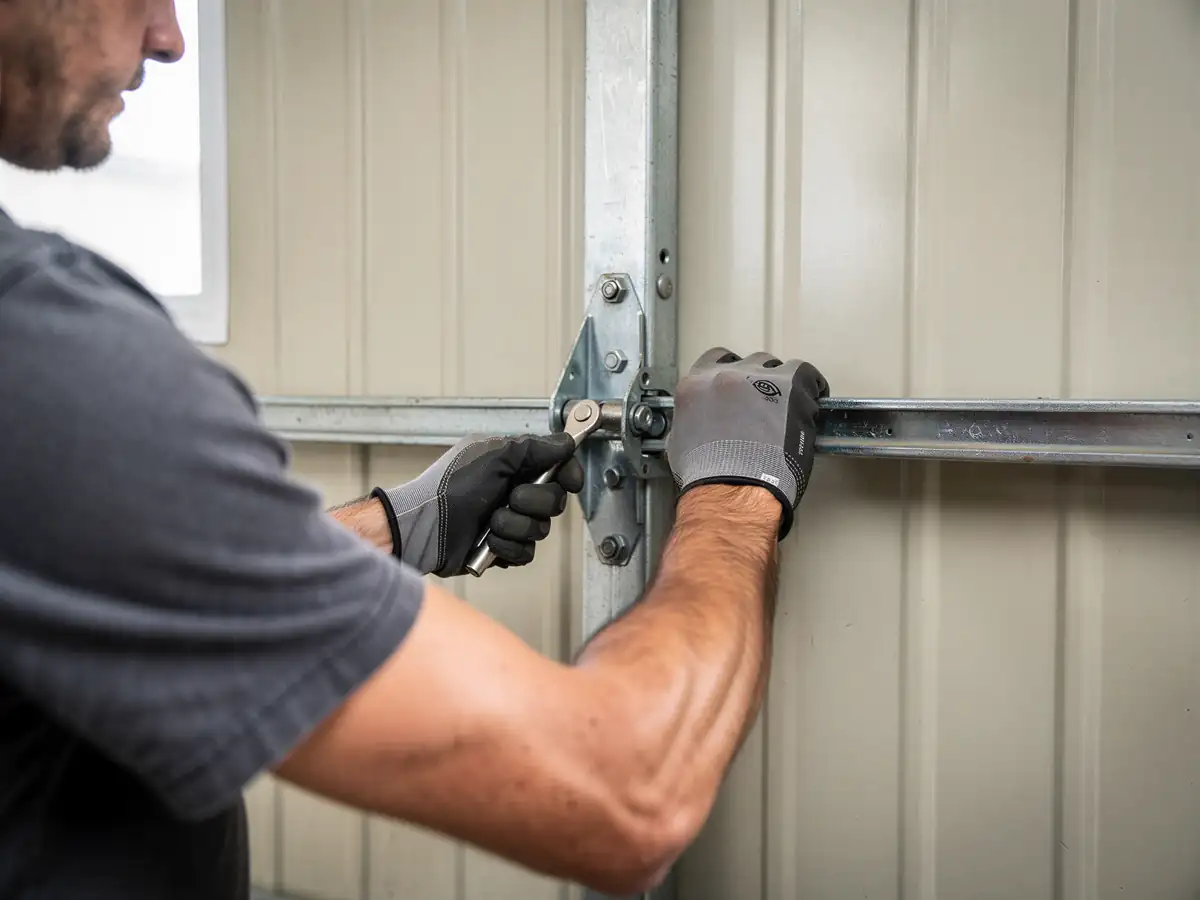
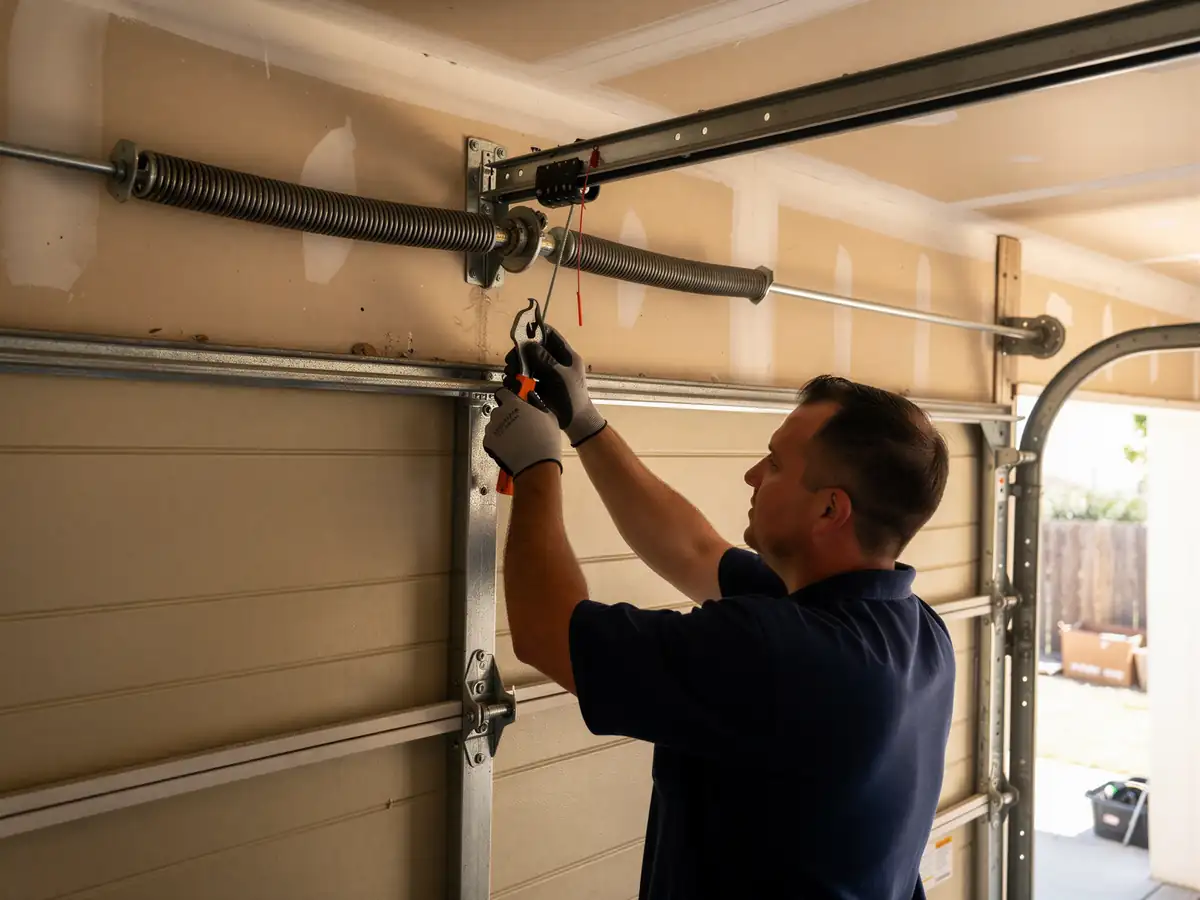
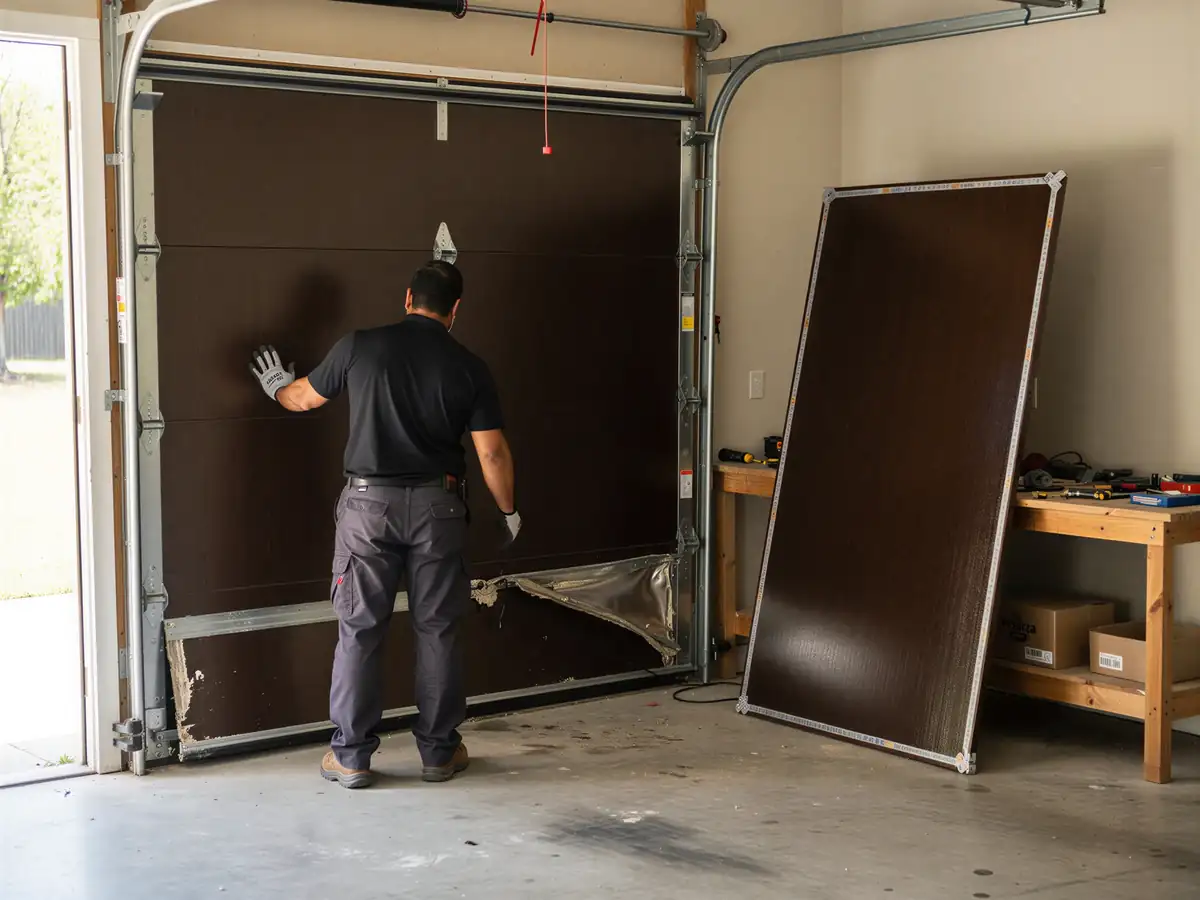
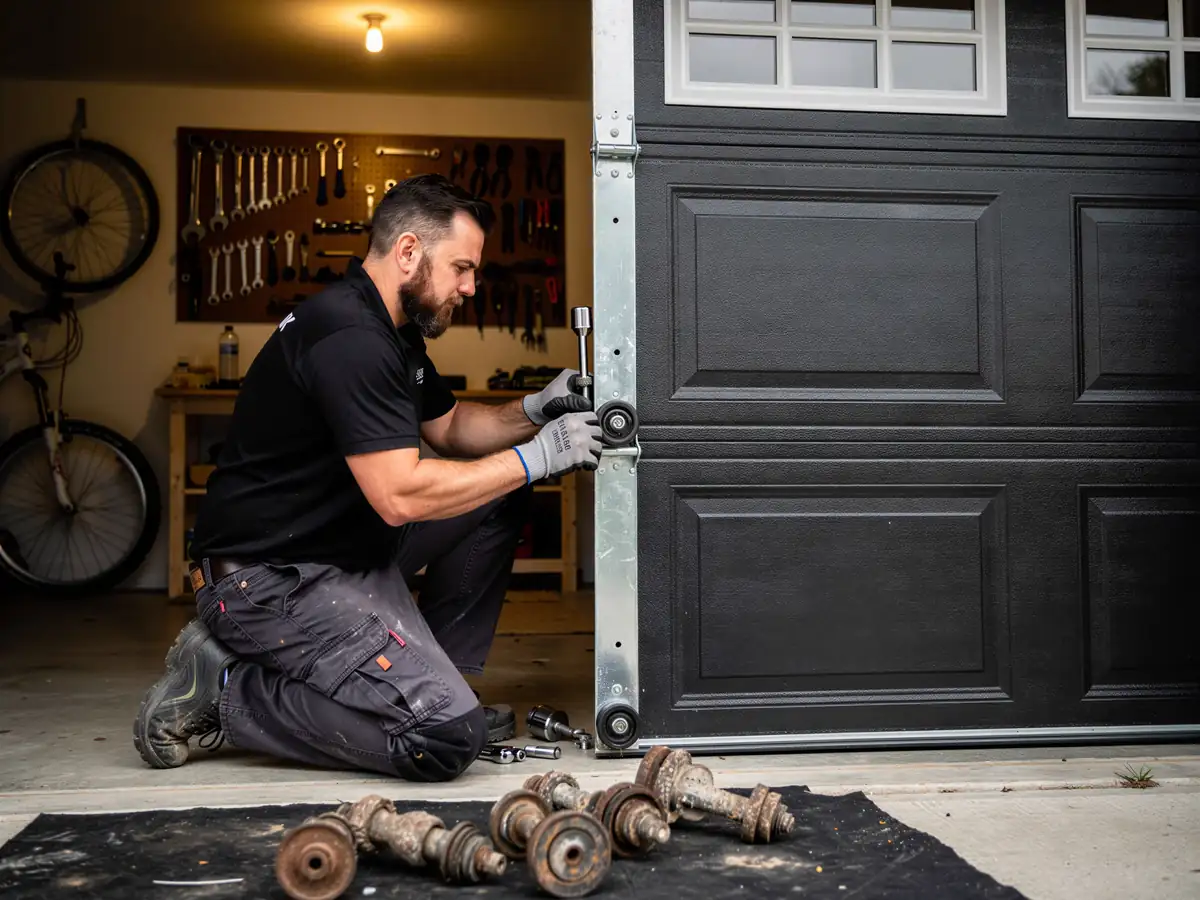
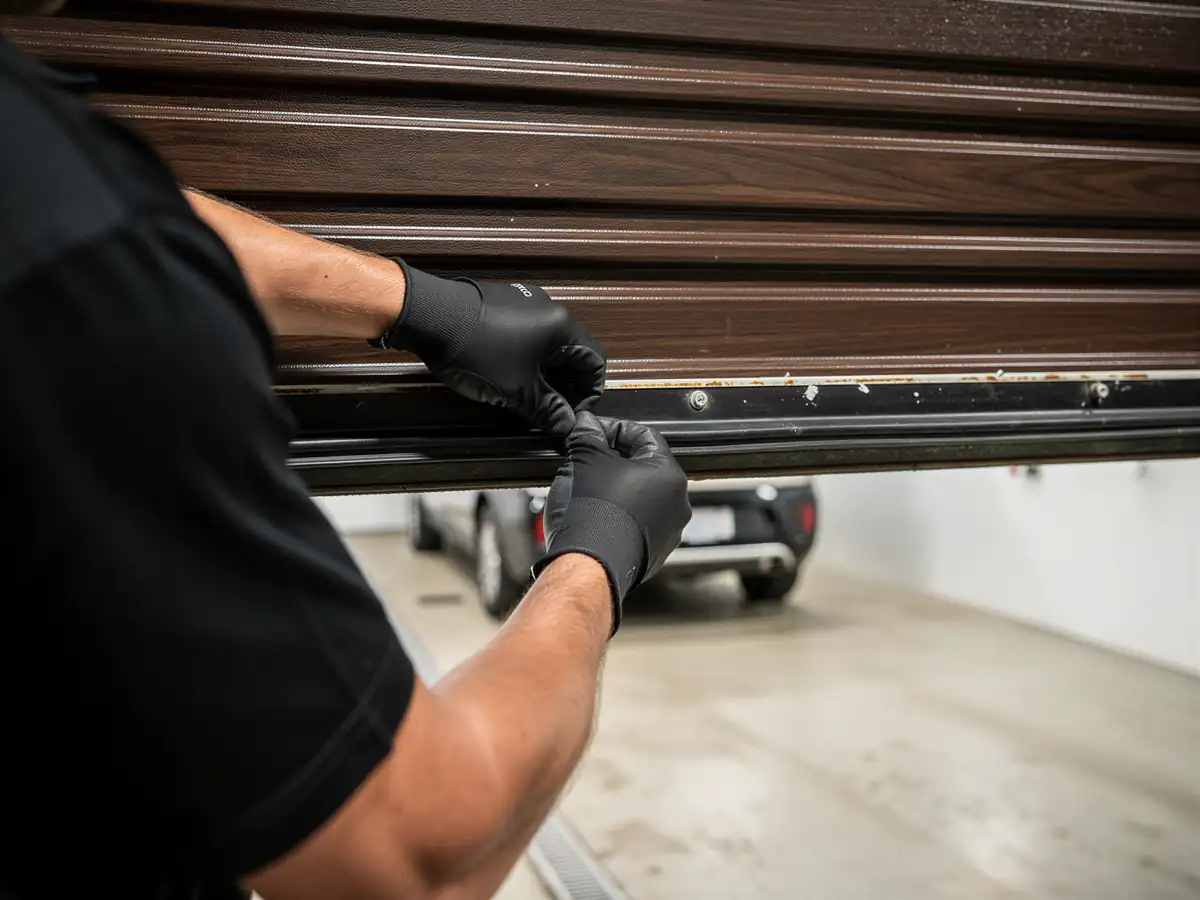
A proper maintenance visit starts with inspecting spring tension and cable condition, since those carry the full weight of the door and fail without much warning when they go. We check roller and hinge wear, track alignment, and bottom bracket hardware, then lubricate everything with grease rated for the swing we get in a cold-moderate climate rather than a general household product that gums up in winter.
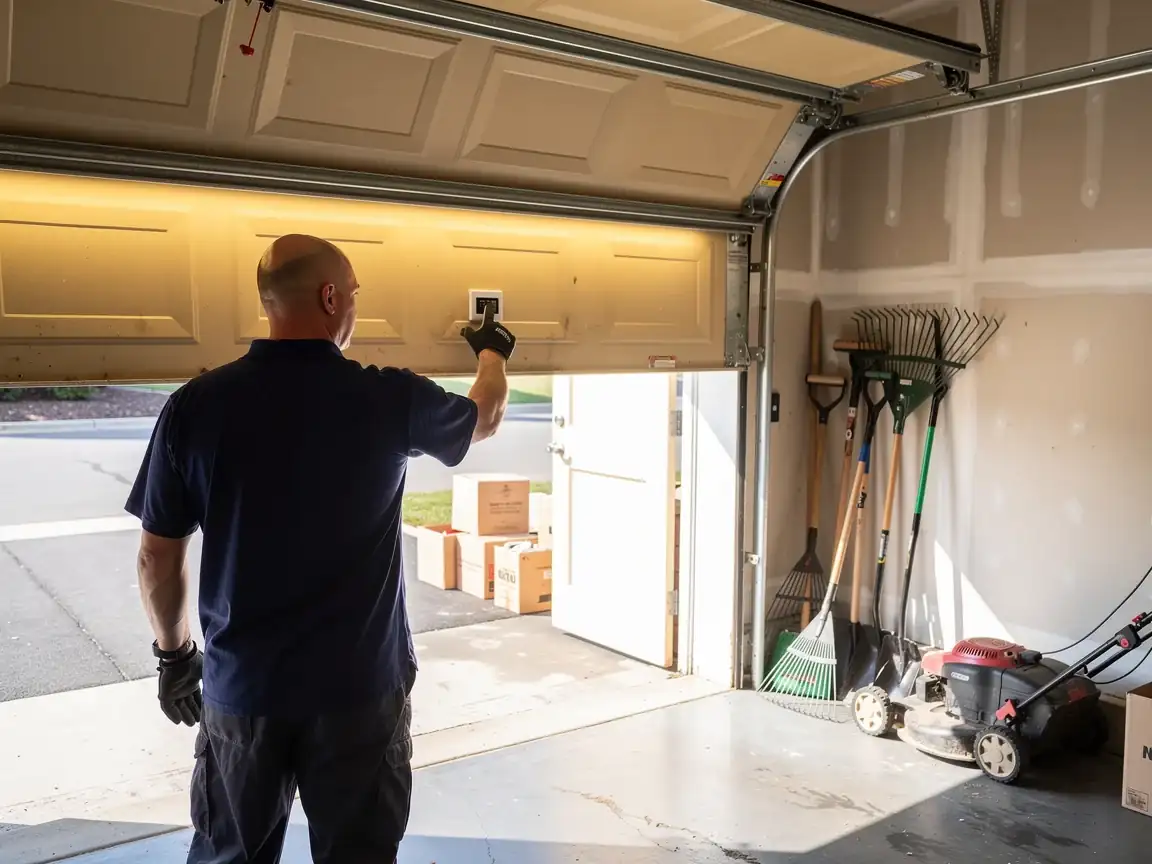
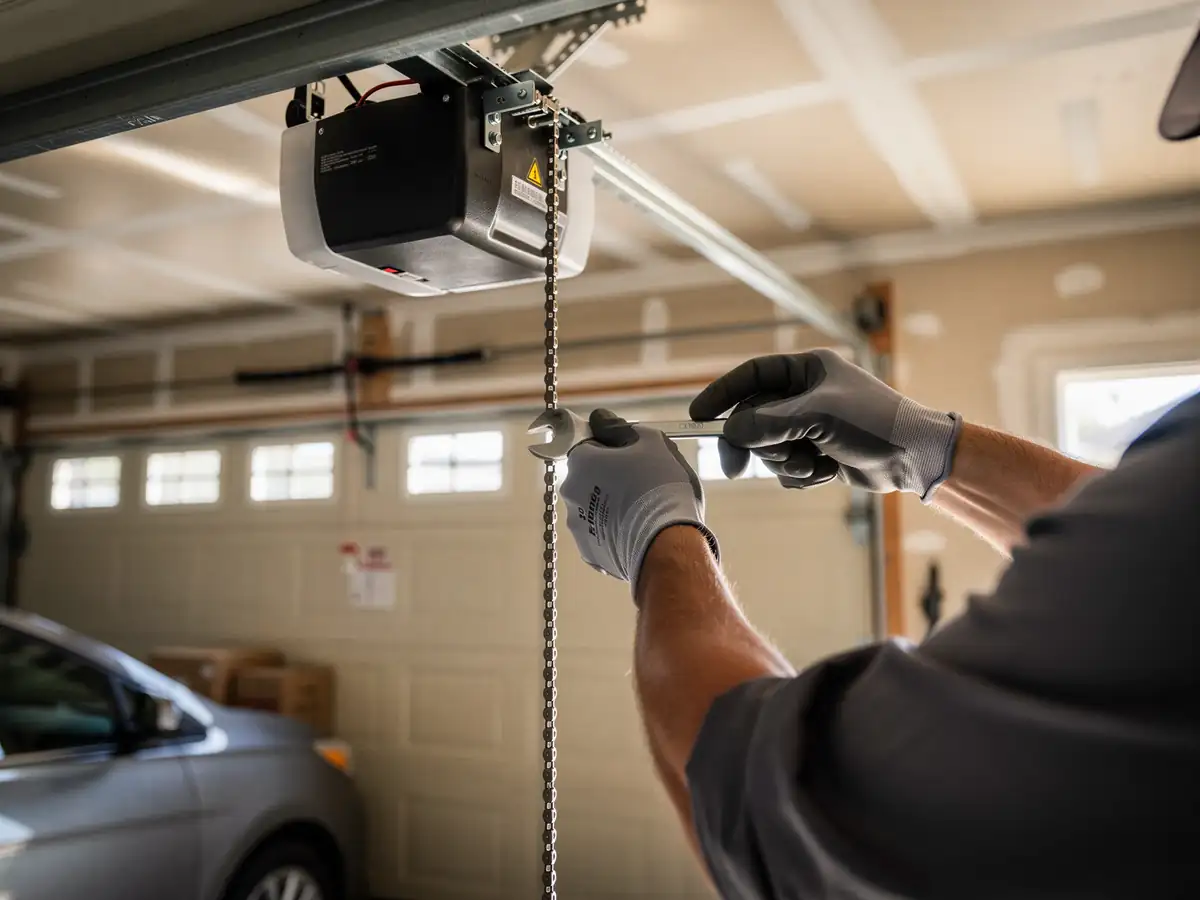
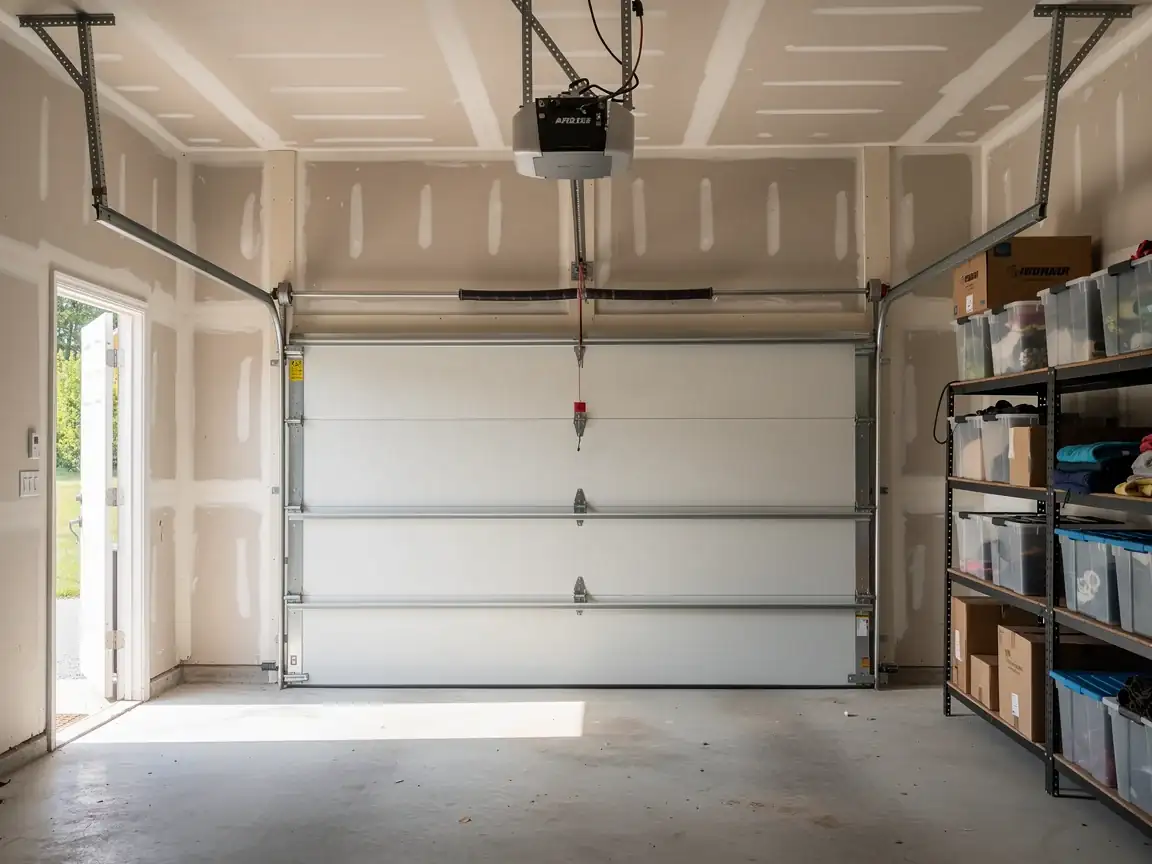
On the opener side, we test travel limits, force settings, and safety sensor alignment, and tighten or replace fasteners that have worked loose from years of cycling. On houses built in the 1974-2005 window, we often find the original hardware is still structurally sound but just needs adjustment and lubrication rather than replacement - that's the common outcome, not the exception.
We also balance-test the door, since an unbalanced door is what burns out openers early and puts uneven load on cables. A five or ten-minute balance check catches a problem years before it becomes a broken spring call.
The Complications
Not every door on a house from this era is worth maintaining instead of replacing
If a torsion spring has already snapped, or if the track is bent enough that the door no longer rides straight, maintenance won't fix that - it's a repair or replacement job, and we'll tell you which one straight up rather than bill for a visit that can't solve it.
Parts availability is the other honest limitation
Some original hardware from houses built in the 1970s and 80s used sizes or mounting styles that aren't made anymore, and matching them can mean a longer lead time than a same-week fix. We'll flag that before we start, not after.
Across the service area
From the closer-in neighborhoods a few miles out to places over 15 miles from the shop - we schedule maintenance the same way, but we size up each door on its own wear pattern rather than assume one visit fits every house built in the same decade.
- 15 miles