What Causes It Around Here
Most of the houses in the Waxhaw service area were built between 1974 and 2005
With a median year of 1993. That's a long run of homes that went up with the same steel roller and raw-stamped track hardware builders used across the Carolinas back then - cheap to install, loud from day one, and not built to run thirty-plus years. Across the nine communities this shop covers, the stock skews heavily to that 1980s-90s era, so a huge share of doors out there are riding on original rollers nobody thought to replace because the door still opened.
The climate band here is cold-moderate
Which doesn't sound dramatic, but it means steel rollers go through real freeze-thaw cycling every winter and real humidity swings every summer. Steel doesn't flex with that the way nylon does. The bearing seizes a little, the roller develops a flat spot against the track, and every open-close cycle after that grinds metal on metal. It's not one bad day that kills a roller around here - it's thirty winters of small temperature swings on a part that was never meant to last that long in the first place.
How It Shows Up
The first sign is almost always sound - a scrape or a rhythmic clunk that lines up with where the roller crosses the track bend into the horizontal section. That's the flat-spotted roller hitting the same point every cycle. Next comes a door that hesitates or jerks partway up, because the roller's binding instead of rolling.
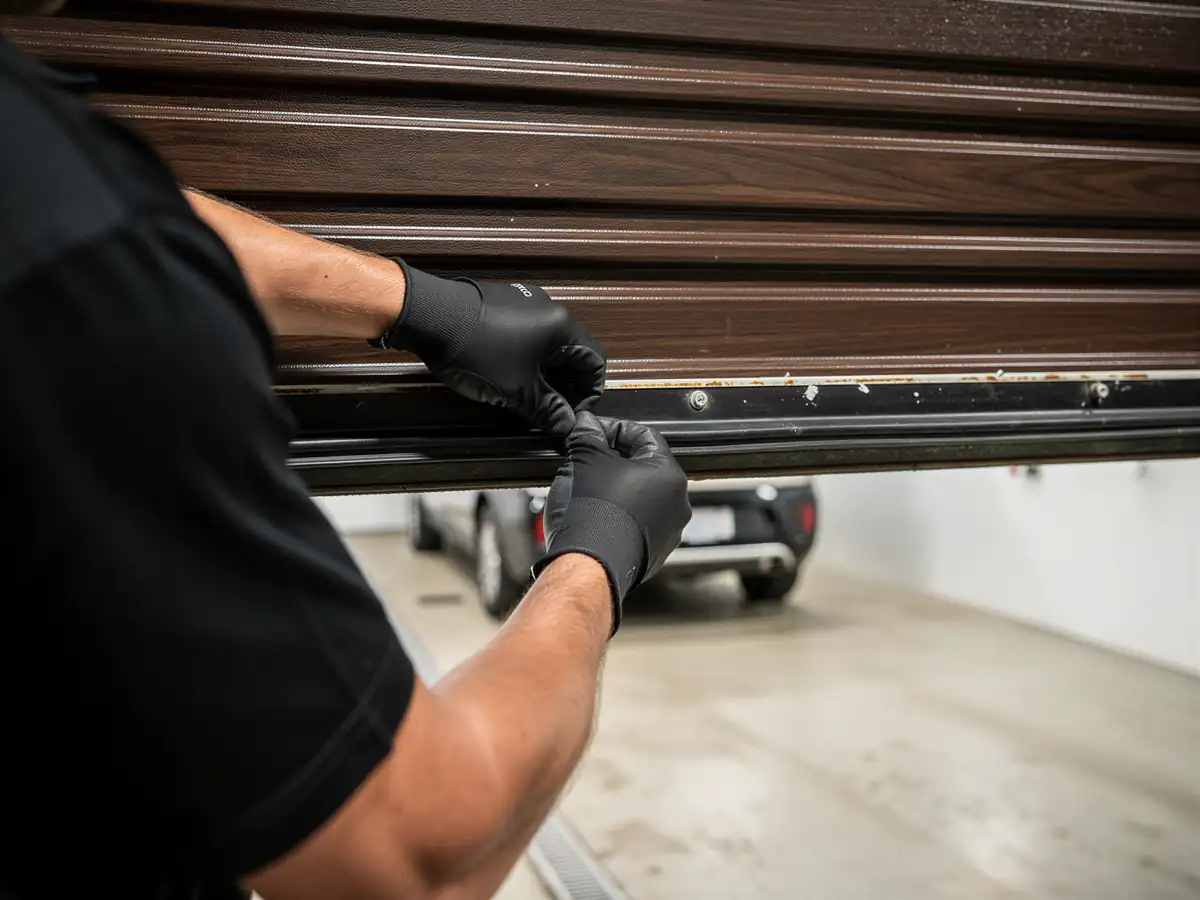
Look at the track itself where it curves. If you see bright metal scoring or a groove worn into one spot, that's roller wear transferring onto the rail, not just a roller problem anymore. On older steel-roller doors in this area, it's common to find two or three rollers near the bottom brackets worse than the rest, since those carry more load and flex more on every cycle. A door that's suddenly louder than it used to be, with no other changes, is roller wear nine times out of ten in homes from this build era.
What the Fix Involves
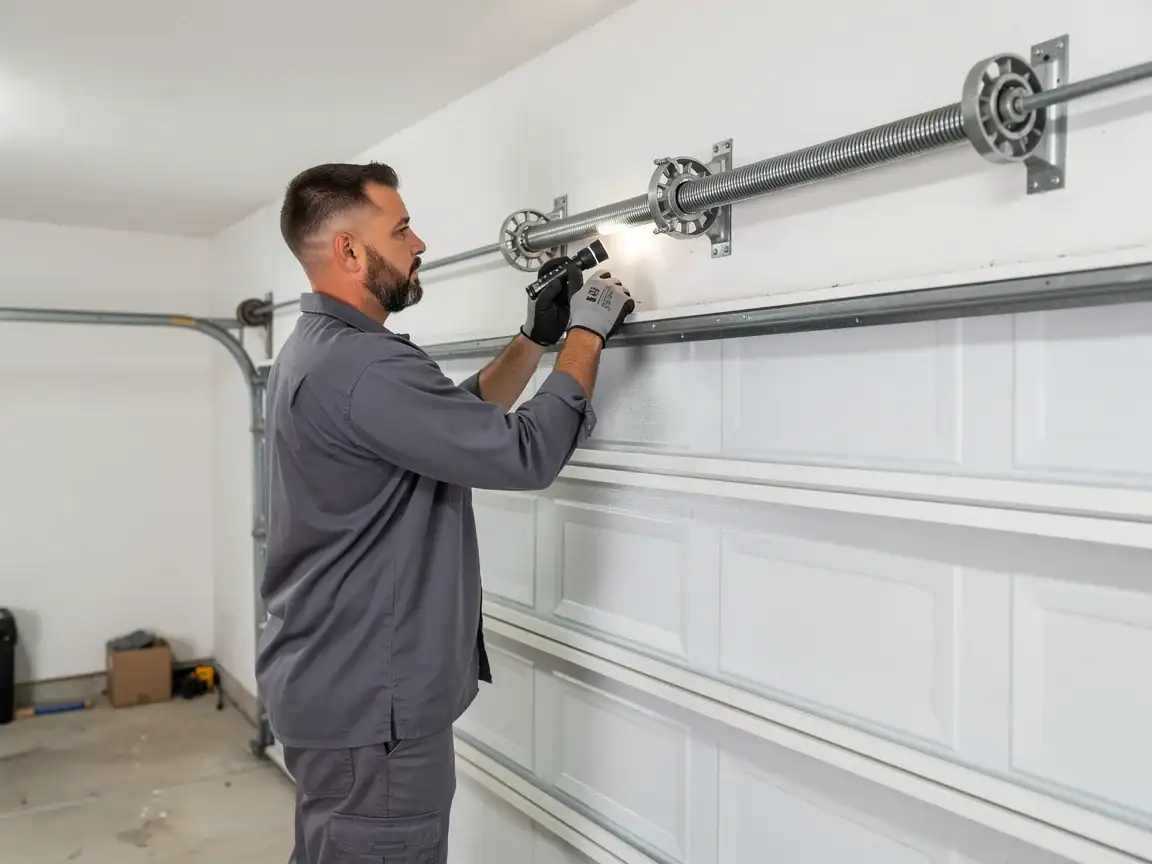
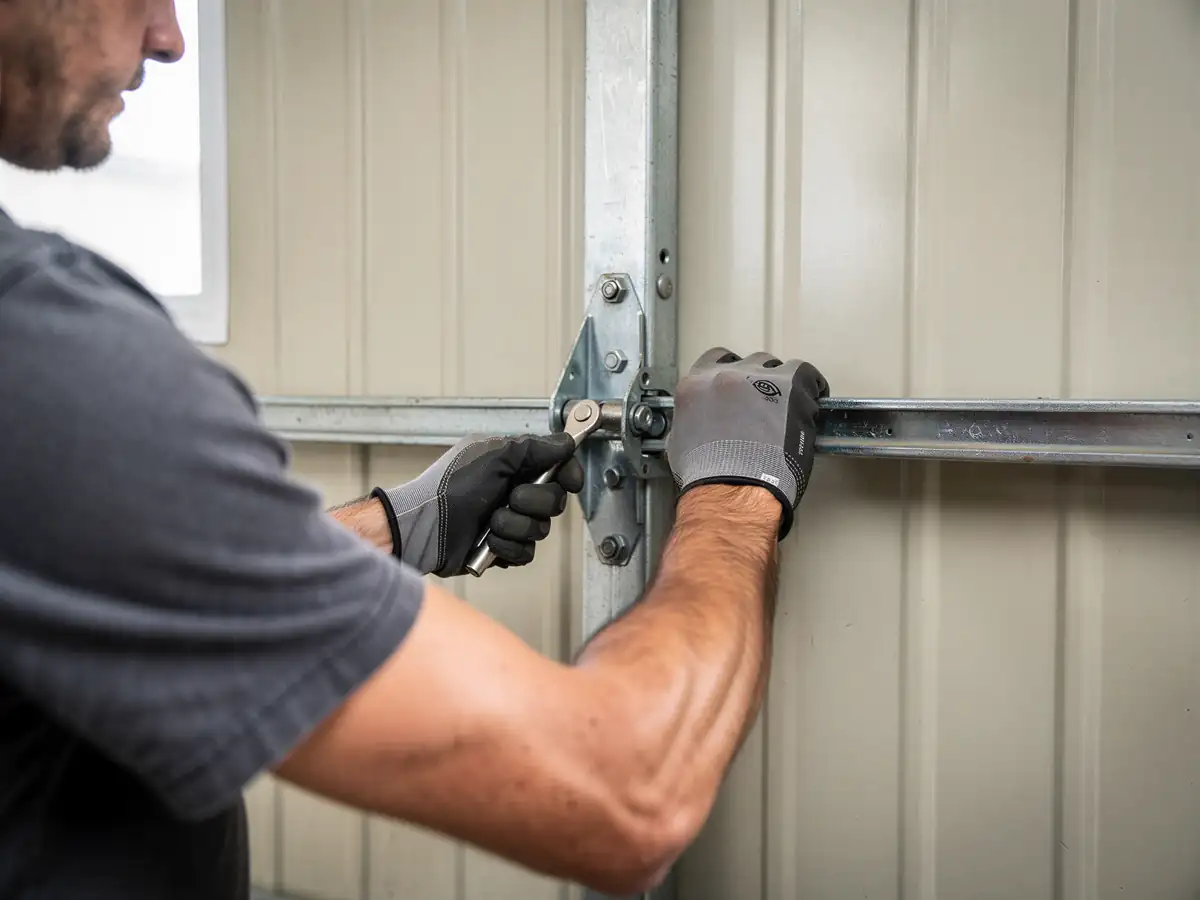
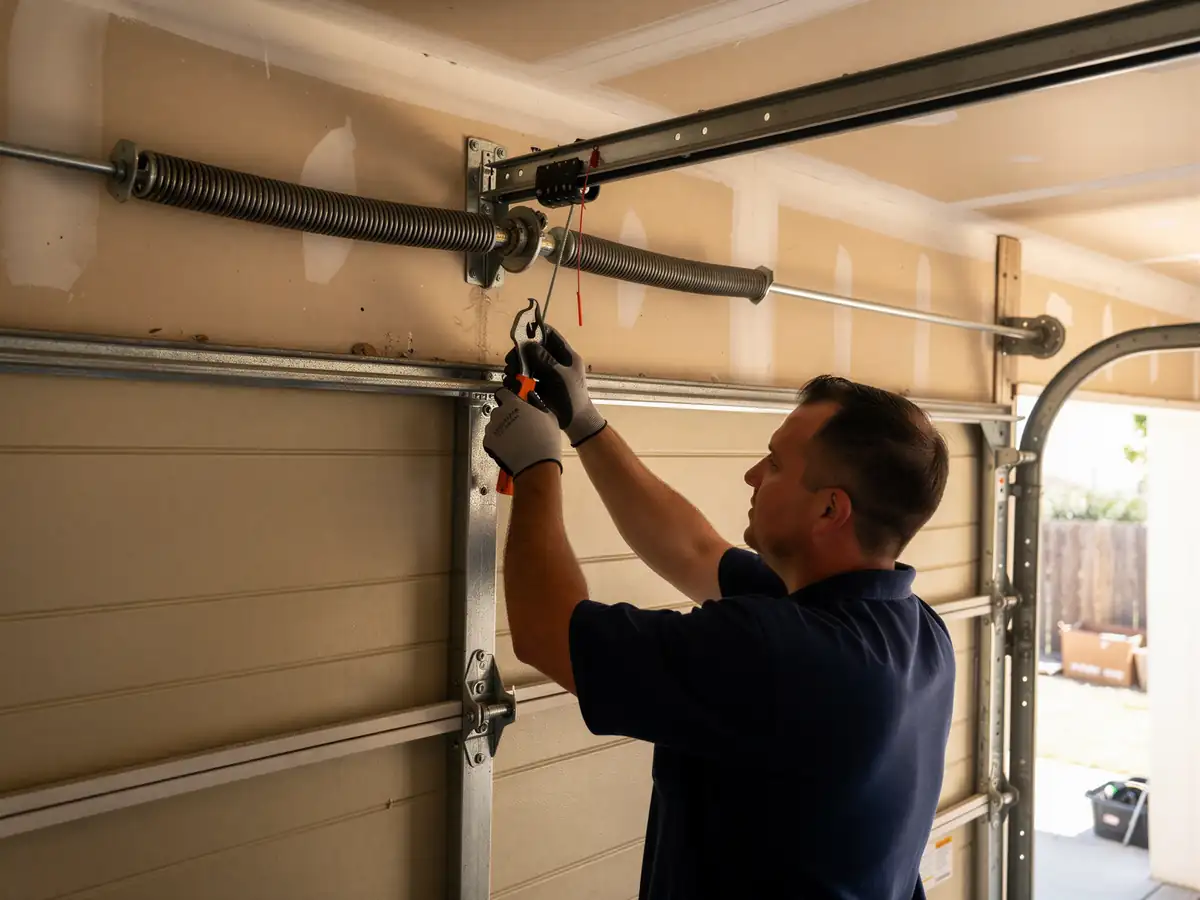
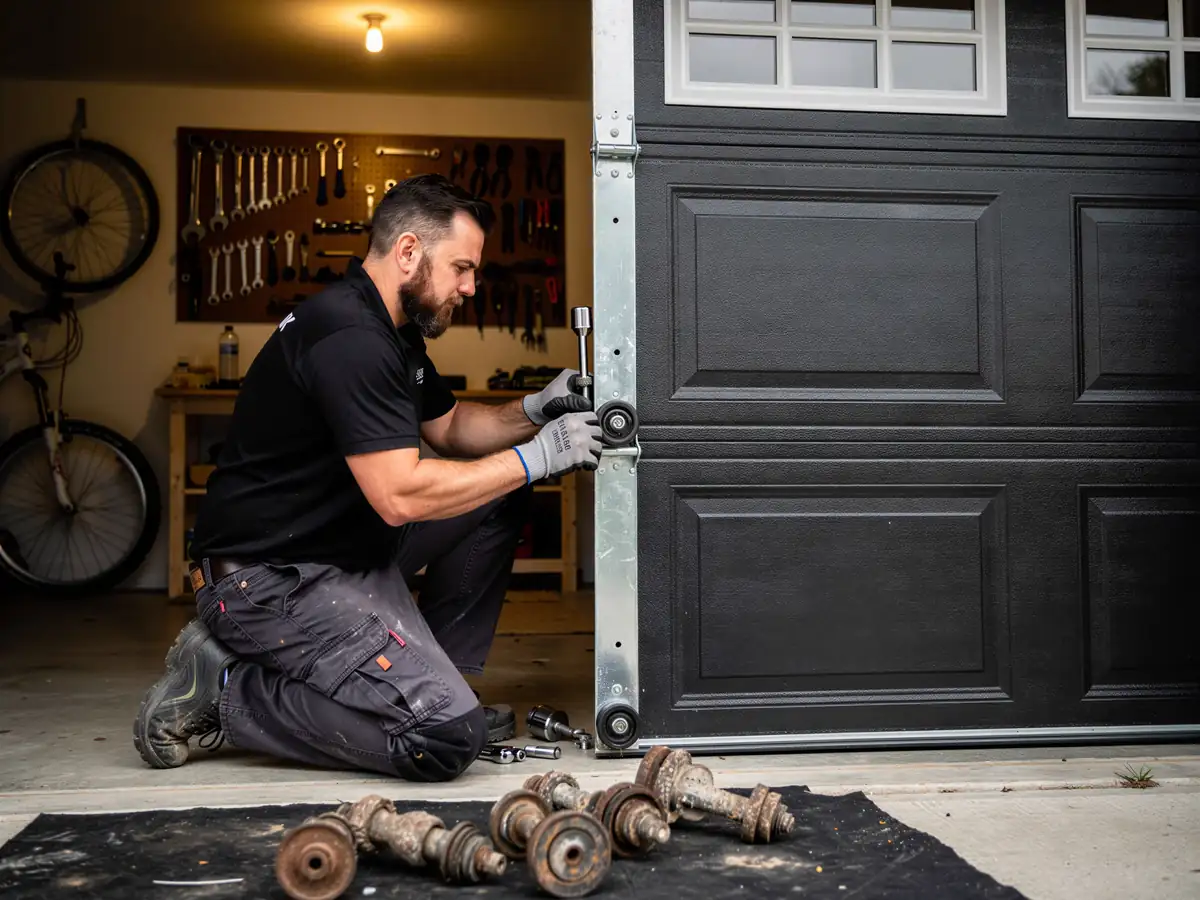
Swapping rollers means pulling the door's panel brackets loose enough to slide the old roller stem out and seat a new one, one at a time, so the door stays supported the whole way. On a standard double door that's eight to ten rollers depending on panel count. We check the track at each roller position while we're in there - if the steel's scored or bent from years of a flat-spotted roller grinding against it, the roller alone won't fix the noise.
Nylon rollers with sealed bearings are the standard replacement for steel originals in this climate. They run quieter, don't develop flat spots the same way, and handle the seasonal temperature swing better than bare steel ever did. We don't push full track replacement unless the rail is actually damaged - if the track's straight and the wear is only on the rollers, swapping those out is the honest fix and the cheaper one.
The Complications
The limitation worth saying plainly
If the track itself is bent or deeply grooved, new rollers on a bad rail will just wear out again, faster. We tell owners that up front rather than selling rollers twice. Double doors also complicate things because the two tracks have to stay matched - swap rollers on one side and leave worn ones on the other, and the door racks unevenly going forward.
Age of the opener matters too
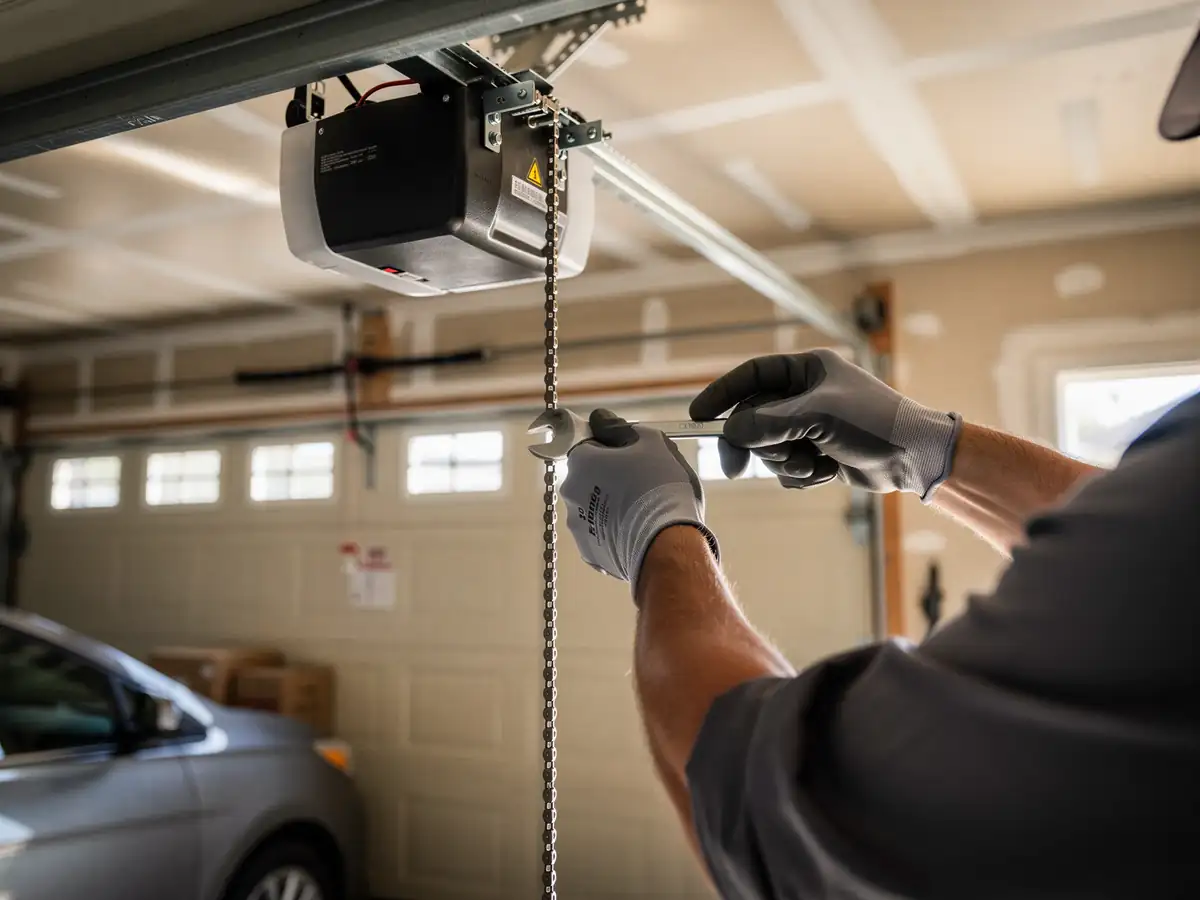
A lot of houses from this era still run original chain-drive openers, and a stiff, worn roller can mask as an opener problem - the motor straining against resistance it shouldn't have to fight. Fix the rollers and the opener often runs quieter and longer, which tells you the roller was the real load all along, not the motor. Across the service area - from Mineral Springs and Wesley Chapel out to Weddington and Marvin - the pattern repeats because the housing age repeats, not because any one street is unusual.