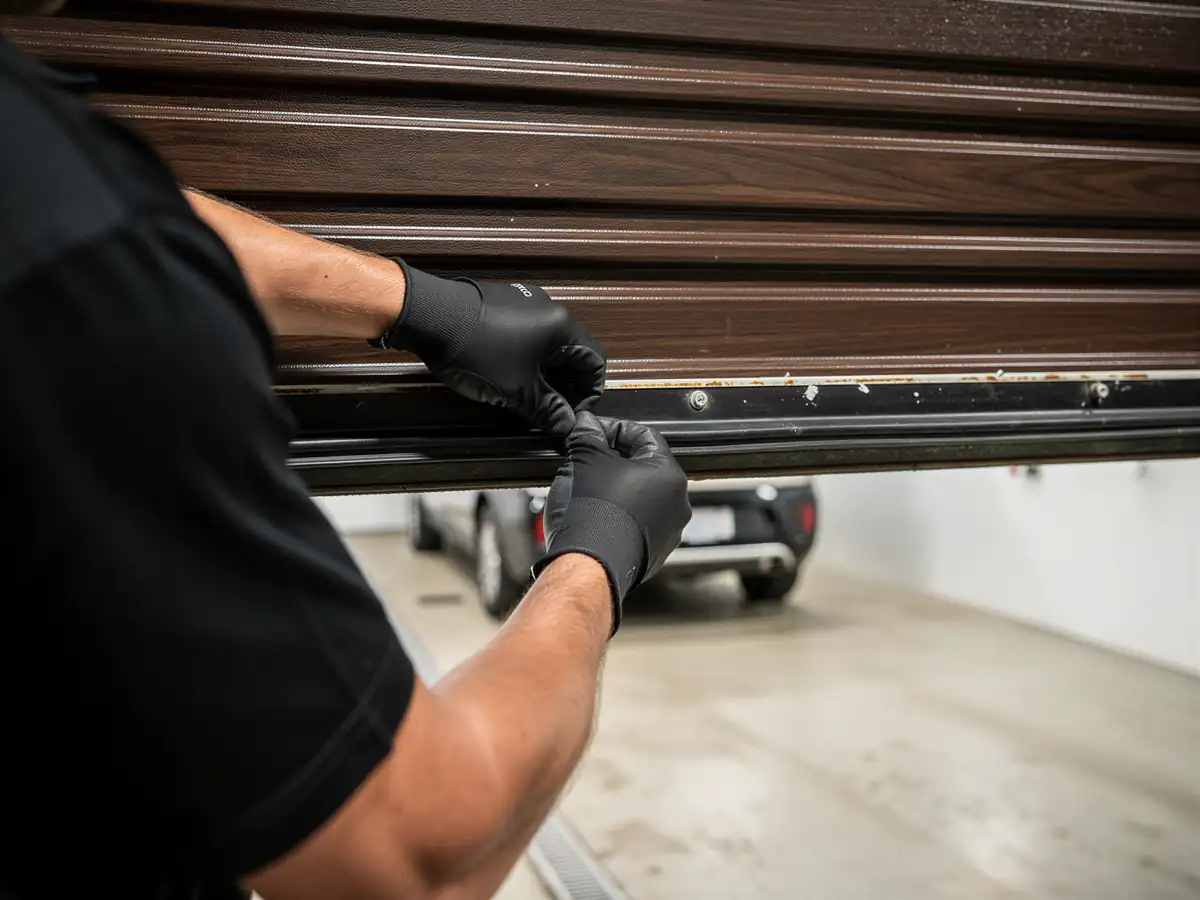
A look at what a Waxhaw Garage Door Pros service call actually checks, built around the 1974-2005 housing stock and cold-moderate winters this area gets.
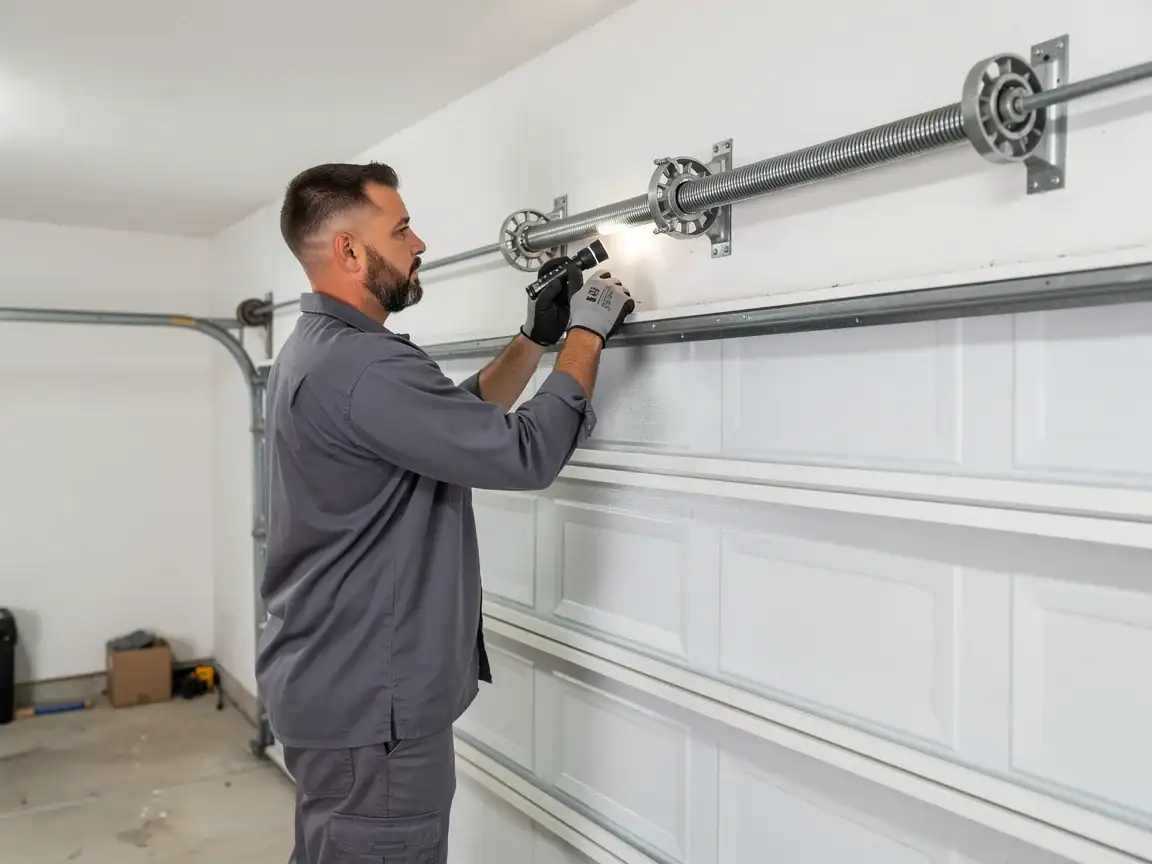
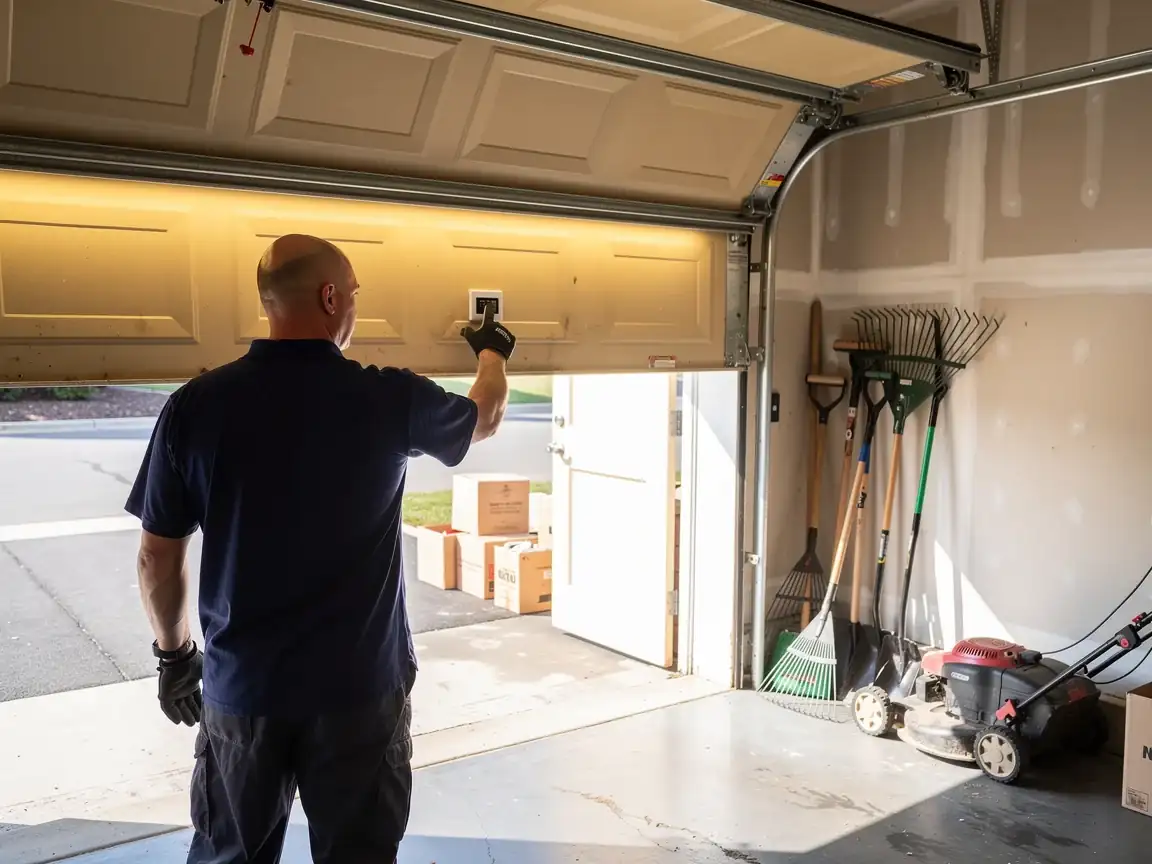
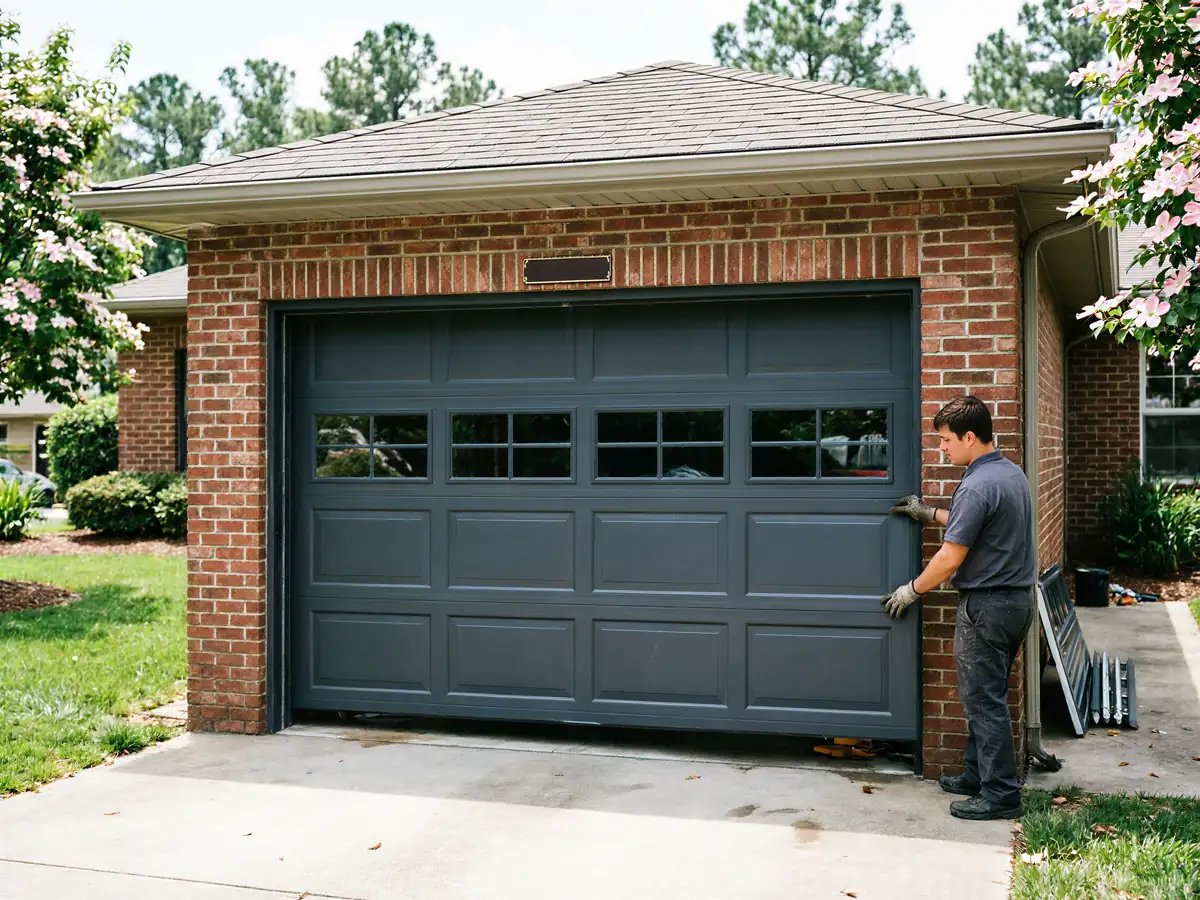
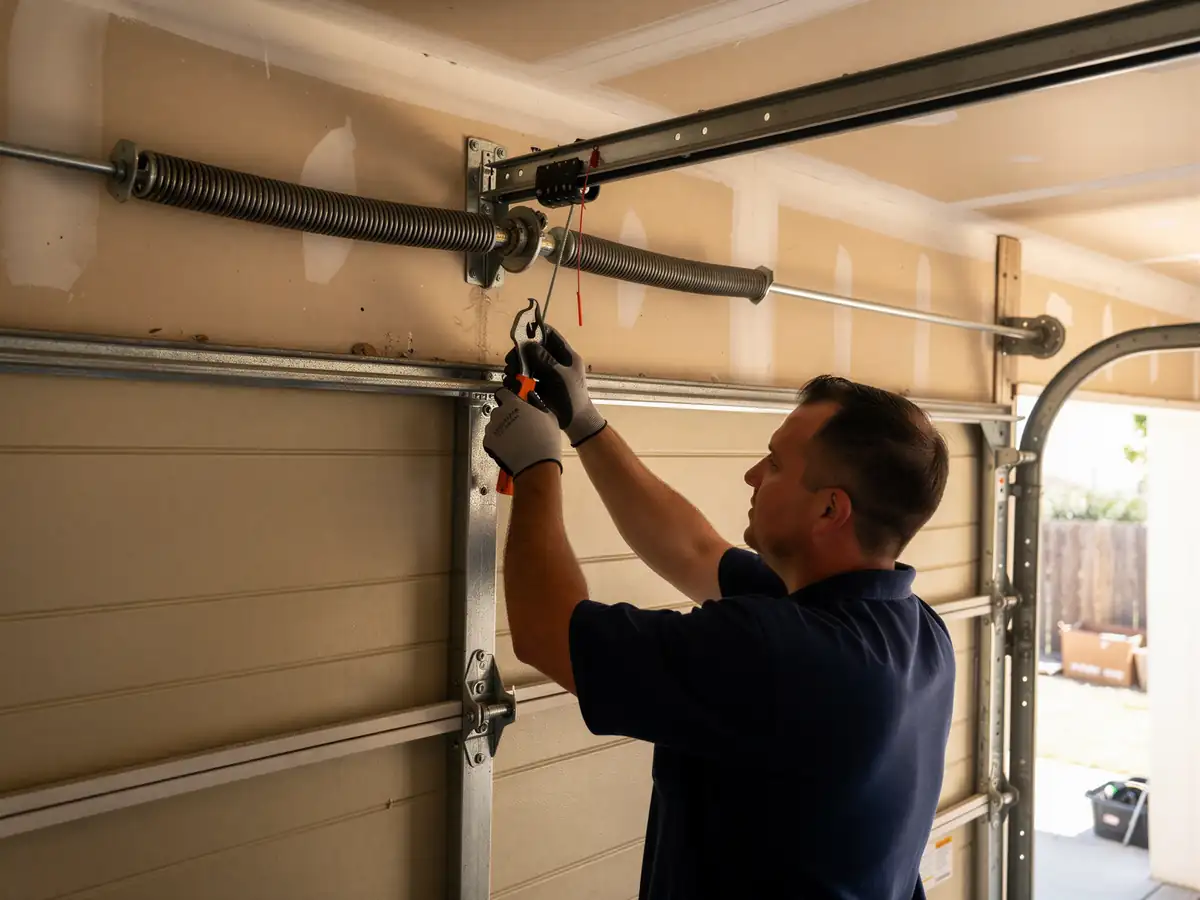
Most houses in this service area went up between 1974 and 2005, with the median build year landing around 1993. That's a specific window - it means the typical door in Waxhaw is running original torsion hardware from a builder-grade install, not a retrofit. Across the nine named areas we work, the stock leans heavily 1980s and 90s, which tells us a lot before we even open the truck: galvanized springs rated for a lighter door than what's often been swapped in since, steel tracks sized to builder spec, and openers that are two or three owners old in a lot of cases. A service call here starts with matching what's actually on the header to what the house was built with, because those two things have drifted apart in a lot of garages on this side of town. We check spring wire gauge against door weight, track alignment against the slab (older slabs settle), and whether the opener's force settings still match a door that's heavier than the one it replaced. None of this is guesswork - it's reading the age of the house off the hardware.
The Problem
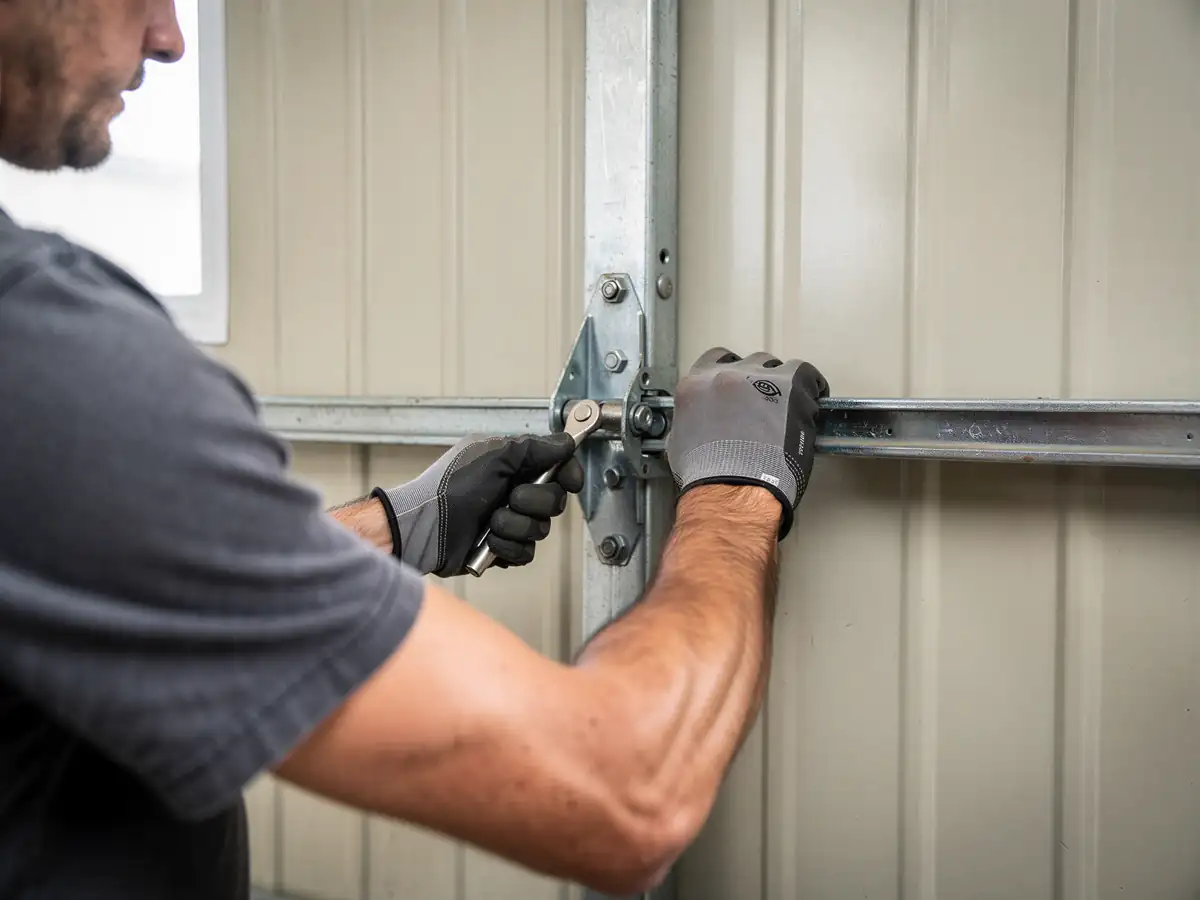
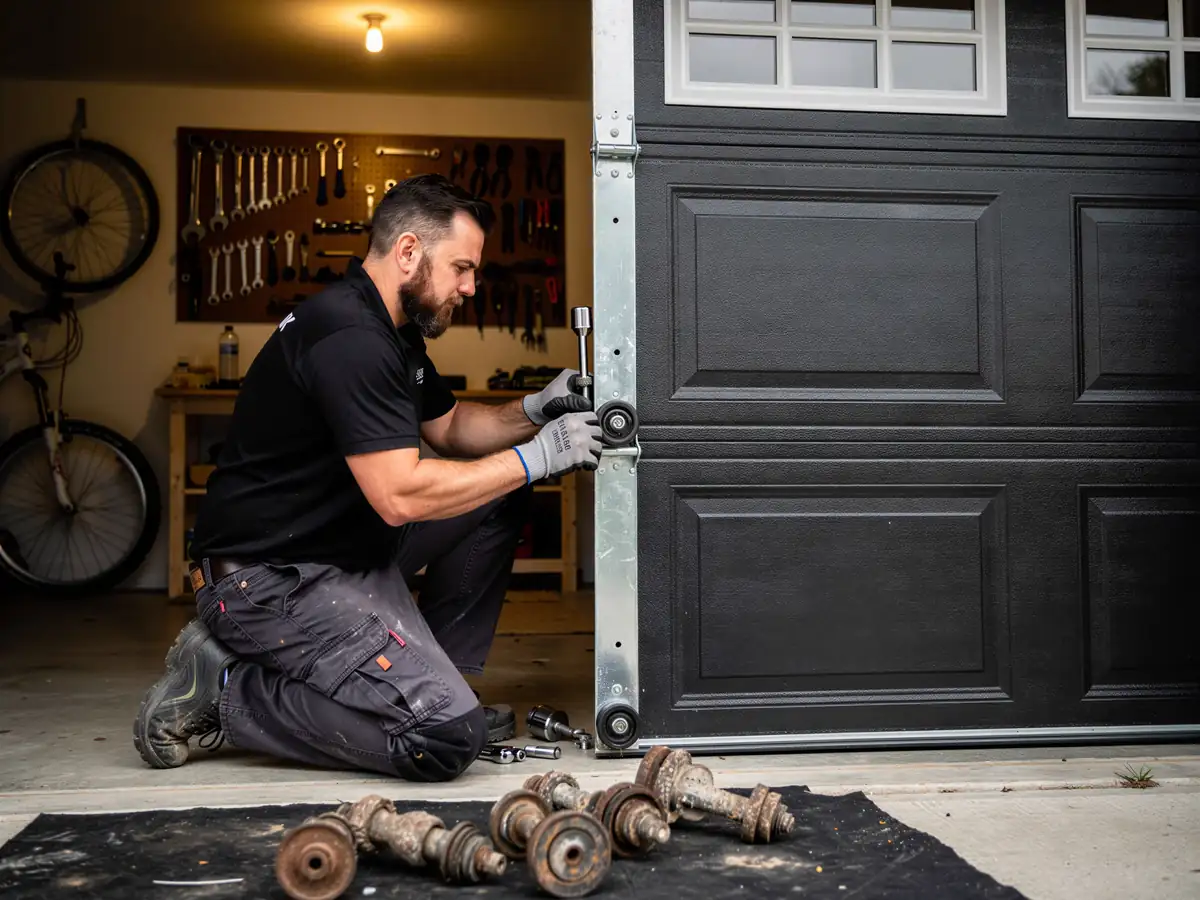
The problem with a door built to 1990s spec is that nobody re-specs it when things change. A homeowner adds insulation panels to a steel door, or swaps a single door for a heavier insulated model, and the torsion spring stays the one that came with the house in 1993. That's an extra ten or fifteen pounds the spring wasn't wound for, and it shows up as a door that's hard to lift by hand, or a cable that frays faster than it should. On a call, we're not just lubing rollers - we're checking whether the spring and the door still agree with each other, because on stock this old, they often don't anymore. We also see a lot of original rollers, nylon ones that have gone brittle after thirty-odd years, still rolling (badly) in tracks that were never resized when the door changed. A service call on a house from this era is as much a hardware audit as a repair.
The Seasonal Bit
This area sits in a cold-moderate climate band, which means winters cold enough to stiffen grease and shrink metal, but not cold enough that anyone builds for sub-zero. That split matters for the doors going into service calls here. Steel contracts a little in a cold snap, which is enough to throw off a track that was already a hair out of plumb from thirty years of settling. Torsion springs wound decades ago lose a little tension as the metal fatigues, and cold makes that loss more noticeable - the door feels heavier on a 30-degree morning than it did in August, and that's not imagination. We check spring tension and opener force settings seasonally for exactly this reason, because the swing between a humid summer and a cold front here is enough to move a marginal setup into a failing one. It's not the brutal freeze-thaw cycle of further north, but it's real, and it's what actually generates the winter calls.
Where People Go Wrong
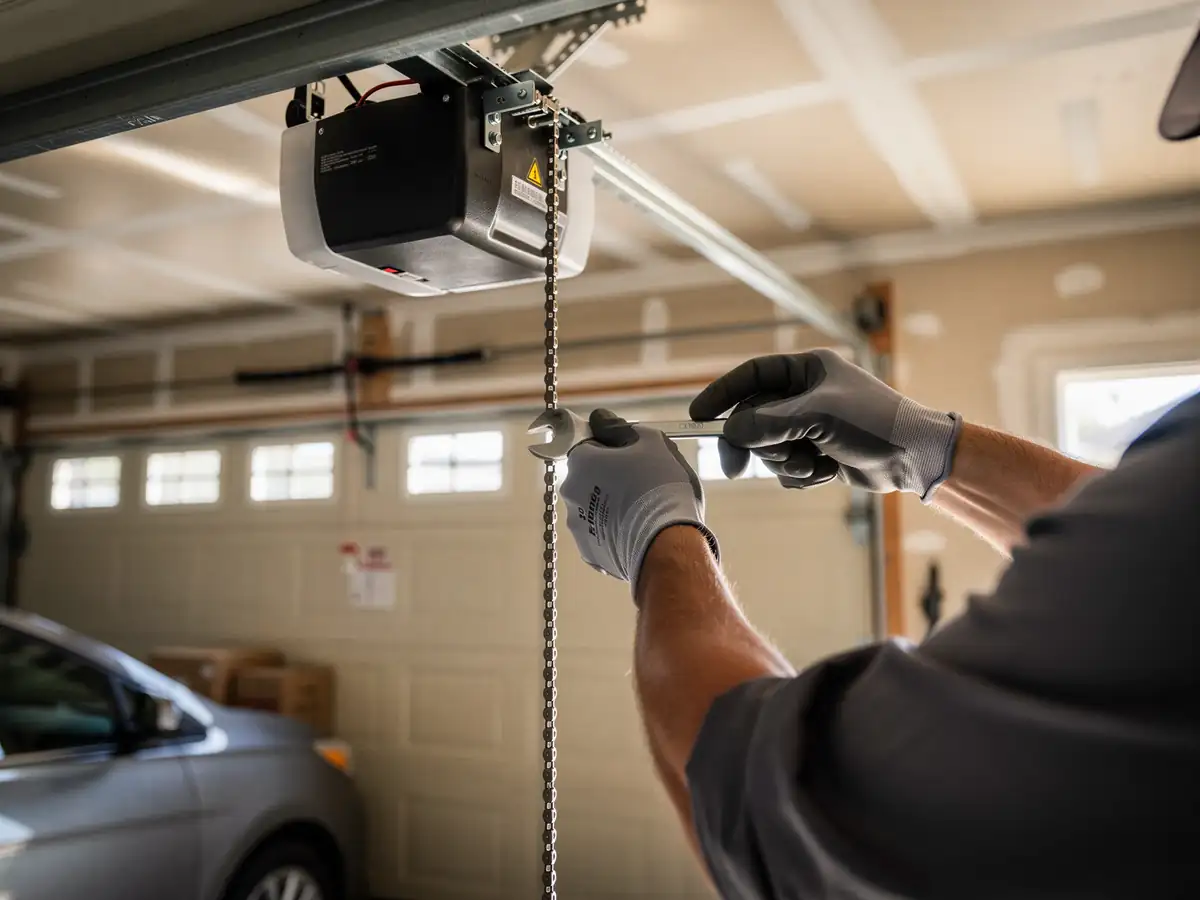
The mistake we see most is treating a noisy door as a lubrication problem when it's a hardware-age problem. Spraying WD-40 on a thirty-year-old roller quiets it down for a week and masks that the roller's actually cracked. We also see people replace an opener without ever checking whether the spring underneath it is still doing its job - a new opener fighting an old spring just burns out faster, and the homeowner is back to square one in under two years. Honestly, if your door and opener both date to the original build and one has already failed, we'll usually tell you replacement makes more sense than patching it piece by piece - parts for that era aren't always on the shelf, and chasing them town to town adds time you don't need to spend. That's the one thing a service call should tell you straight: sometimes the right fix is the door, not the part.
How it works
From “it’s stuck” to “it’s fixed”
01
Tell us what’s wrong
Describe the symptom - won’t open, loud bang, opener runs but the door won’t move.
02
On-site diagnosis
A technician tests the door under power and by hand and finds what actually failed.
03
Clear, up-front plan
You get the fix that’s needed and what drives the cost - before any work starts.
04
Repaired & tested
The repair is done, the door is set true and tested, and the work area left clean.
Not sure which repair your door needs in Waxhaw, NC? Describe what it’s doing - every job starts with a diagnosis.
How do you know what spring my door needs if I don't know the age of my house?
We can usually narrow it down fast. Since most homes in this service area were built between 1974 and 2005, with the bulk in the 80s and 90s, the hardware style and spring gauge tend to follow a predictable pattern for that build era, which we cross-check against the actual door weight on site.
Does the cold here actually affect my garage door?
Yes, though not dramatically. This area sits in a cold-moderate band - cold enough that steel tracks and aging torsion springs tighten or lose tension noticeably in winter, which is why a door can feel fine in summer and heavy by January.
Is it ever not worth repairing an old door?
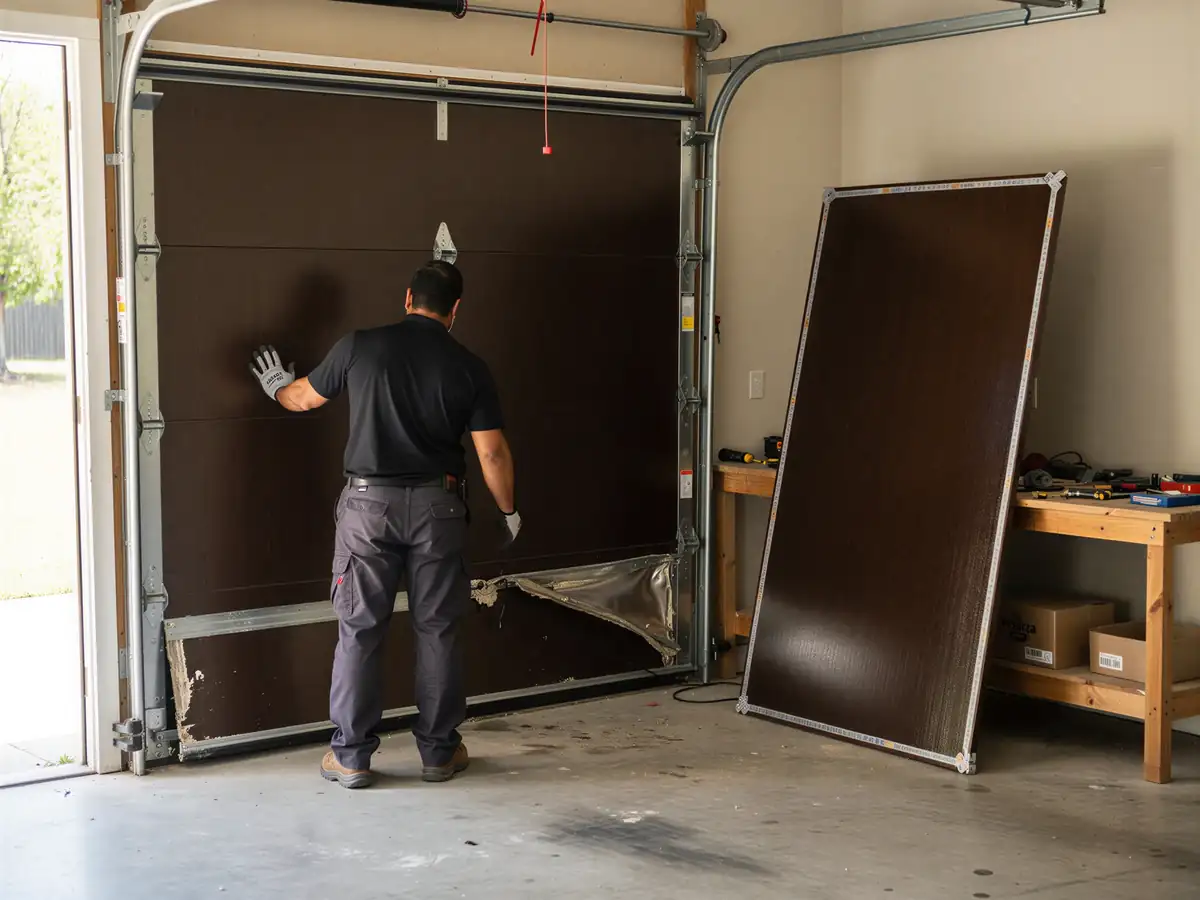
Sometimes. If the door and opener both date to the original build and a major part has failed, parts for that era can be hard to source, and we'll say so rather than string together a patch job that won't hold.