What Causes It Around Here
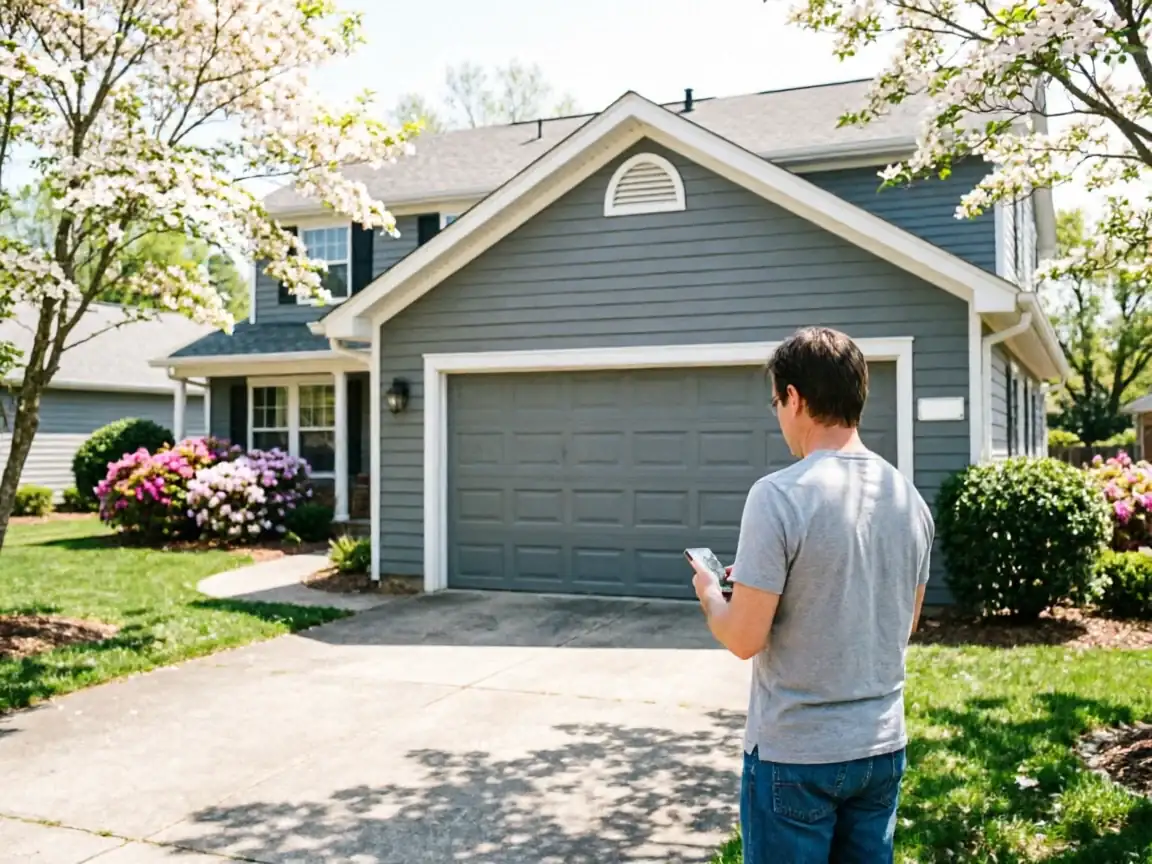
The median house in Mineral Springs went up around 1991, which puts most original openers at an age where gears strip, capacitors weaken, and logic boards start losing the plot even if the motor itself still turns. A unit installed when a house was framed in the early 90s has had three decades of temperature swings working on its circuit board and its sensor wiring. The cold-moderate climate here does the unit no favors either - a board that runs fine in July can hang up or throw a random reversal error on a cold January morning because the moisture inside a garage condenses and corrodes contacts slowly, year after year. We also see driveway-install replacements from the 2000s and 2010s hitting the end of their own service life now, since a lot of them went in as a quick swap rather than a full system upgrade.
The Complications
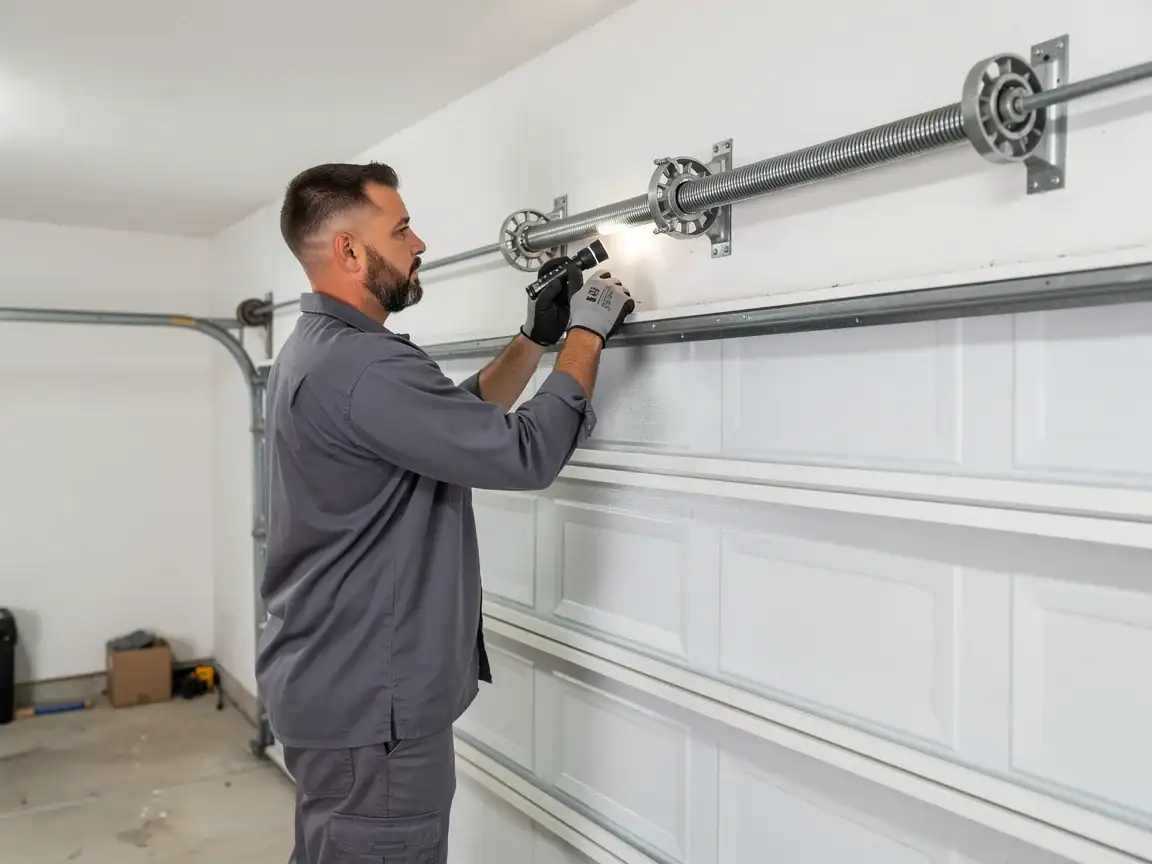
An opener from the early-90s stock often outlived the door hardware it was paired with, or outlived the wiring that feeds it. We'll get a call about an opener that "won't close" and find the real issue is a frayed sensor wire run along an old staple job, not the unit itself. Houses built in this window sometimes have the opener on a circuit shared with something else in the garage, so a tripped breaker looks like a dead motor. And because Mineral Springs sits far enough out that we're driving in from Waxhaw rather than around the corner, we try to get a clear description of the symptom over the phone first - flashing light count, grinding noise, door reversing at the floor - so the right parts are already in the truck instead of us making a second trip.
How It Shows Up
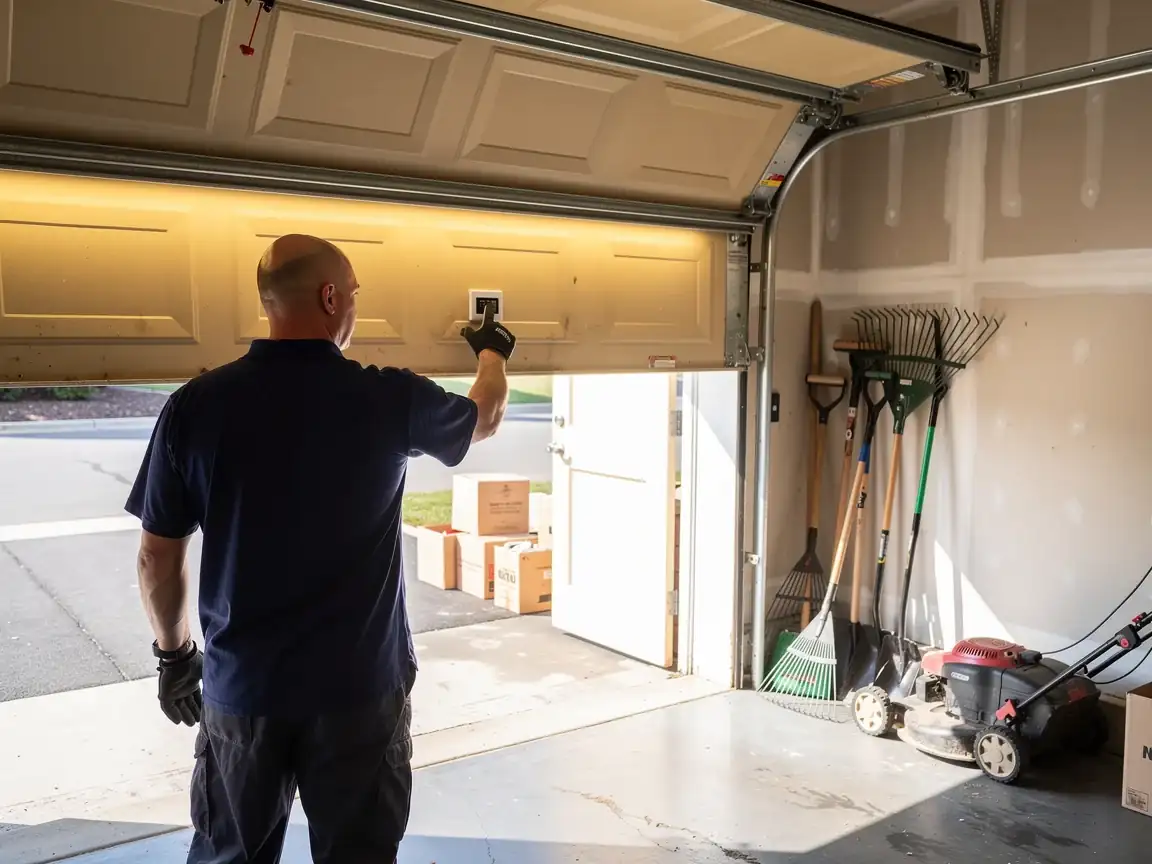
The most common complaint we hear from this area is an opener that runs the motor but the door doesn't move, which usually means the drive gear has stripped - a known wear point on units installed when these houses were new. Second most common: the door reverses partway down for no visible reason, which on an early-90s install is almost always a sensor alignment or wiring issue rather than anything wrong with the door itself. We also hear about openers that work fine most of the year and then act up in the cold months - flashing error codes, a delayed response to the remote - which tracks with how a cold-moderate climate stresses an aging circuit board more than the summer heat does.
The DIY Question
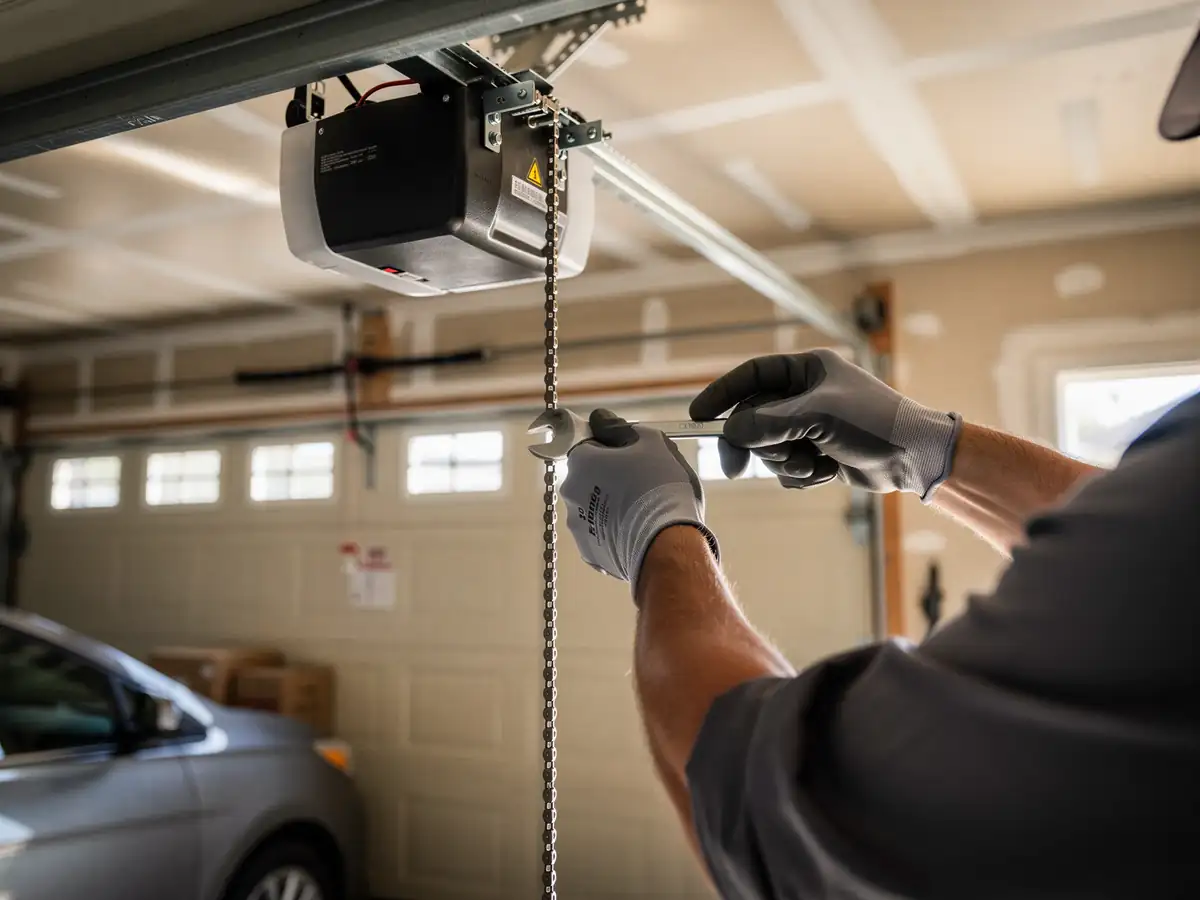
Swapping a remote battery or re-aligning a sensor bracket that's gotten bumped - most homeowners can handle that and don't need to call anyone. Where it gets risky is opening the opener housing itself. The capacitor inside stores a charge even unplugged, and on a unit this old the board is often held in with brittle plastic clips that crack if you don't know the panel layout. If your opener is original to a house from the early 90s, we'd rather you call before you start pulling the cover off than deal with a cracked housing on top of the original problem.