Time on the Job
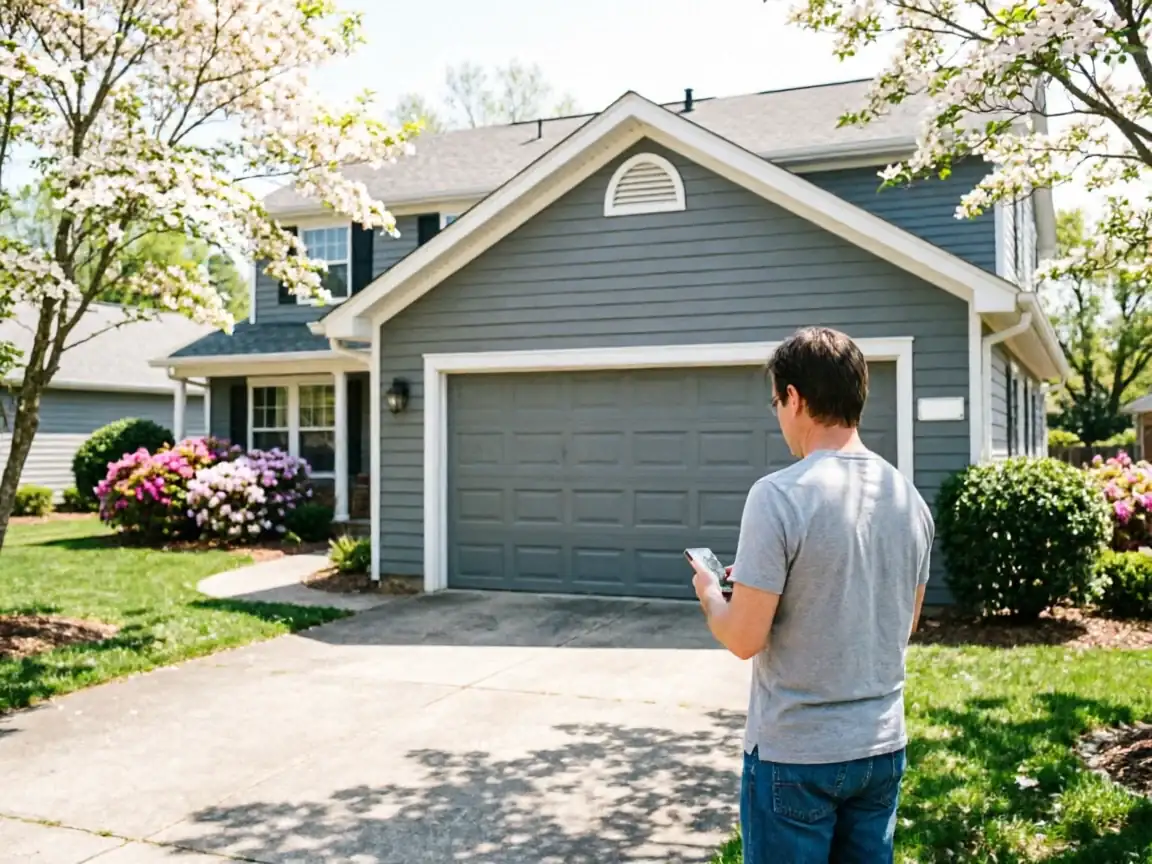
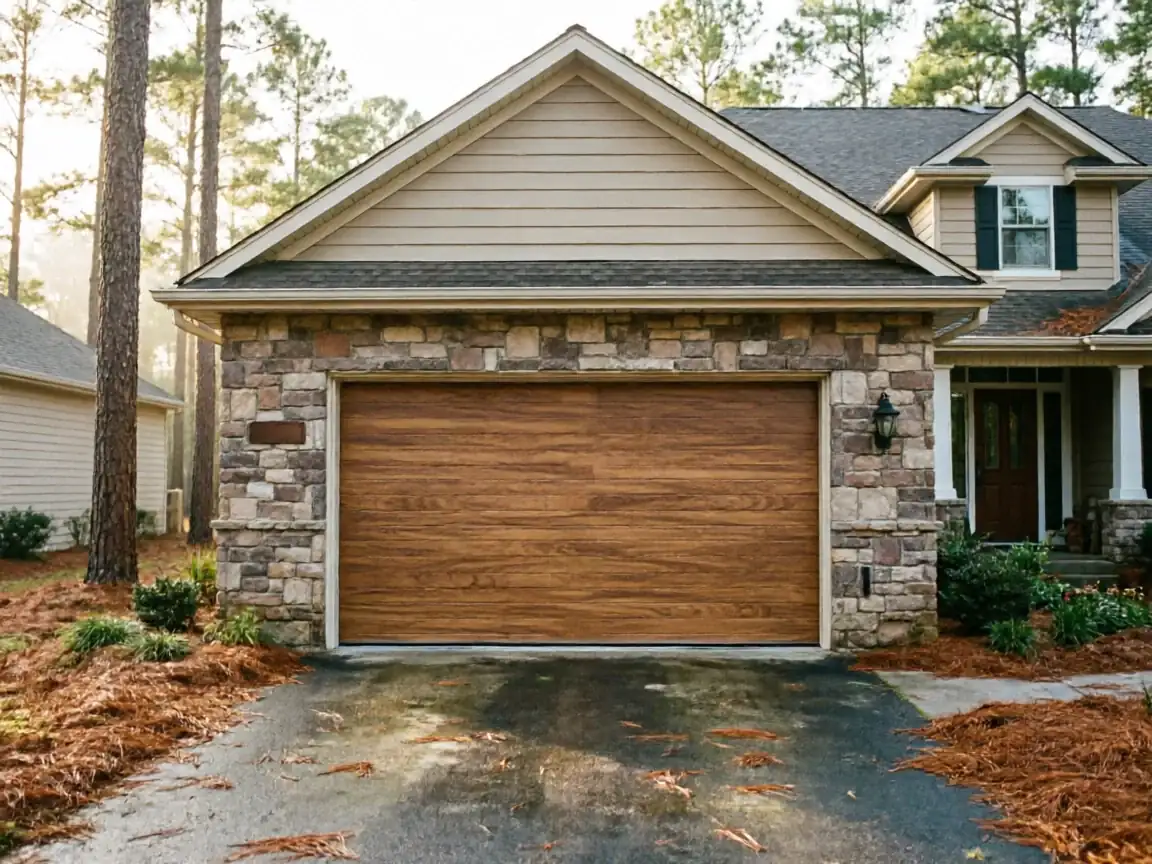
Most houses in Mineral Springs went up around 1991
A touch earlier than the 1993 median for the wider service area we cover. That matters more than it sounds like it should. A door installed when a house was built in 1991 is pushing thirty-four years old, and torsion springs are rated for a set number of open-close cycles, not a set number of years. Two openings a day for three decades runs most springs out of life whether the house looks freshly maintained or not.
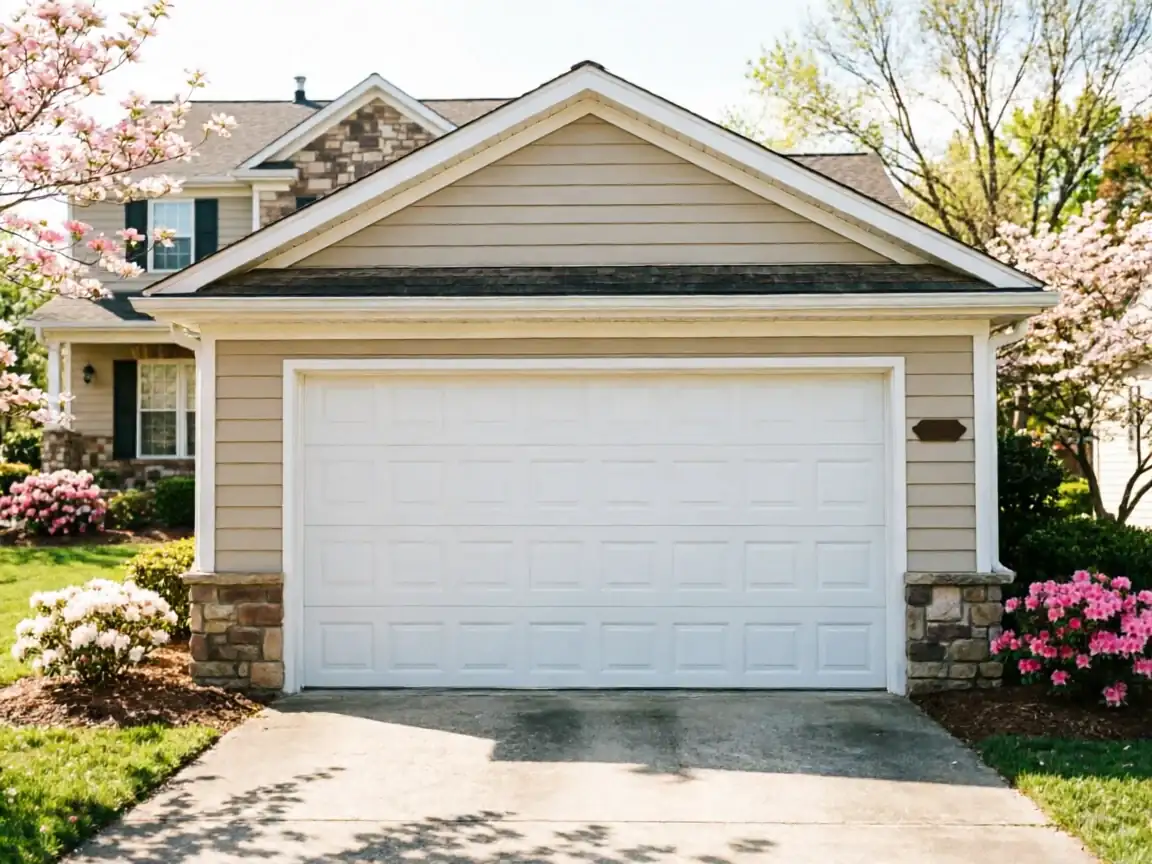
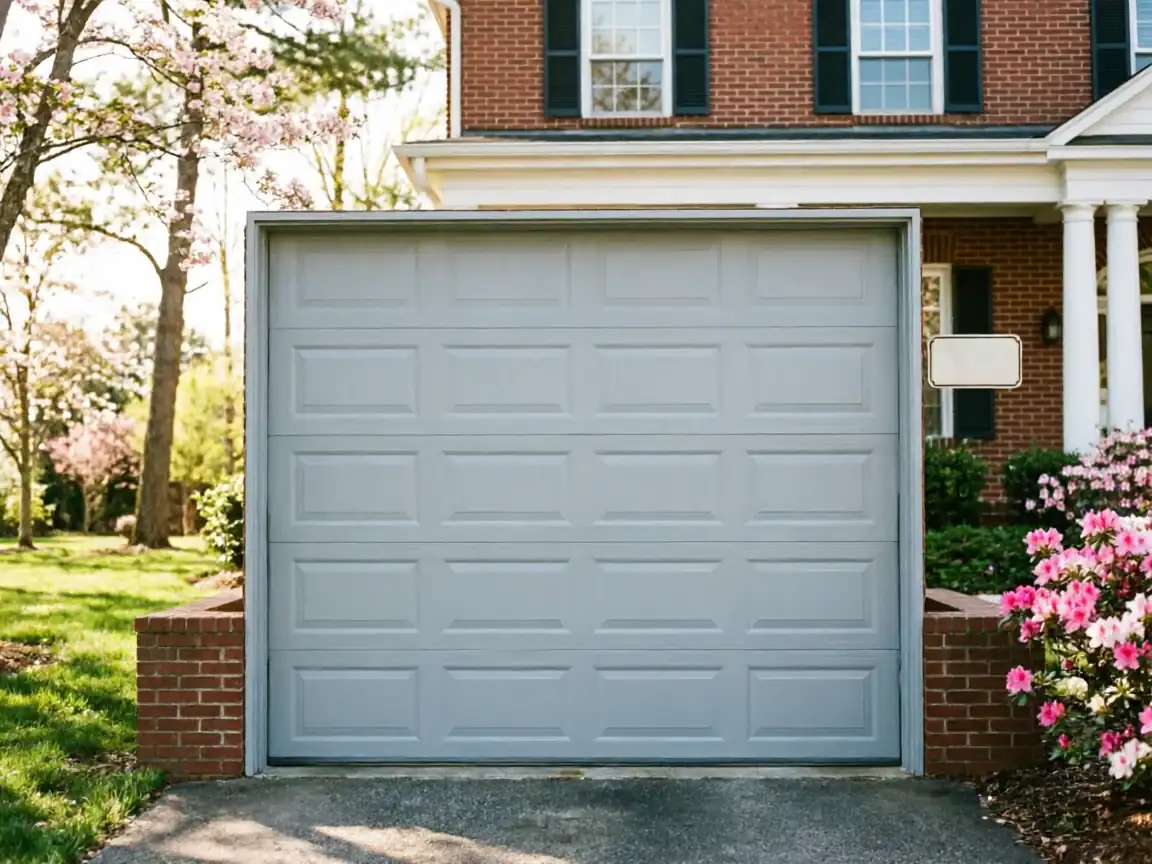
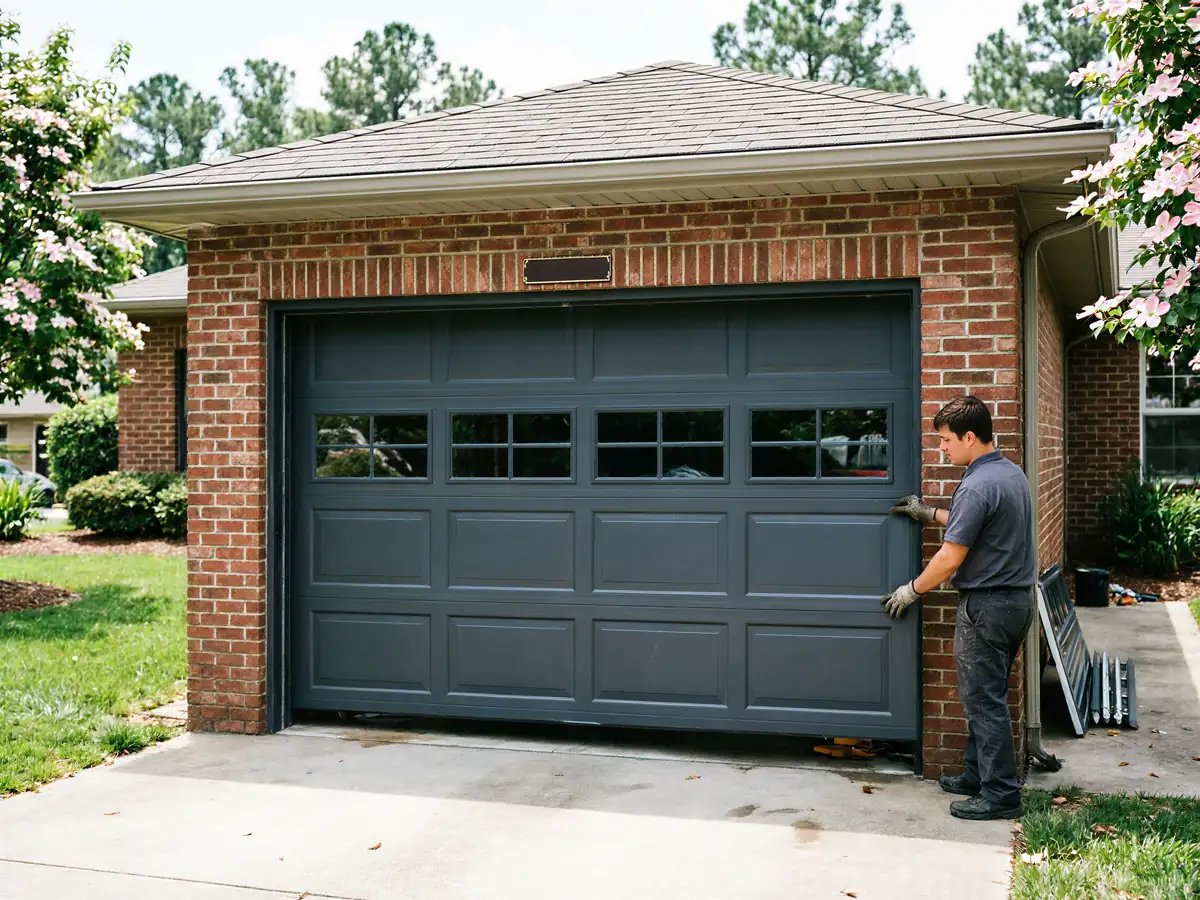
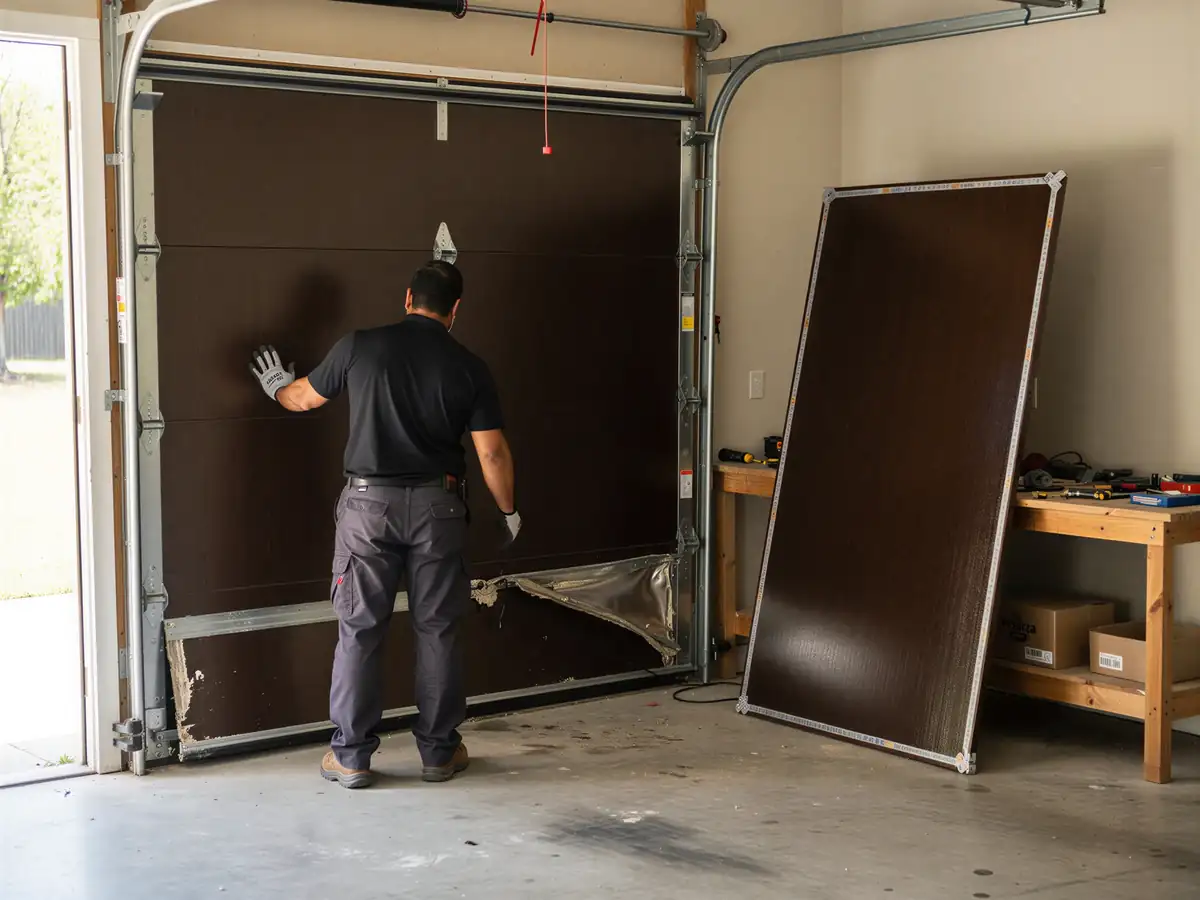
The doors themselves are usually steel sectional units, raised-panel, single-layer steel without foam backing
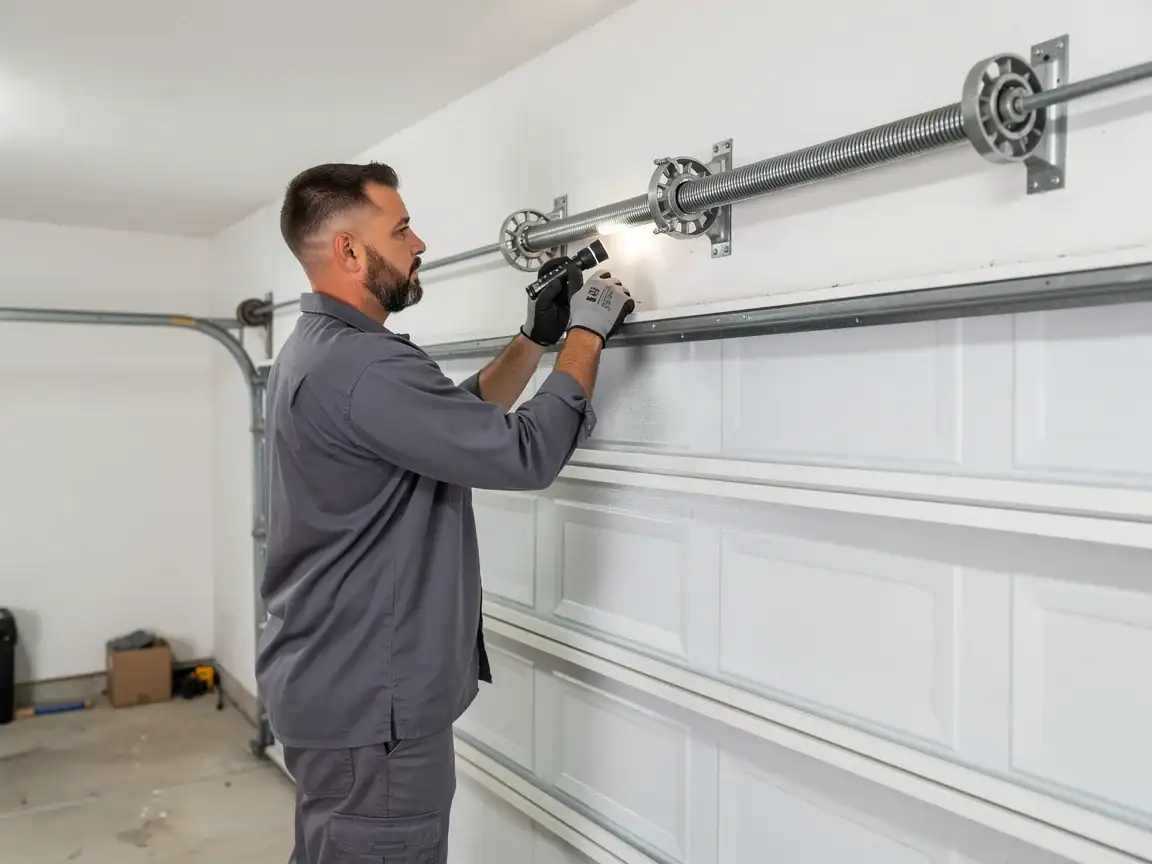
Insulated doors weren't standard builder-grade equipment yet in this stretch of the county. Expect 16x7 double doors on the two-car garages and 9x7 or 8x7 singles, running on galvanized track with a center-mounted torsion shaft rather than the older side-mount extension spring setup from earlier decades.
We're based in Waxhaw, three miles out
Which makes Mineral Springs one of the closer stops on our route. With 1,188 households here against roughly 20,236 across the full territory we serve, it's a smaller pocket of homes, but the housing stock is consistent enough that we see the same handful of failures over and over on these doors.
- 1,188 households
What Causes It Around Here
The region sits in a cold-moderate climate band, which means winter mornings cold enough to stiffen steel and grease, but not cold enough to crack a door outright the way a true northern winter would. On a thirty-plus-year-old door, that daily swing matters. Lubricant that was fine in August gums up by January, rollers bind, and a spring that's already near its cycle limit takes the extra strain of a stiff, cold start every morning.
Age is the bigger factor than weather, though. A 1991-built door has had three decades of expansion and contraction in its steel panels, hinges that have loosened and been re-torqued (or not), and a spring that was likely never replaced. Median household income here runs $88,203, just under the $89,417 figure for the broader area, which tracks with what we see on site: well-kept homes where routine garage door maintenance isn't usually top of the list until something stops working.
The Complications
The complication with doors from this build era is parts matching. A 1991 door isn't old enough to need a full custom retrofit, but it's old enough that the original spring wire size, drum, and track spacing don't always match what's on the shelf today. We measure before we order rather than guess from the house's age alone.
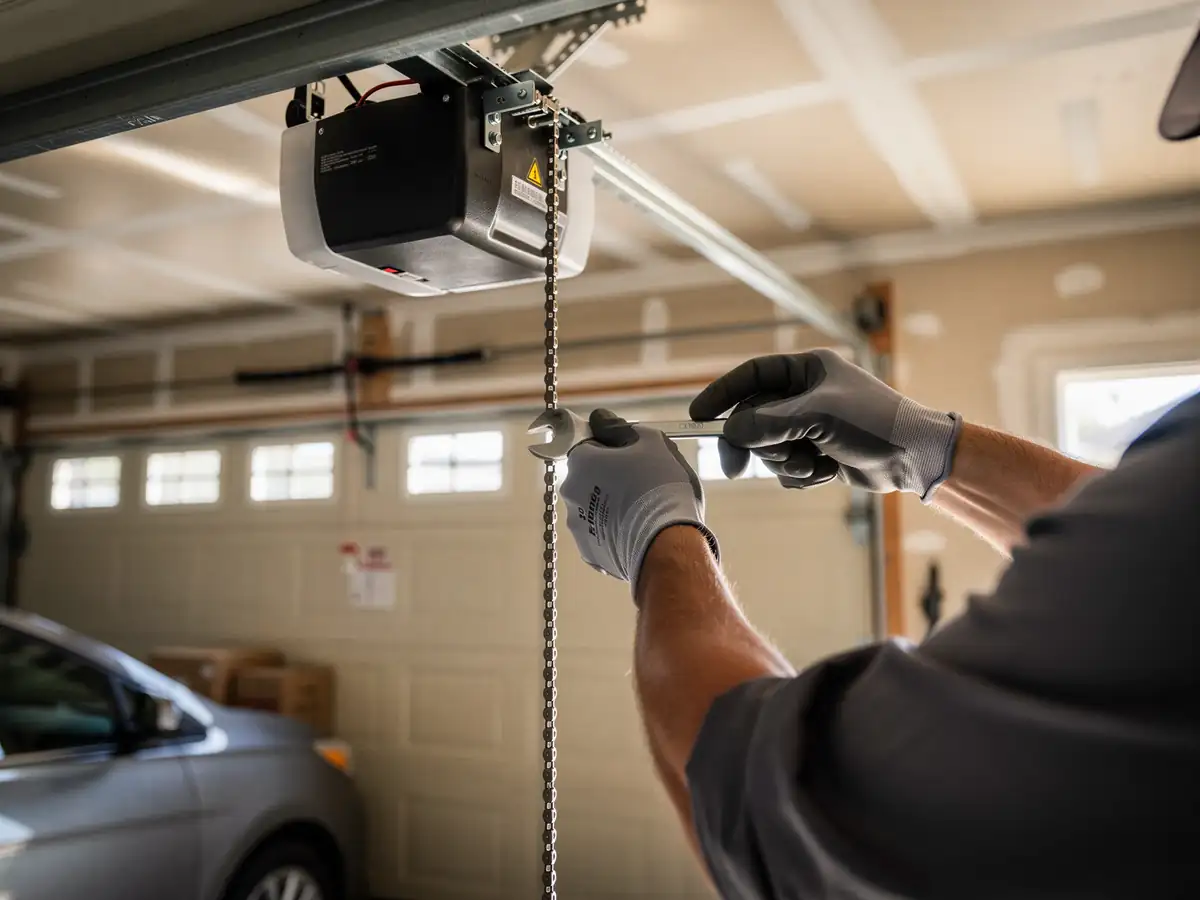
Another wrinkle: many of these doors were never upgraded with safety sensors when photo-eye requirements became standard practice, so an opener swap sometimes means adding sensor brackets and wiring that weren't there originally. It's not a hard fix, just one more thing to account for in the quote rather than something we can price blind over the phone.
What the Fix Involves
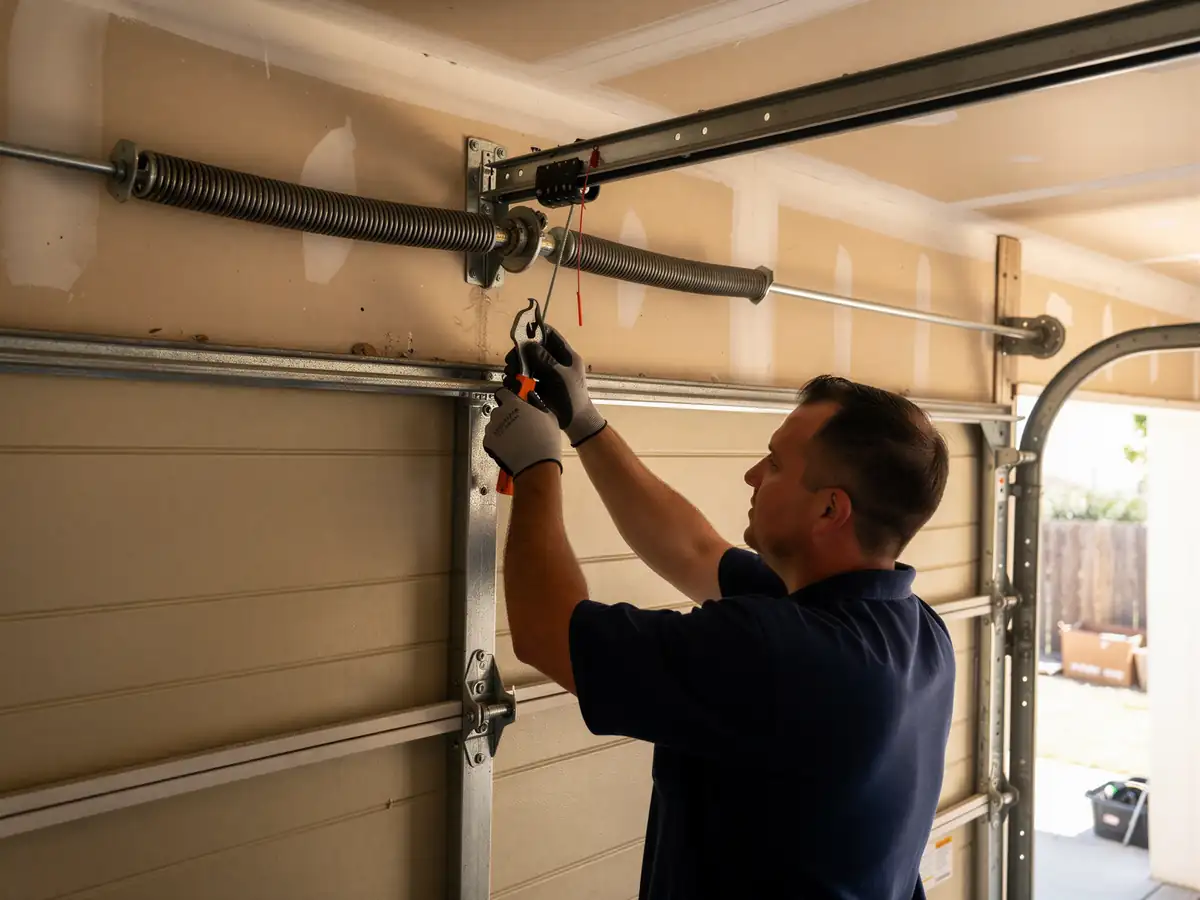
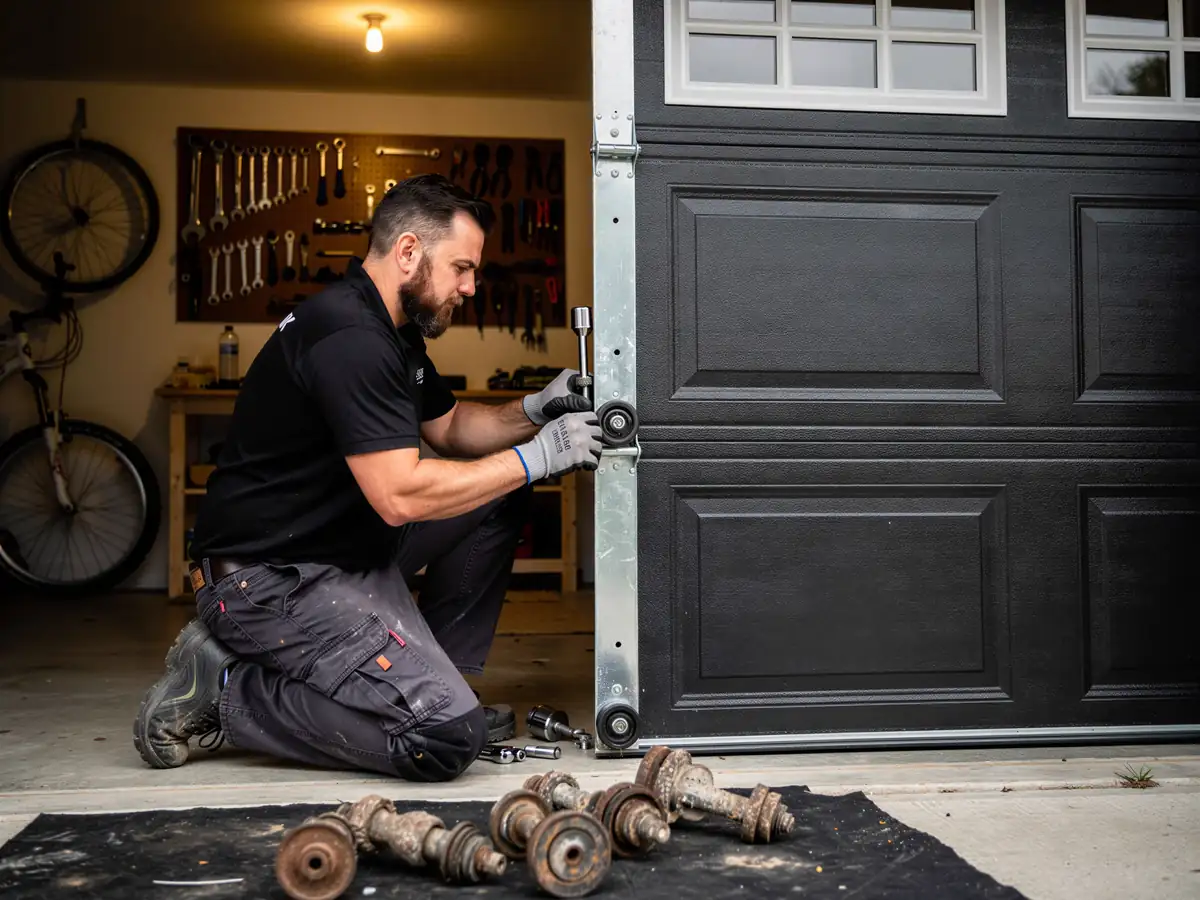
For a worn-out torsion spring, the job is pulling the old spring off the shaft
Matching wire size and wind direction, and setting the new spring with the correct number of turns for the door's weight - get that wrong and the door is either too heavy to lift by hand or slams down with no resistance. On a double door from this era, that's almost always a two-spring system, and we replace both even if only one has broken, since the other is on the same clock.
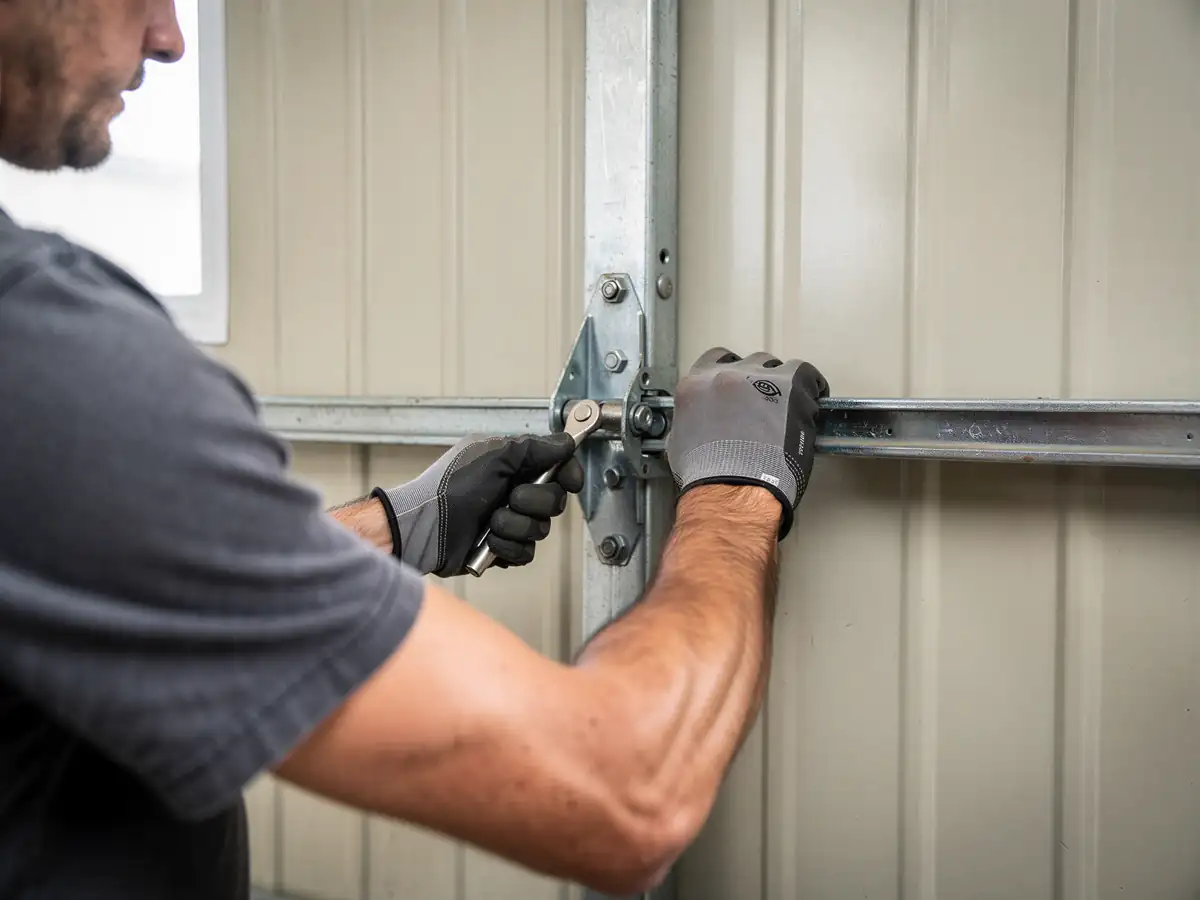
If rollers or hinges are original steel, we're usually swapping those out too
Thirty-plus years of travel wears the roller stems down to where they rattle in the track. Track alignment gets checked at the same time, since a shifted track puts uneven load back on a brand-new spring fast and shortens its life again.
How It Shows Up
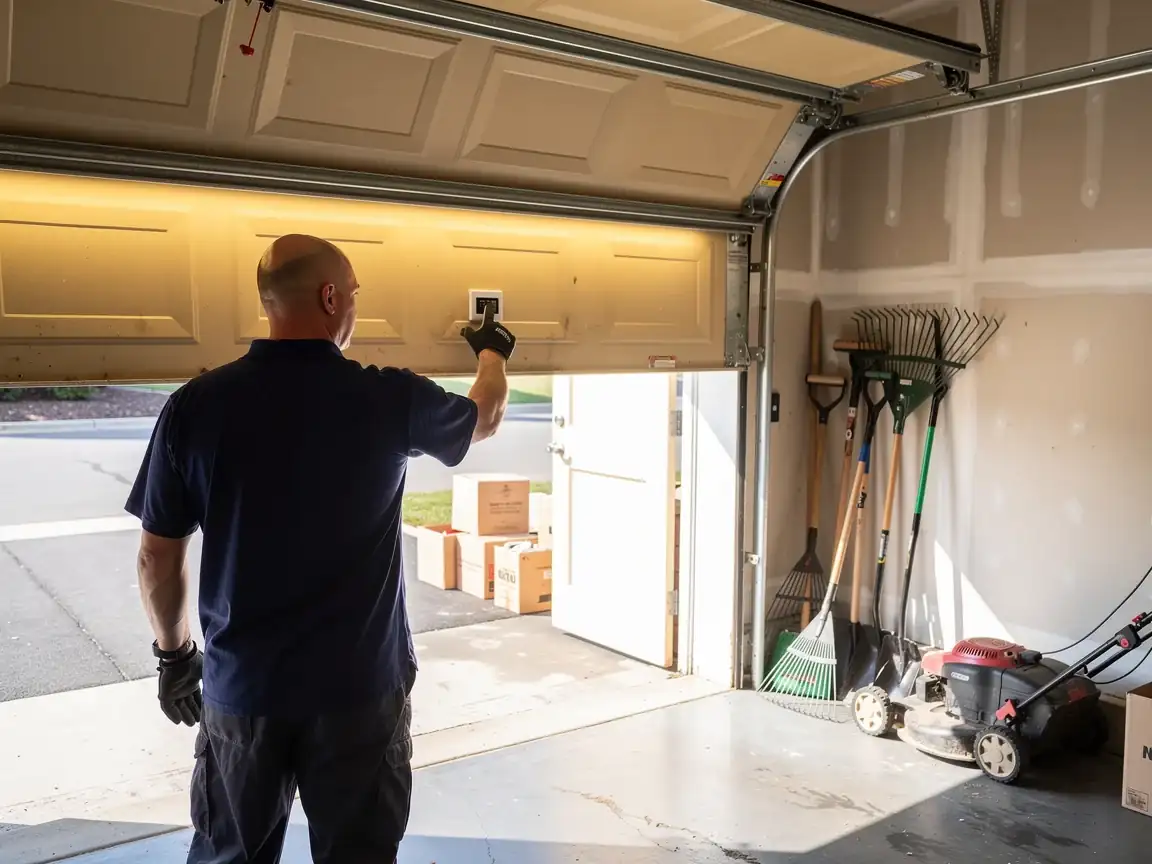
The most common call we get from this stretch is a door that won't budge and a loud bang from the garage beforehand - that's the spring letting go, usually without warning. Short of that, watch for a door that's started closing slower than it opens, a visible gap or stretch in one of the spring coils, or an opener that strains and reverses partway up.
Cables fraying at the bottom bracket is the other pattern we see on doors this age - thin steel strands starting to show at the drum end. Left alone, a frayed cable snaps under load, and a door can come down unevenly or drop hard on one side.
The DIY Question
Torsion springs are wound under several hundred pounds of tension, and we don't recommend homeowners touch them, no matter how old the door or how confident the YouTube video makes it look. The winding bars and clamps matter, and a slip here causes real injury, not just a redo.
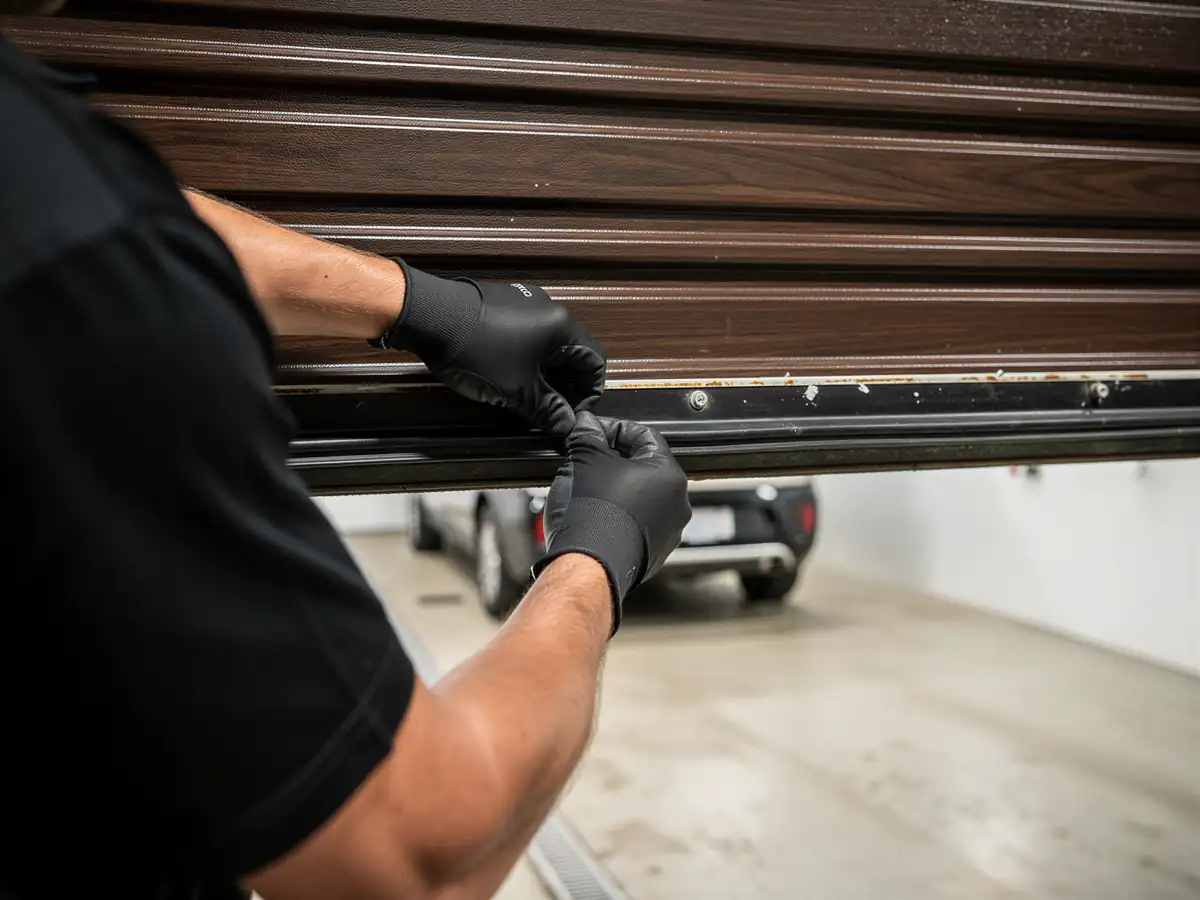
Where DIY makes sense: swapping a worn weatherstrip, tightening visible hardware, or clearing track debris. Where it doesn't: springs, cables, or anything on the torsion shaft itself. One honest limit on our end - parts for a non-standard spring size sometimes take a few days to source, so a same-day fix isn't guaranteed on every door, even a straightforward-looking one.