How It Shows Up
A torsion spring on a door from this era usually doesn't snap without warning - it gives you a loud bang from the garage, often when nobody's touched the door in hours, as the wound coil lets go on its own. After that, the door gets heavy fast. If you've got an opener, it'll strain, reverse, or stop partway and refuse to finish the cycle. Lifting it by hand, you'll feel the full weight of the door with nothing balancing it, which on a standard sectional door is more than most people expect. Sometimes it's gradual instead: the door starts closing crooked, one side dropping faster than the other, which usually means one spring on a two-spring setup has already failed and the other is carrying the whole load. Either way, the door still being able to open isn't a sign it's fine - it's a sign the spring hasn't fully let go yet, and running it in that state wears out the opener trying to compensate.
Getting It Booked In
There's no depot in Unionville - every job here is dispatched from Waxhaw, so booking means putting a time on the calendar rather than catching a truck that happens to be nearby. Jobs out this far tend to get grouped with other far-side calls - Wingate, Fairview, places in that same stretch - rather than squeezed in between closer stops, so the scheduling window is usually a defined slot rather than an open-ended wait. When you call, having the door's approximate age and whether it's a single or double door helps - given the 1974-2005 build range out here, that narrows down spring size before anyone arrives. We'll ask what the door did right before it failed, since a sudden bang versus a slow sag points to different repairs.
What the Fix Involves
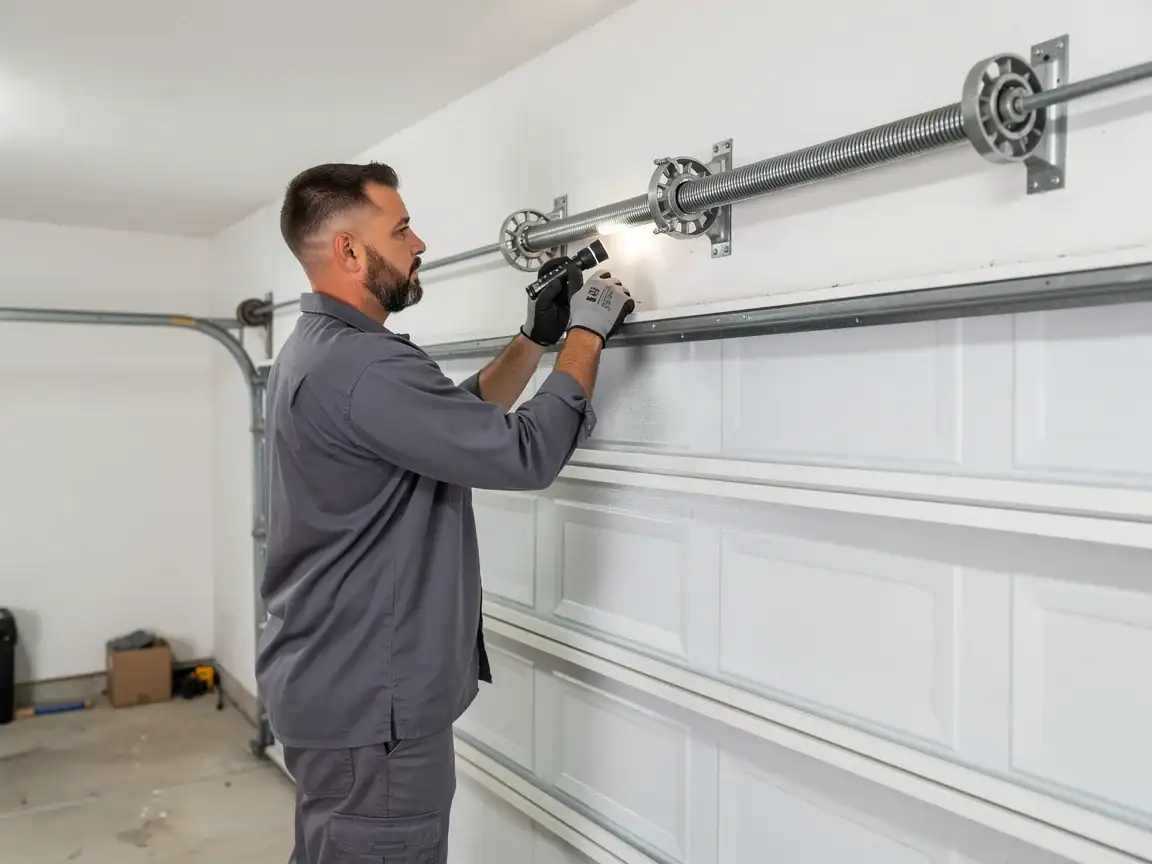
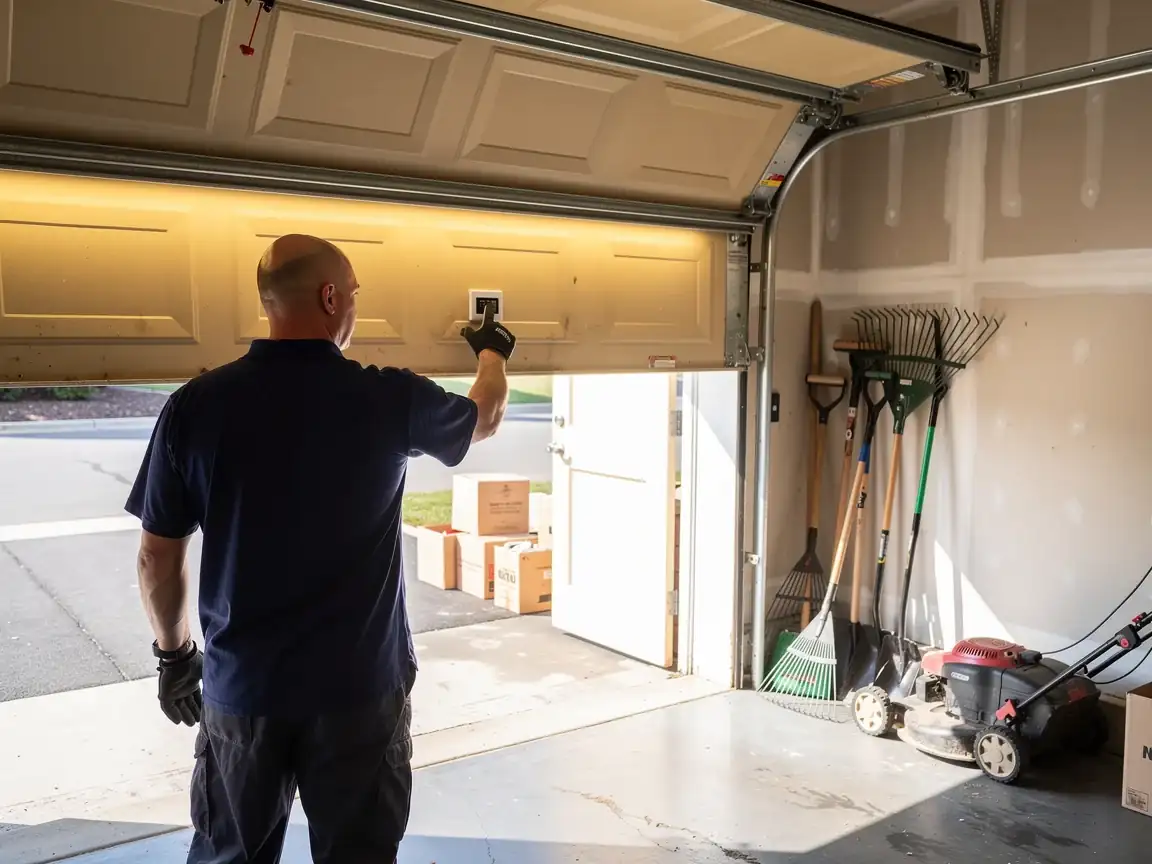
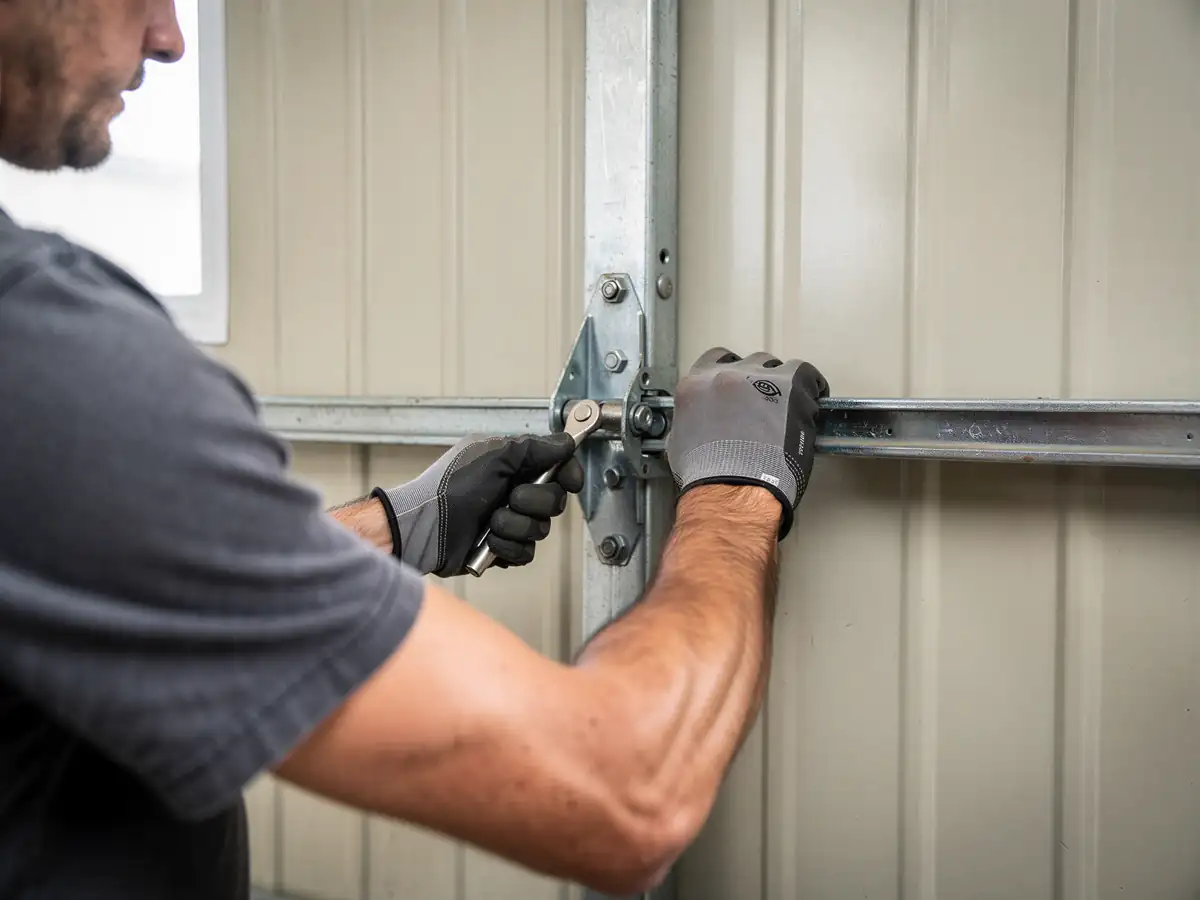
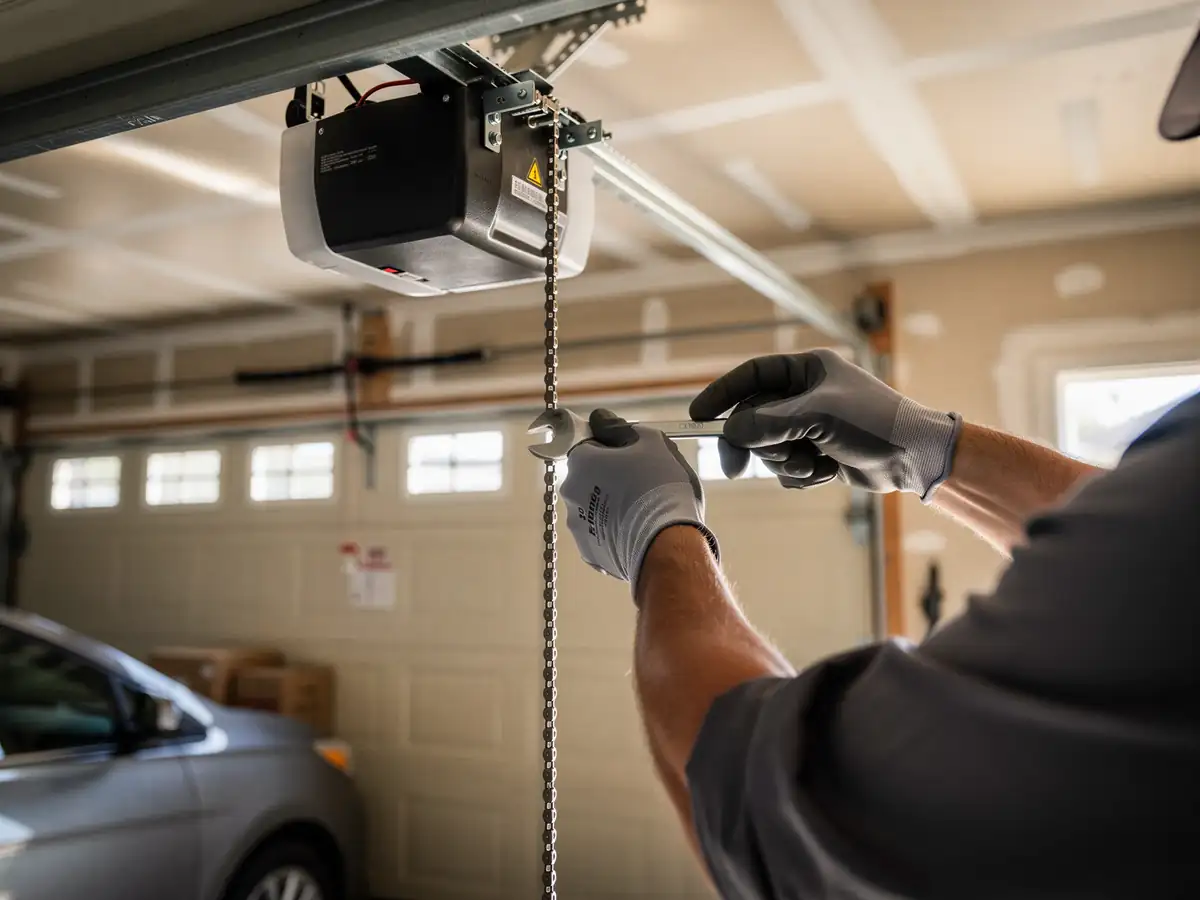
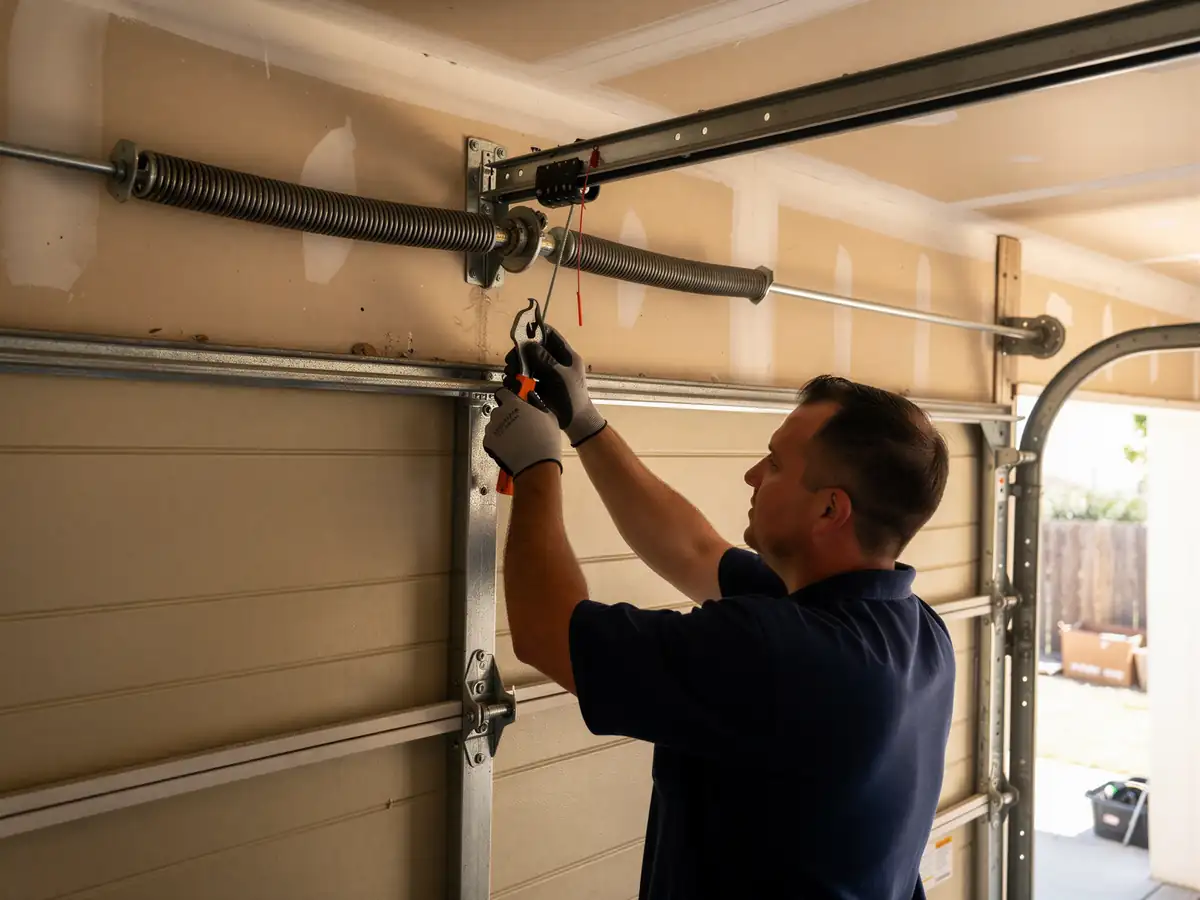
The actual repair is mechanical, not electrical: the old spring gets unwound and removed with the door secured, the new spring - matched to the door's weight and the drum size on the torsion bar - goes on, and it's wound to the manufacturer's turn count for that door height. We check the cables and end bearings at the same time, since on a door this age they're usually original and worth inspecting even if they're not the reason for the call. Local winters here fall into the COLD moderate band, which doesn't demand anything exotic in the hardware, but cold does stiffen old lubricant on springs that haven't been serviced, which is part of why failures tend to cluster in the colder months. After the spring's on, we hand-test the balance - the door should hold at waist height on its own - before reconnecting the opener and running it through a full cycle.