Stocked Parts
Unionville's 2,431 households sit mostly in homes built between 1974 and 2005
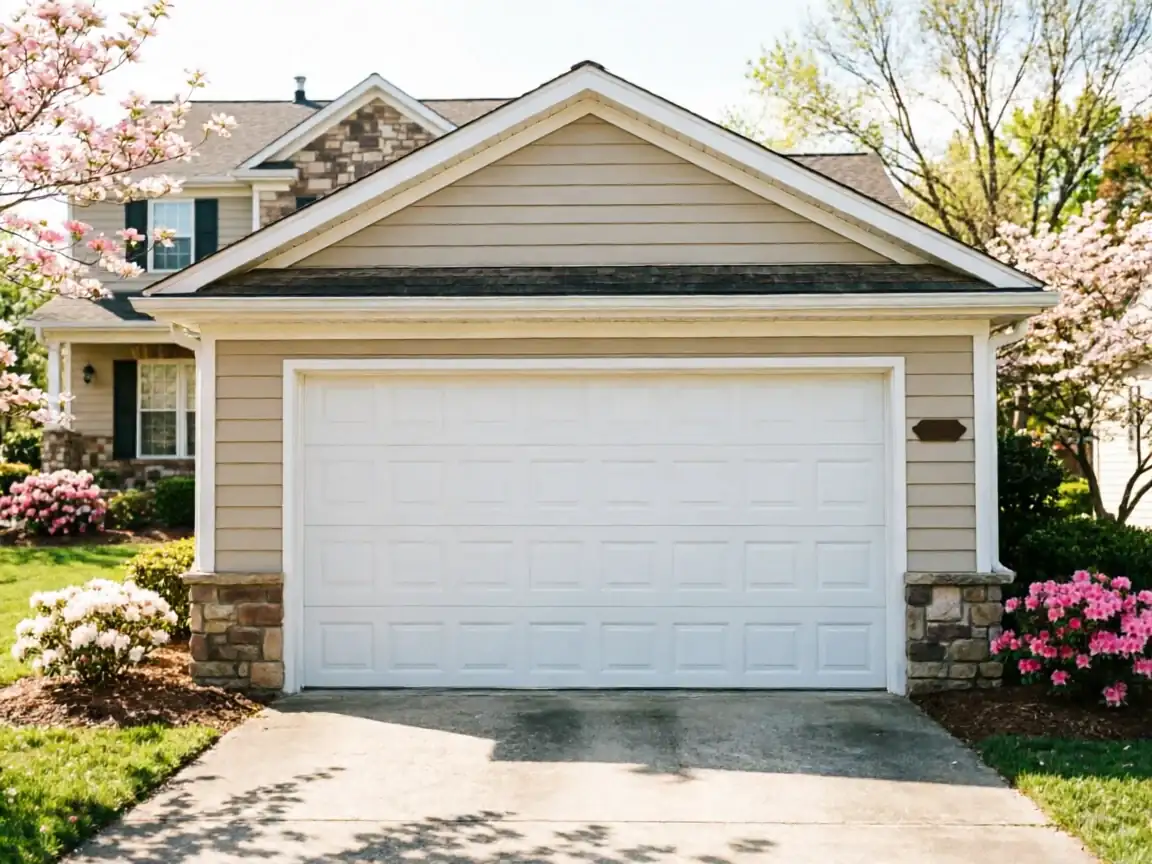
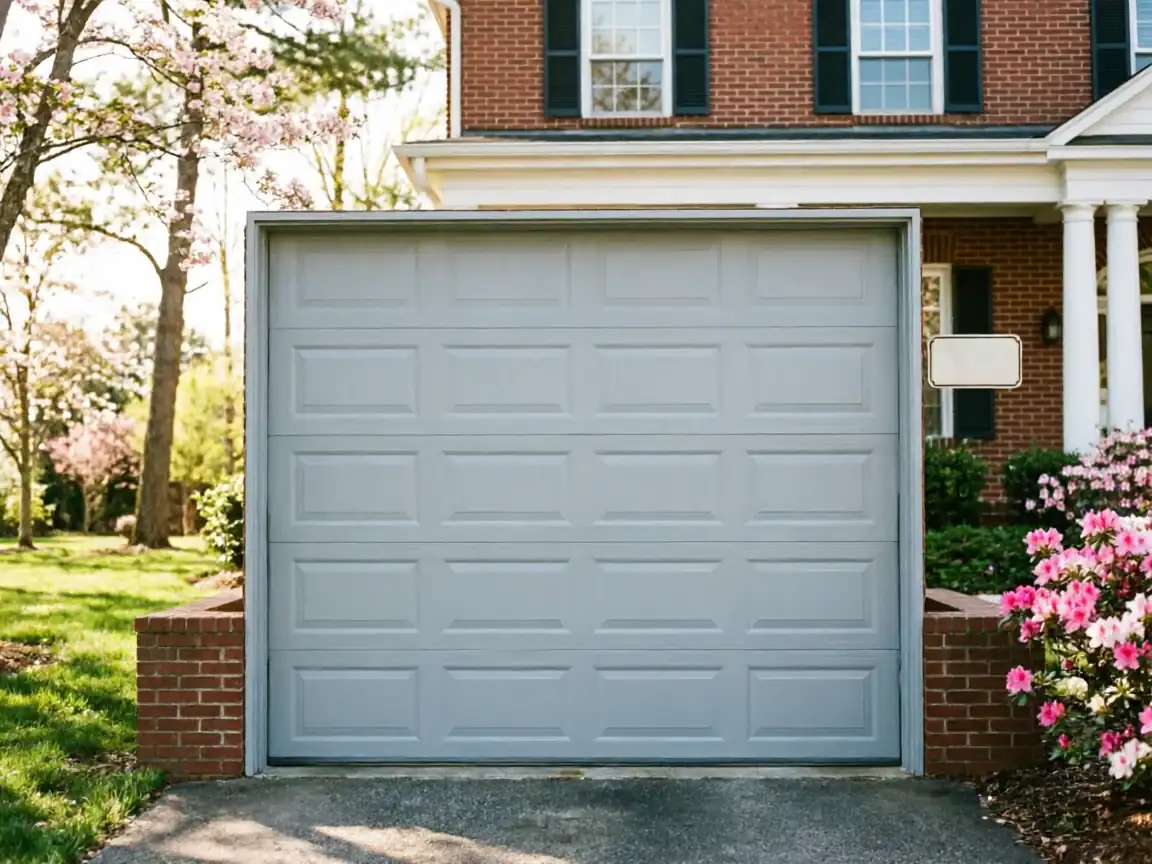
With the median landing at 1993. That puts a specific kind of door behind most openings here: roll-formed steel sectional, raised-panel face, little or no foam backing because insulation wasn't standard on builder-grade doors in that window. We keep common panel heights for that era on the truck. What we don't always have ready is the exact profile from a particular subdivision's build run - manufacturers retooled their embossing dies more than once since 1993, so a bottom section that looks identical from the driveway can be a different die entirely once you measure the rib spacing. When that happens, we confirm the match from photos before we drive out, rather than guess and come back twice.
- 2,431 households
That's the honest limit here
We don't stock every discontinued profile, and a full-width panel for a 16x7 double sometimes means a short order wait rather than a same-visit swap.
How It Shows Up
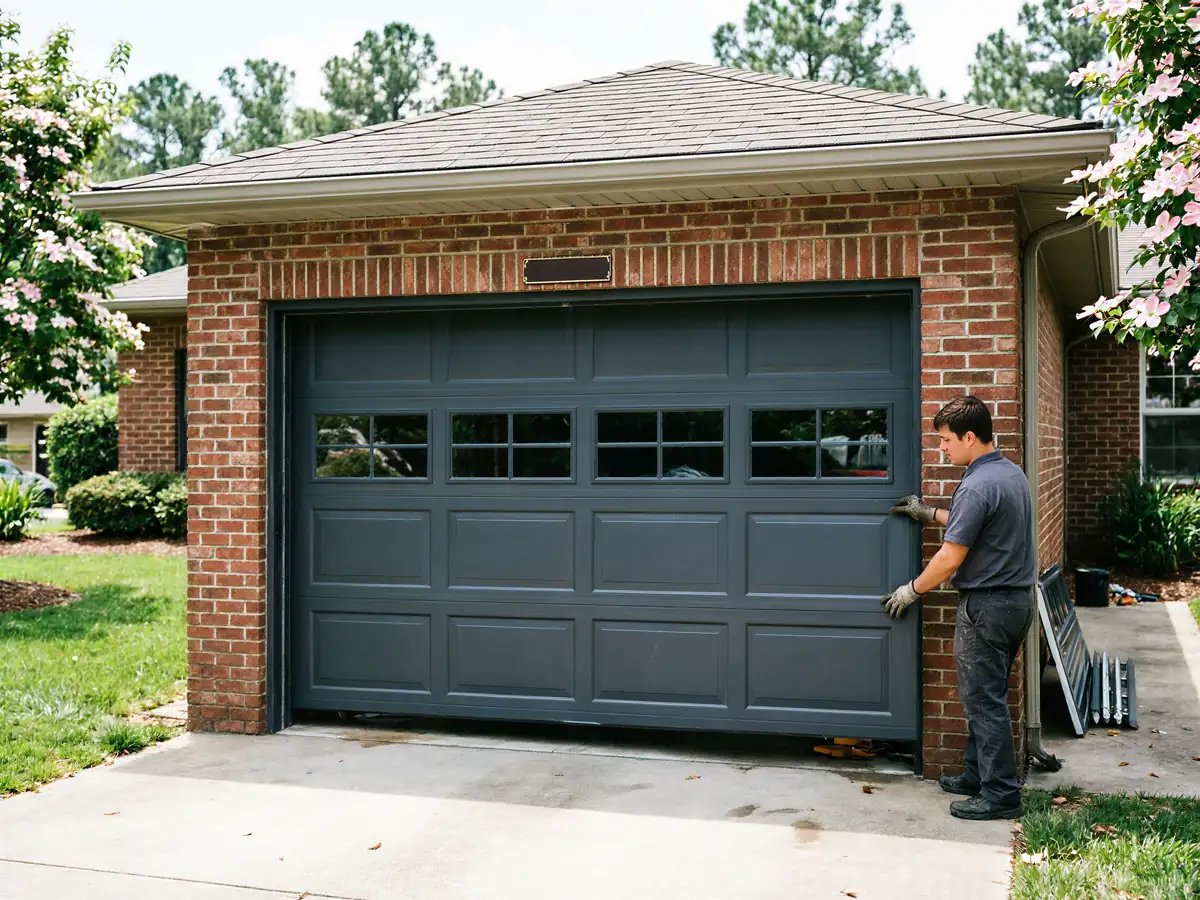
The most common failure on a 1993-vintage steel door is a cracked or bowed bottom section - the panel that takes the brunt of mower impacts, curb splash, and the cold-weather contraction this region gets. Steel panels from that build era shrink and swell with temperature swings more than today's thicker-gauge doors, and the stress shows up first around the bottom hinge screws, where small hairline splits start and spread.
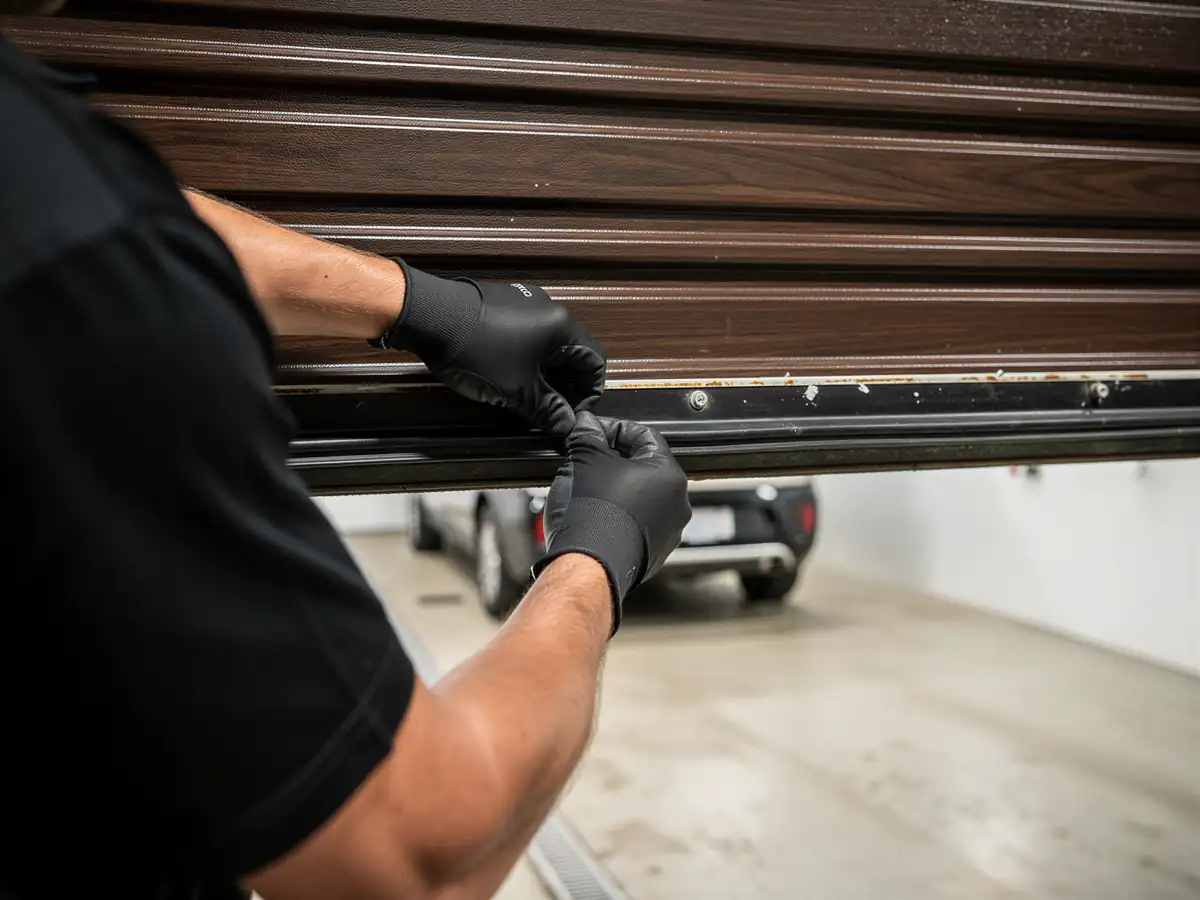
Rust is the second pattern, usually along the bottom edge where moisture sits against the steel longest. On an unisulated door from the early 90s there's no foam core to slow the corrosion once the paint layer is compromised, so a small rust spot can go from cosmetic to structural faster than owners expect. Dented panels from a backed-into door are more straightforward - the panel is bent, the rest of the door usually still tracks fine, and it's a clean single-section swap rather than something that touches the spring or opener.
Getting It Booked In
We run this job out of Waxhaw, and Unionville sits about 16 miles out, farther than some of the other towns we cover. That distance is the reason we ask for photos of the damaged section and, if you have it, the door's model sticker before we schedule. Matching the panel profile and color ahead of time means the trip covers the job in one visit instead of a measuring trip followed by a second visit once the part arrives.
If the section needed is a common height we're already carrying, booking is simple. If it's a less common profile tied to a specific subdivision's original build run, we're upfront that the part has to come in first - we'd rather tell you that on the phone than have you wait at home for a truck that's missing the one piece it needs.
Time on the Job
Swapping one panel section is a fraction of the work a full door replacement is
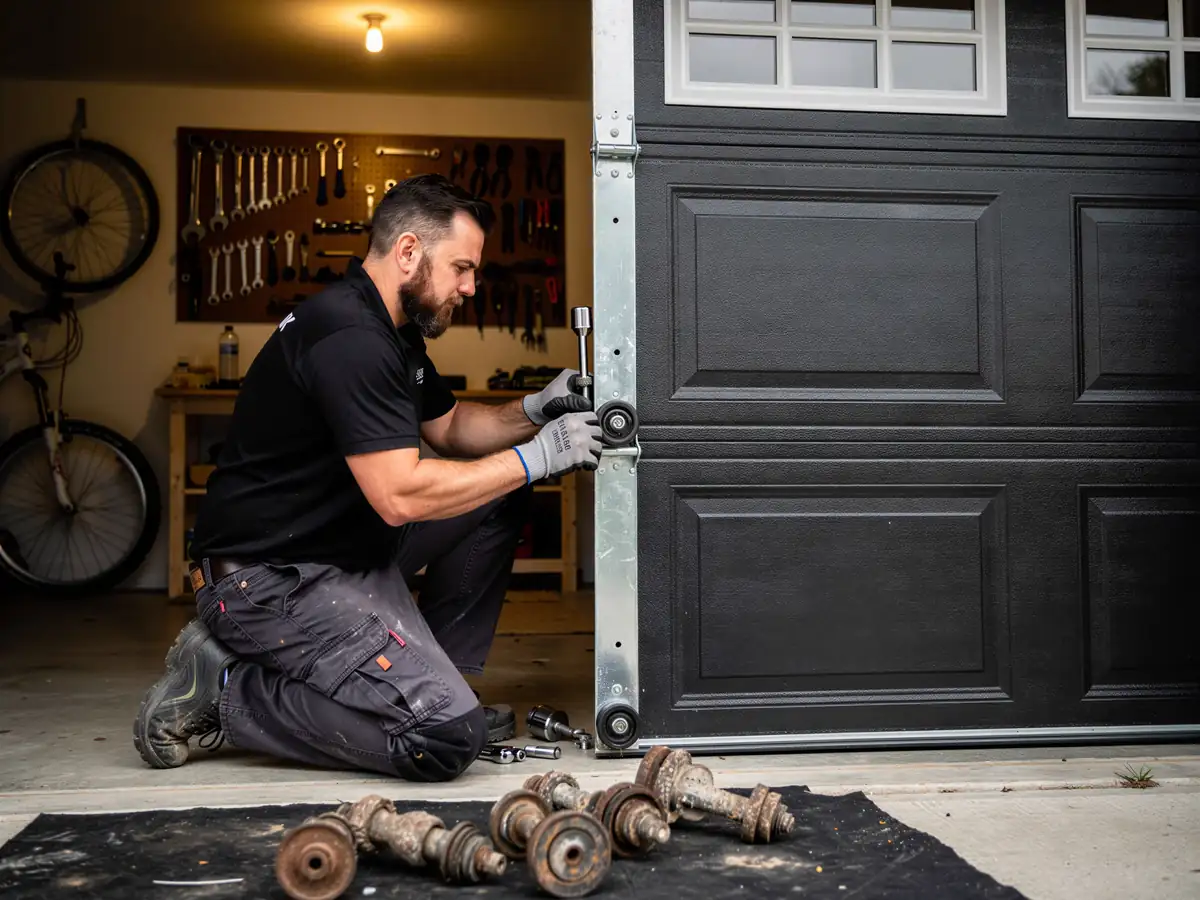
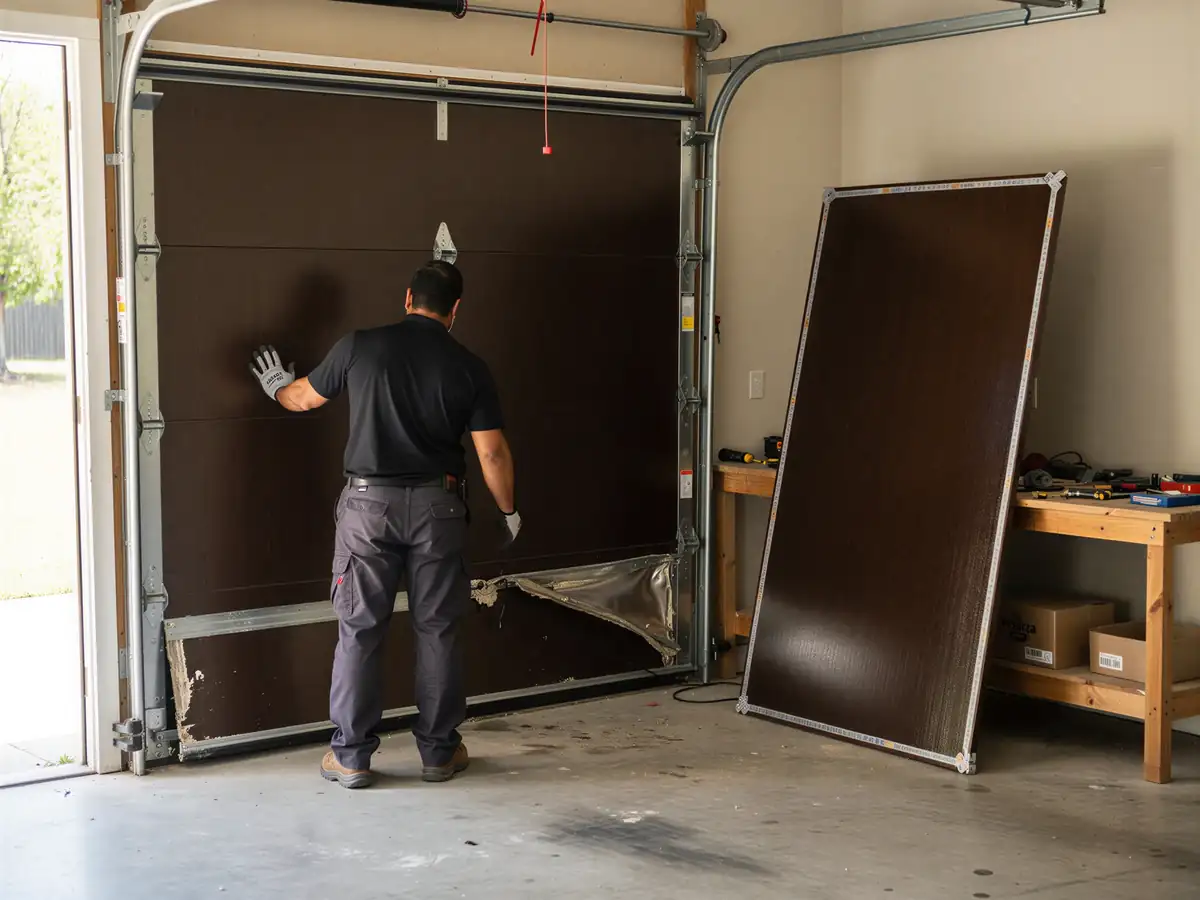
The door comes off its rollers one section at a time, the damaged piece comes out, the new one goes in, and the hinges and rollers transfer across rather than getting replaced outright unless they're worn. Most of the job time on a single-section swap goes into getting the alignment right afterward - a mismatched panel height, even by a little, throws off how the door rides in the track.
At Unionville's median household income of $92,009
We see owners weigh a straightforward panel swap against a fuller refresh more than in some lower-income areas we cover - if more than one section on a 1993-era door has failed, or the door's worn in multiple places, replacing the whole door can cost less over time than patching section by section.
- $92,009 median household income
What the Fix Involves
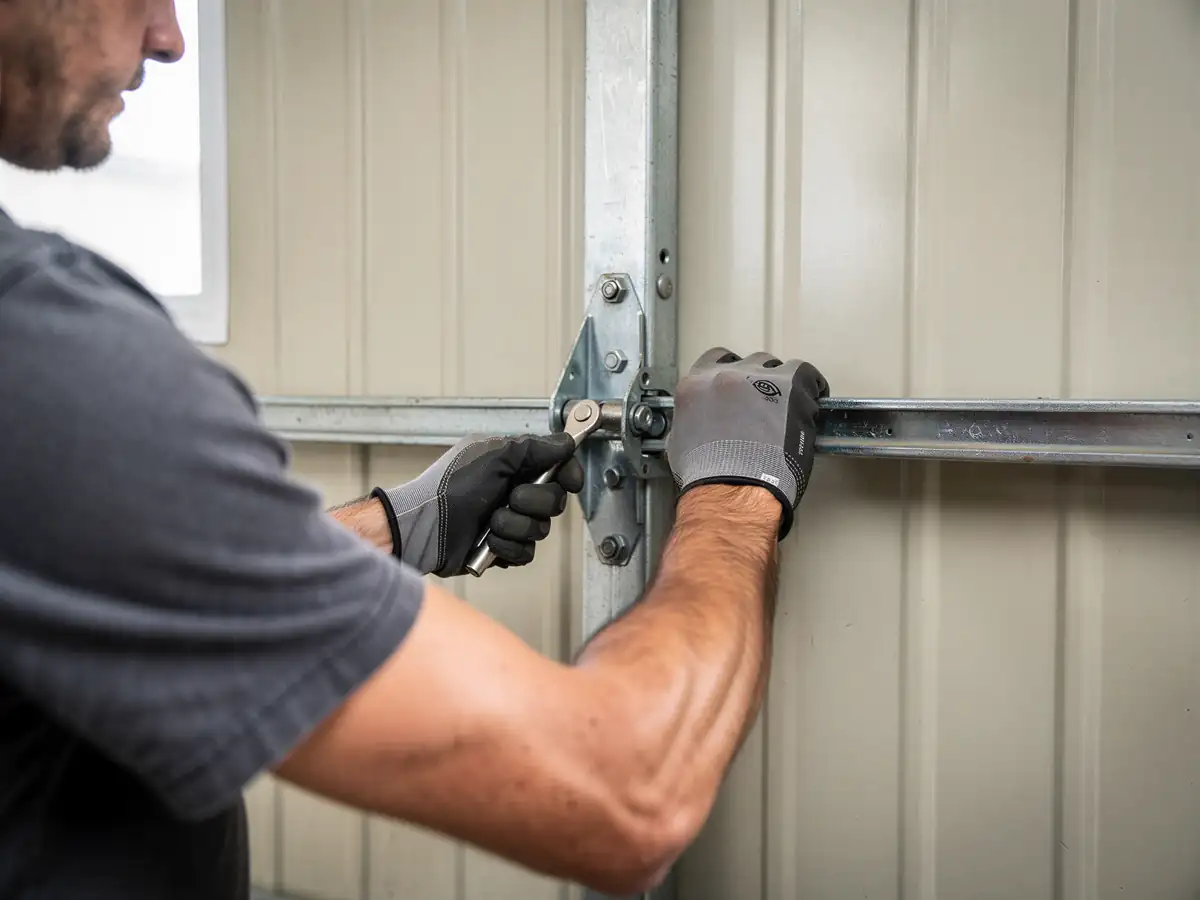
Once the right section is on hand, the door comes down off its track far enough to isolate the damaged panel without pulling the whole assembly apart. Hinges, rollers, and end hardware from the old section move over to the new one rather than getting swapped wholesale, since that hardware usually outlasts the steel it's bolted to. The new section goes in, gets reconnected to the track, and the door gets run through a full open-close cycle to check it tracks straight and doesn't bind.
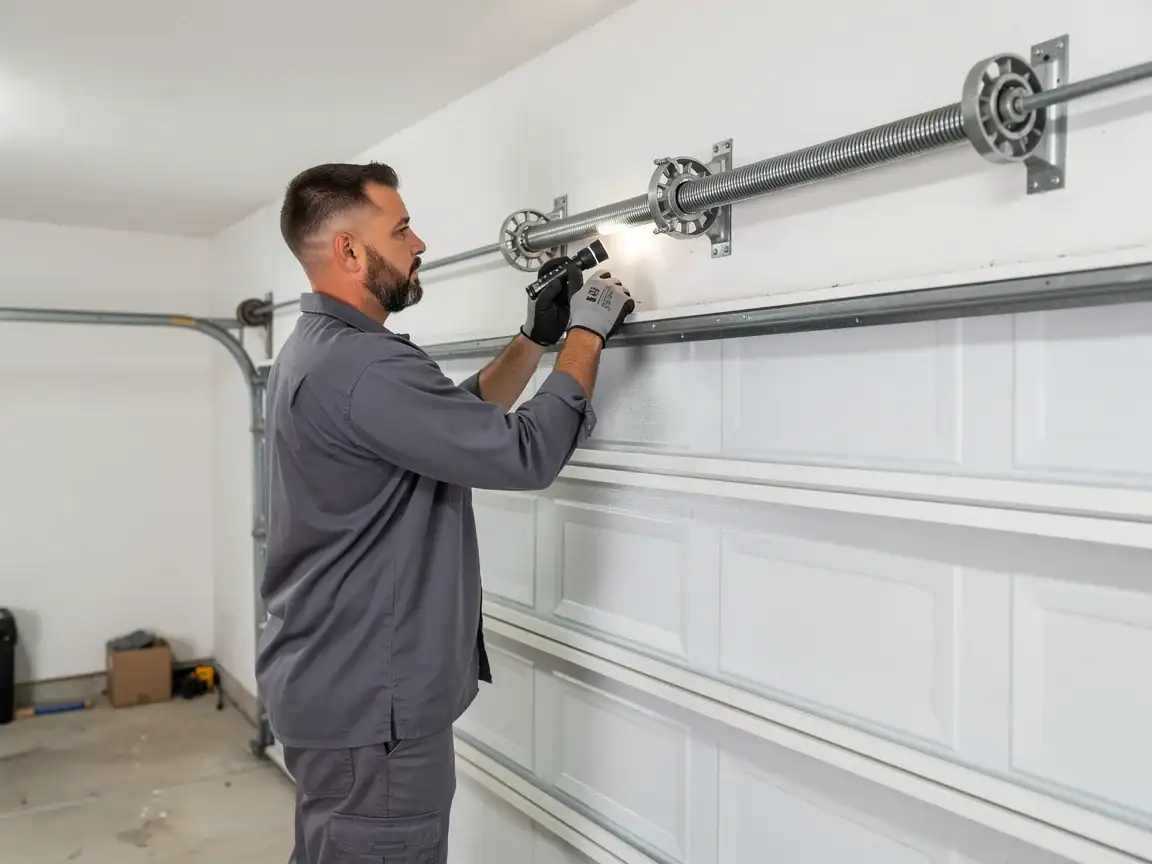
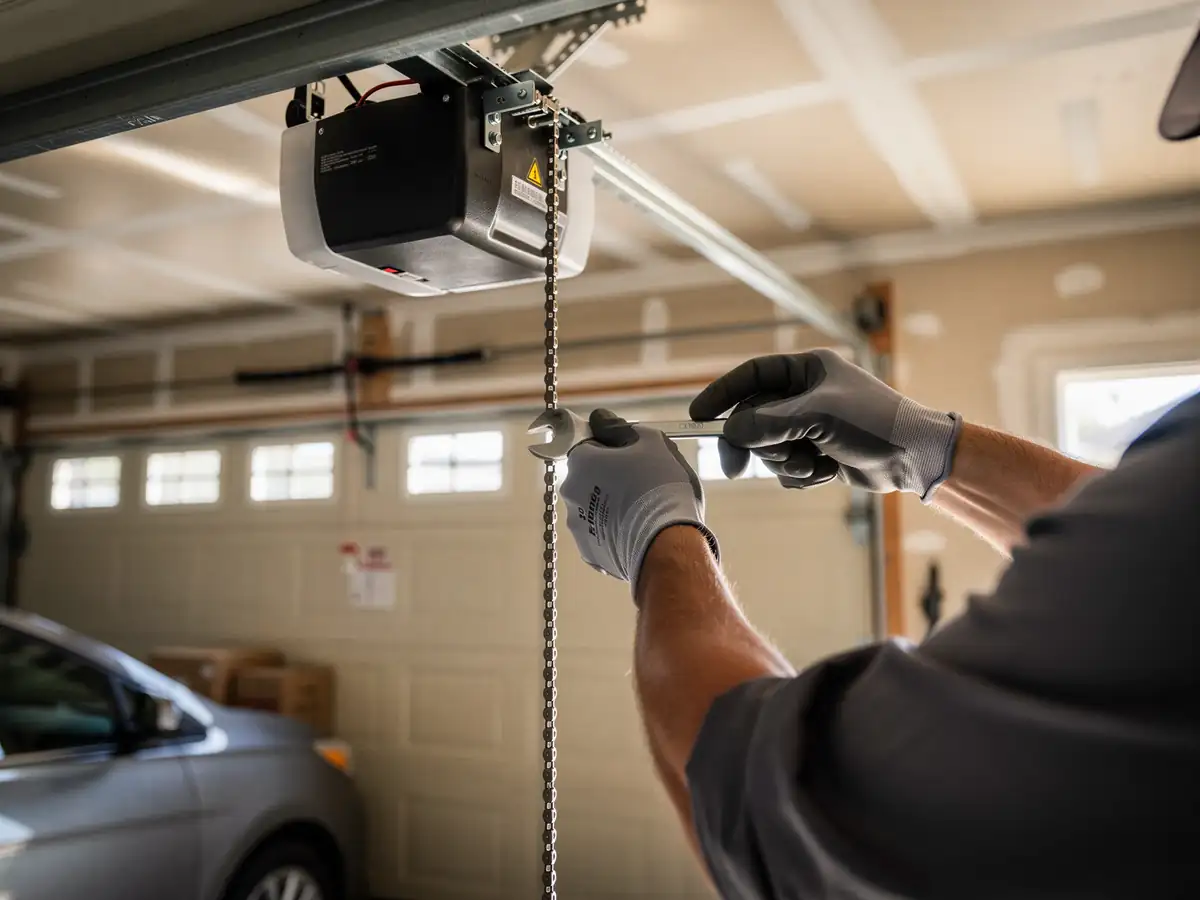
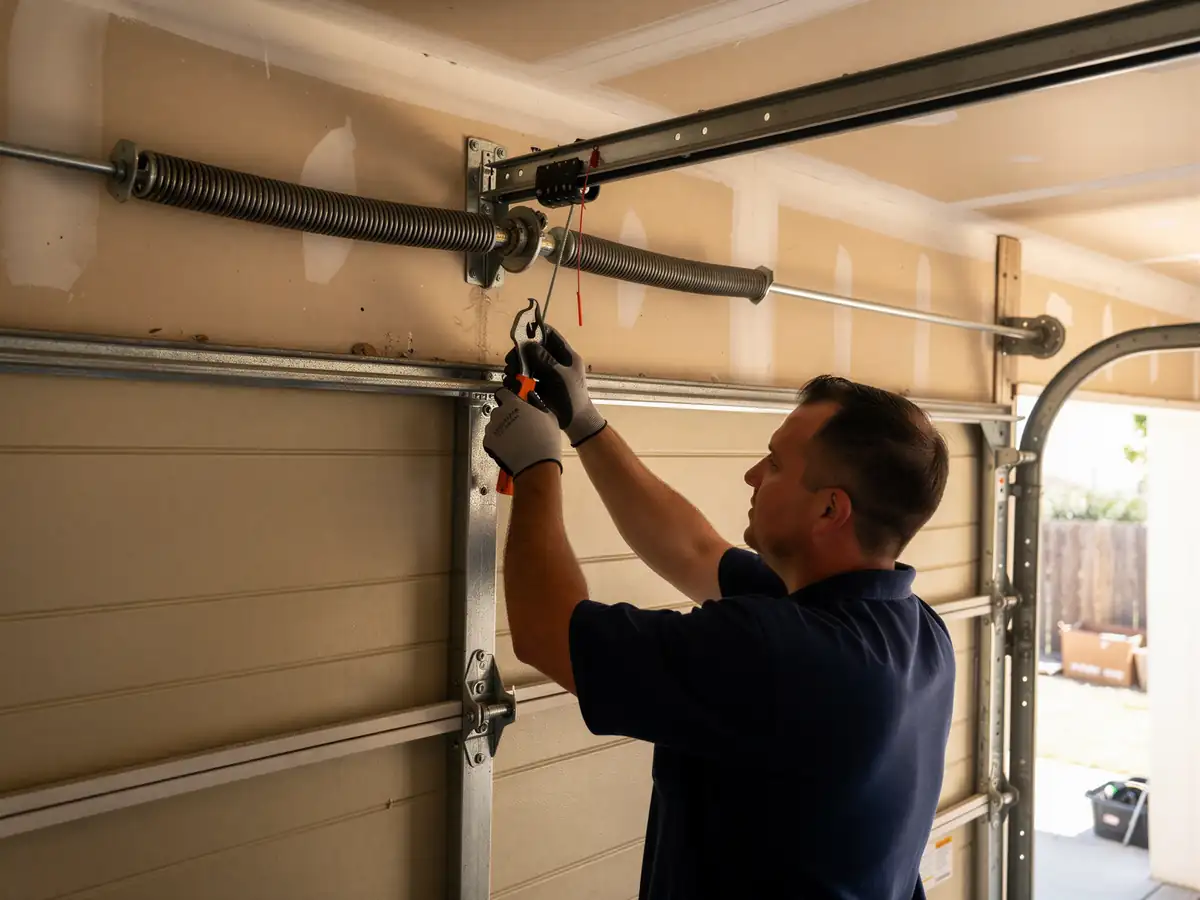
On a 1993-era builder-grade door, the last step is often a spring check - after a panel swap, the door's weight balance can shift slightly, and a torsion spring sized for the old configuration can end up working harder than it should. We check that before we call the job done rather than leave it to show up as a second call later.