What the Fix Involves
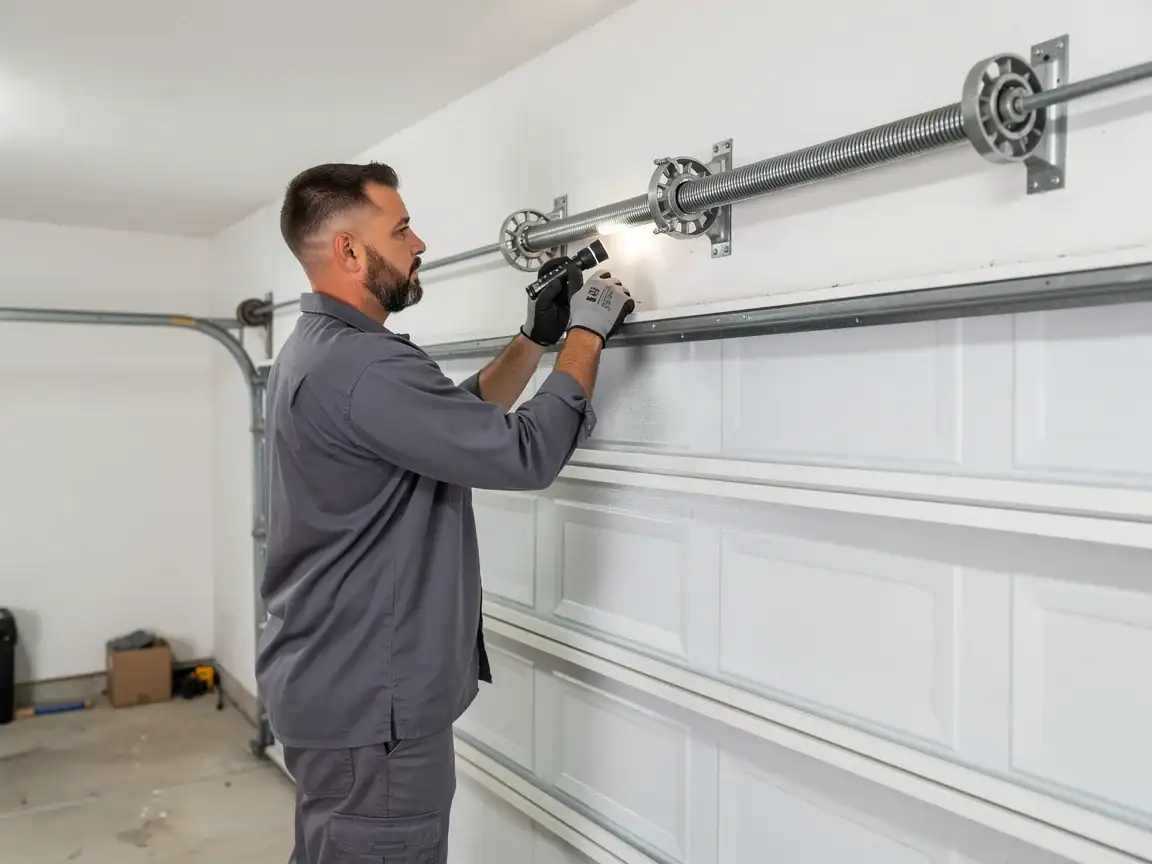
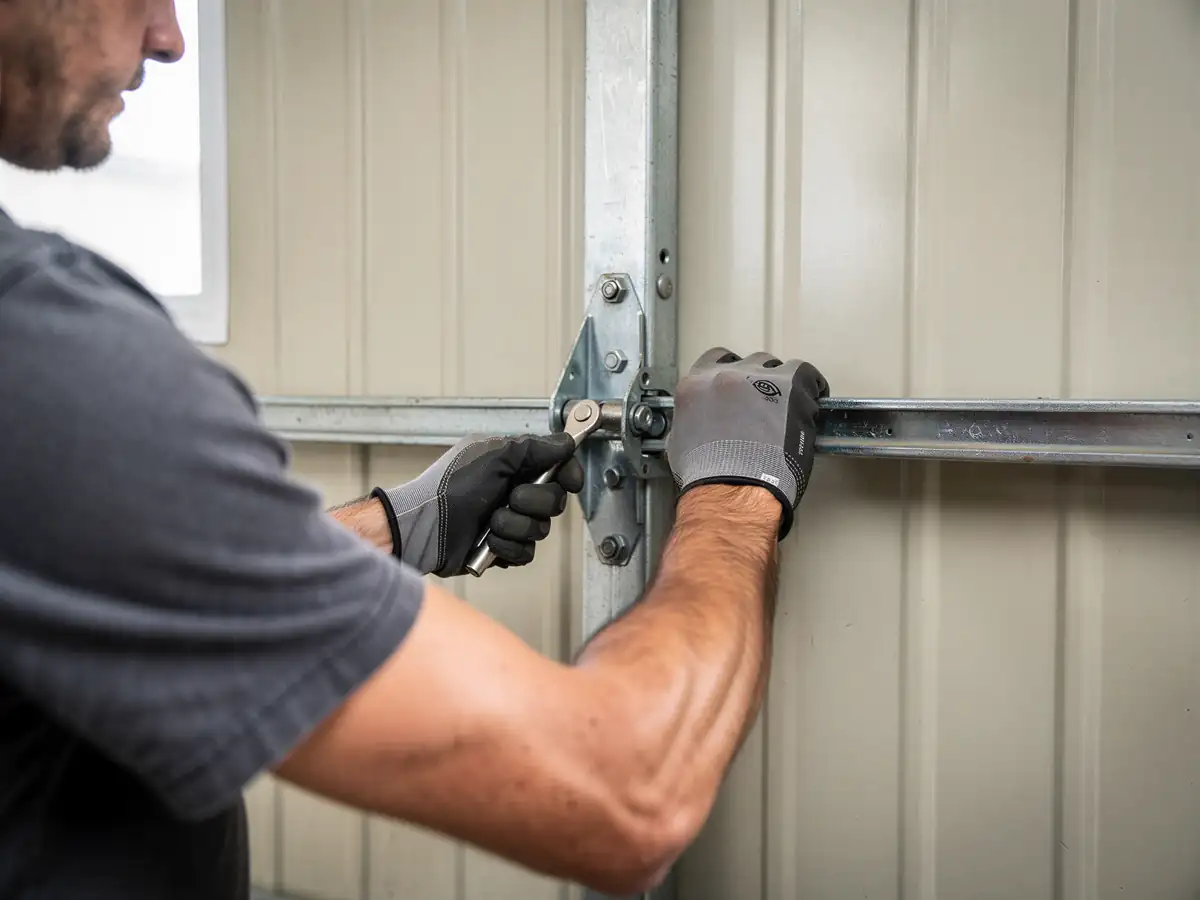
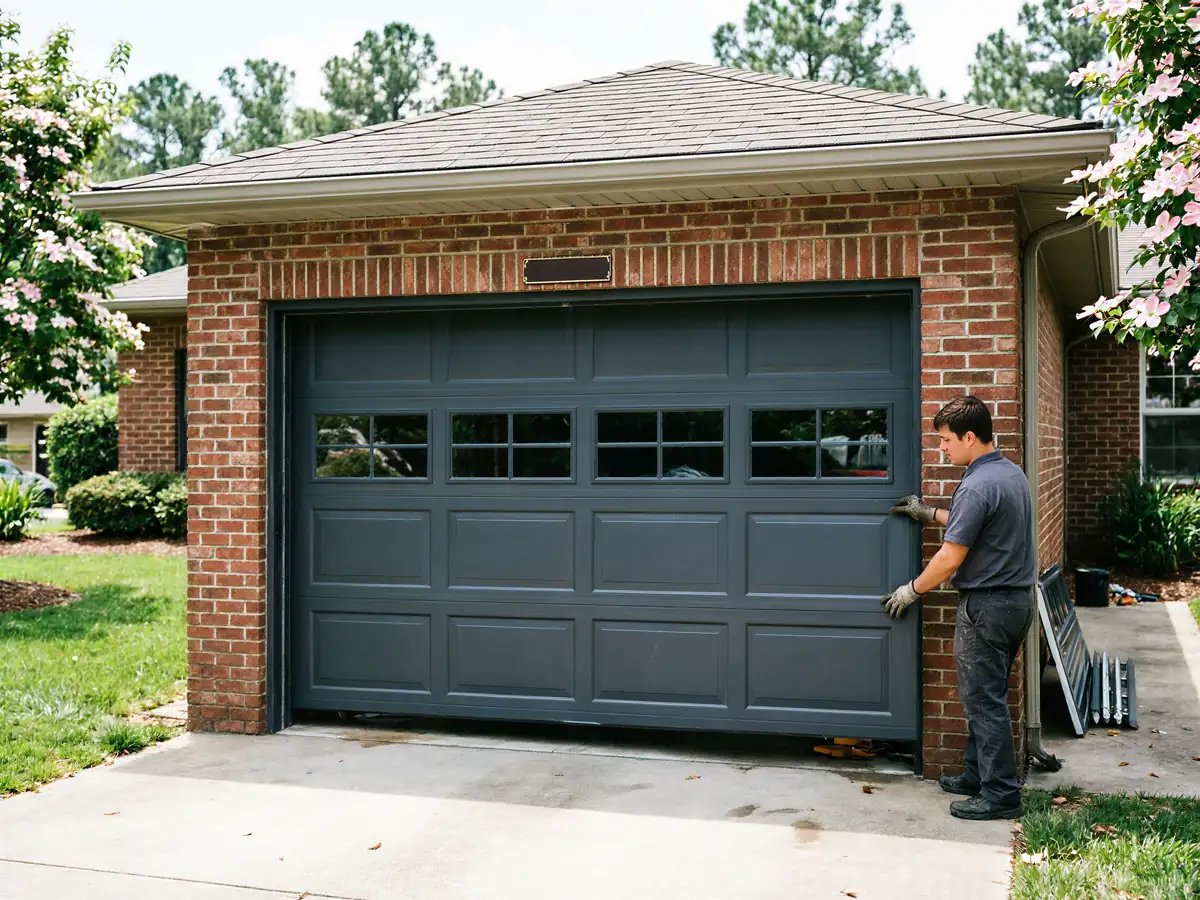
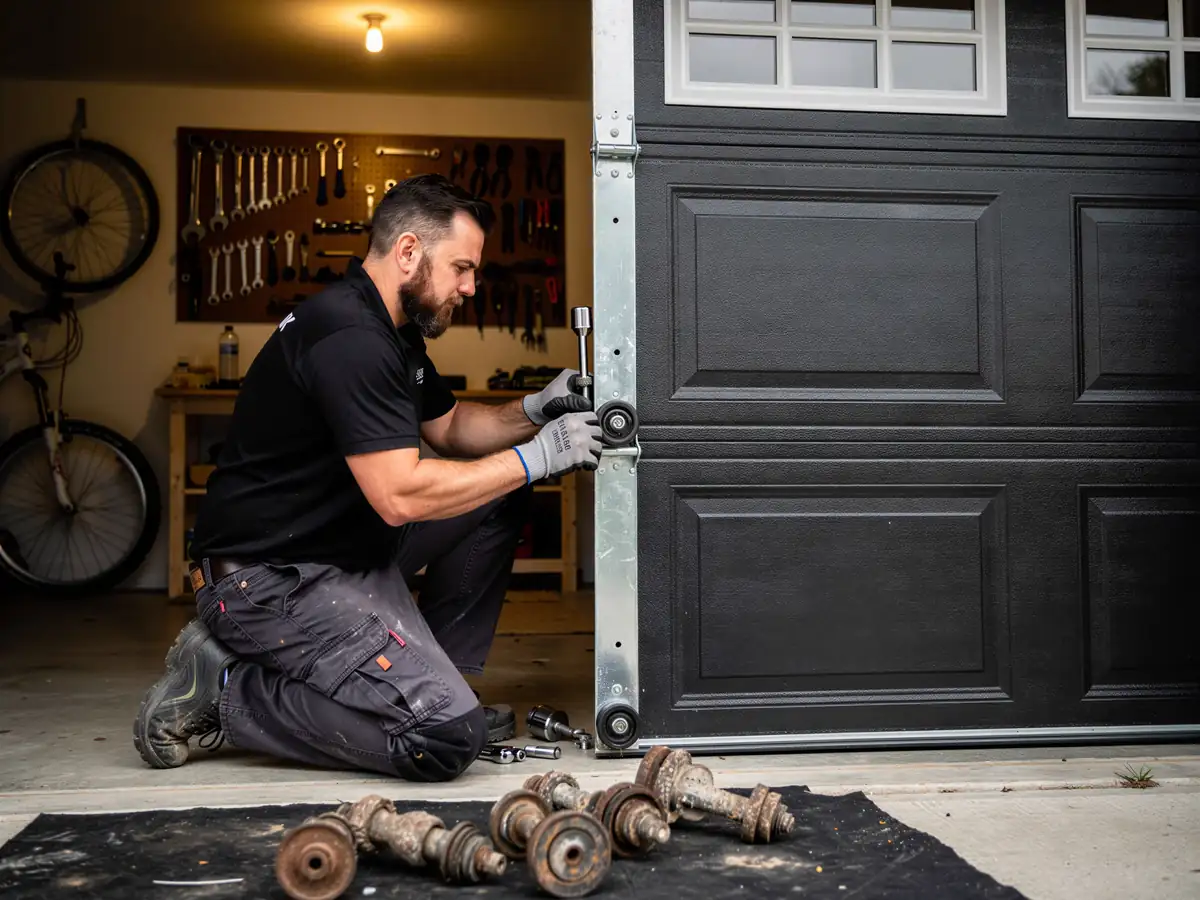
A roller job means pulling the old wheels out of the track and swapping them for new ones, one at a time
With the door supported so the track stays aligned. In a neighborhood like Weddington, where the typical house went up around 1998, that usually means removing hollow steel rollers with stamped sheet-metal stems - the standard builder-grade part for doors from that stretch of the 1990s. They were fine hardware for the price point at the time, but after close to three decades of daily travel the bearings dry out and the stems bend slightly, which is what makes the door ride rough even when the opener and springs are sound.
We usually move the door to nylon rollers with sealed bearings
Which run quieter and don't need the periodic grease that steel rollers do. We check the track at the same time, since a bent roller stem can walk the door sideways in the track over years, and a track that's been nudged out of plumb will chew through a new roller just as fast as it did the old one. If the track itself is bent, we say so before we quote the roller swap - no point putting new wheels in a crooked channel.
How It Shows Up
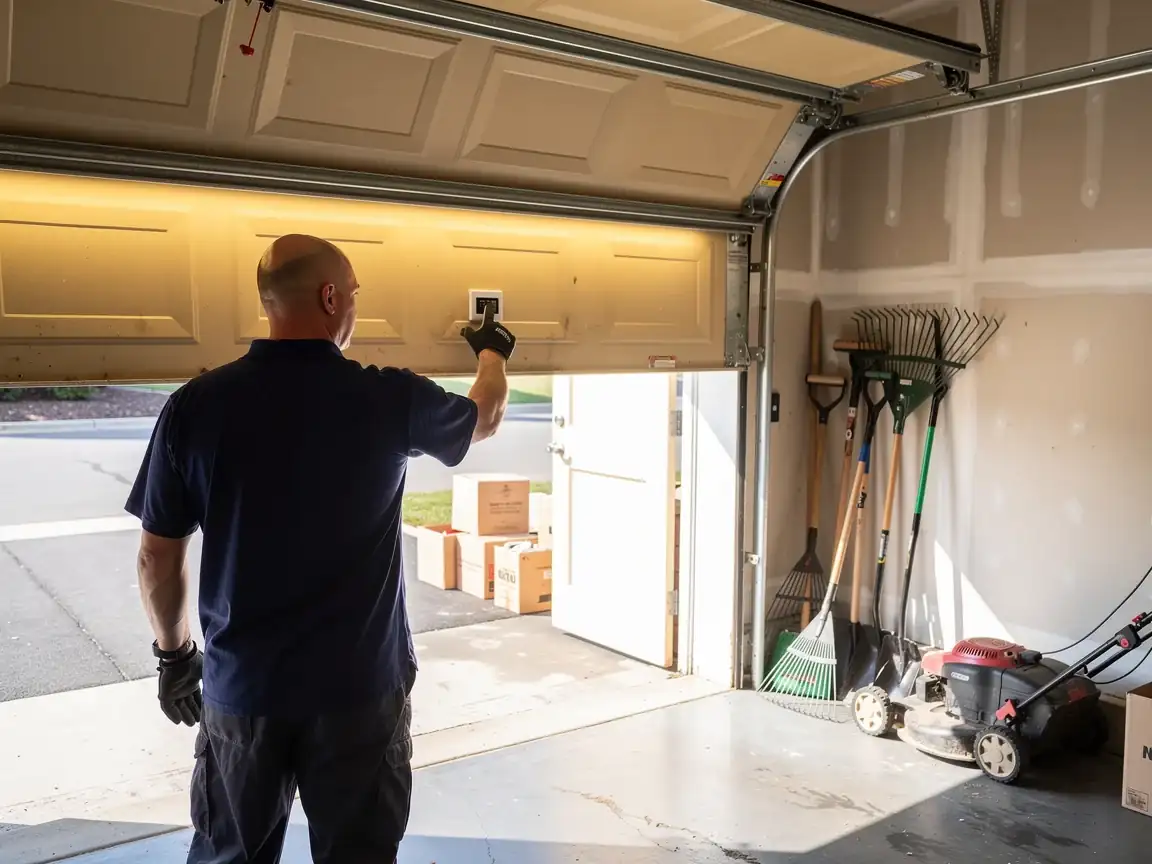
The usual complaint is noise - a grinding or clunking that tracks with the door's travel, loudest right where a bent roller crosses the curved section of track near the top. Some owners notice the door hesitating or jerking at that same spot, which is the roller catching rather than rolling.
On a 1998-era door, this tends to show up gradually rather than all at once, since the original steel rollers wear down slowly rather than failing outright. By the time it's loud enough to notice, several rollers are usually past due, not just the one making the noise - which is why we check the full set rather than replacing just the squeaky one.
What Causes It Around Here
Two things drive roller wear in this area: age and temperature swings. Weddington sits in a cold-moderate climate band, and the freeze-thaw cycle through winter stiffens old grease inside steel roller bearings, so the first cold mornings of the year are often when a marginal roller finally starts grinding instead of turning. That's a seasonal pattern we see on doors from this build era specifically, not a defect in any one door.
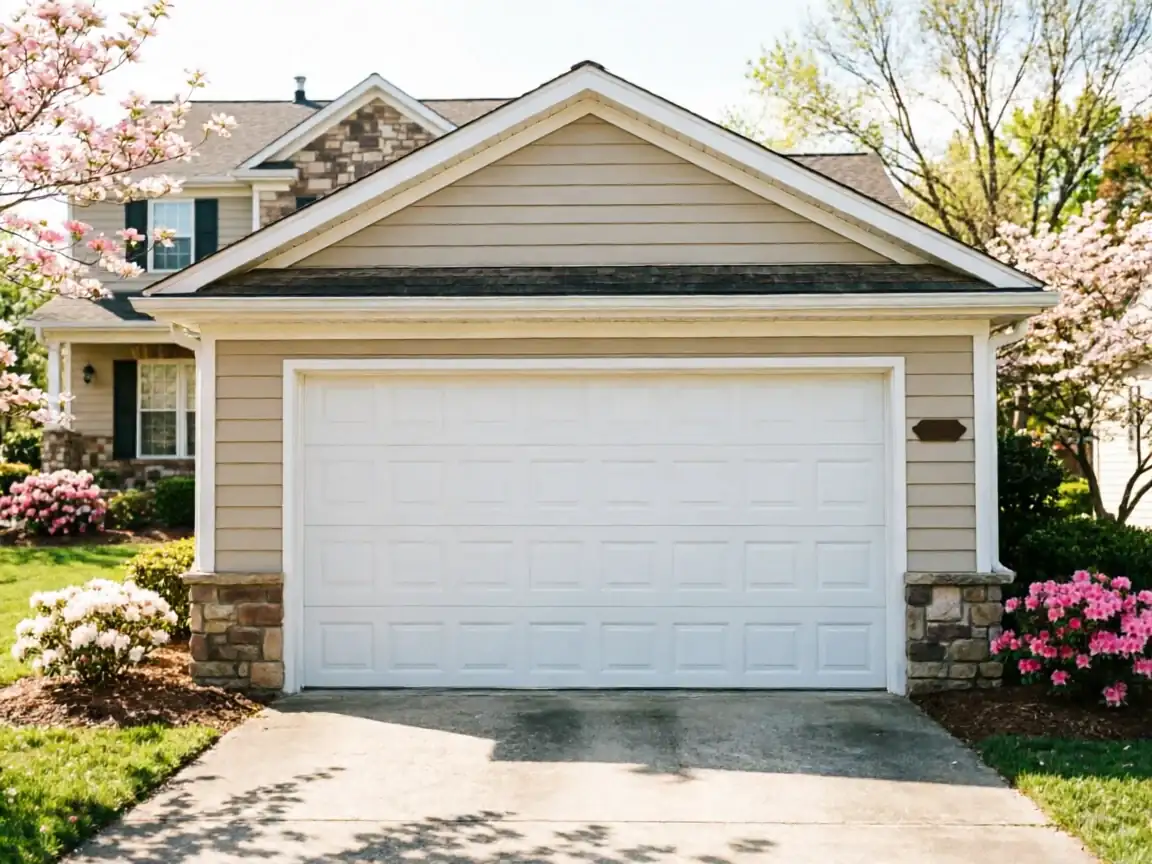
The other factor is simply the age of the housing stock. A door installed in 1998 has had roughly 27 years of two-or-more cycles a day. Steel rollers from that period weren't built for that kind of mileage - they were adequate, not durable - and by this point in a house's life, replacing them isn't optional maintenance, it's catching up on wear that's already there. We don't see this as often on newer builds nearby, where nylon rollers came standard from the start.
Getting It Booked In
We run this job out of Waxhaw, about 6 miles from Weddington
So there's no separate branch or crew based here - one of our trucks comes out on the scheduled visit. We'll ask what the door sounds like and where in the travel it happens, since that tells us whether we're looking at a full roller set or a track alignment issue as well, and we try to quote accordingly before the truck rolls.
- 6 miles
If you're also dealing with a door that won't open smoothly for other reasons
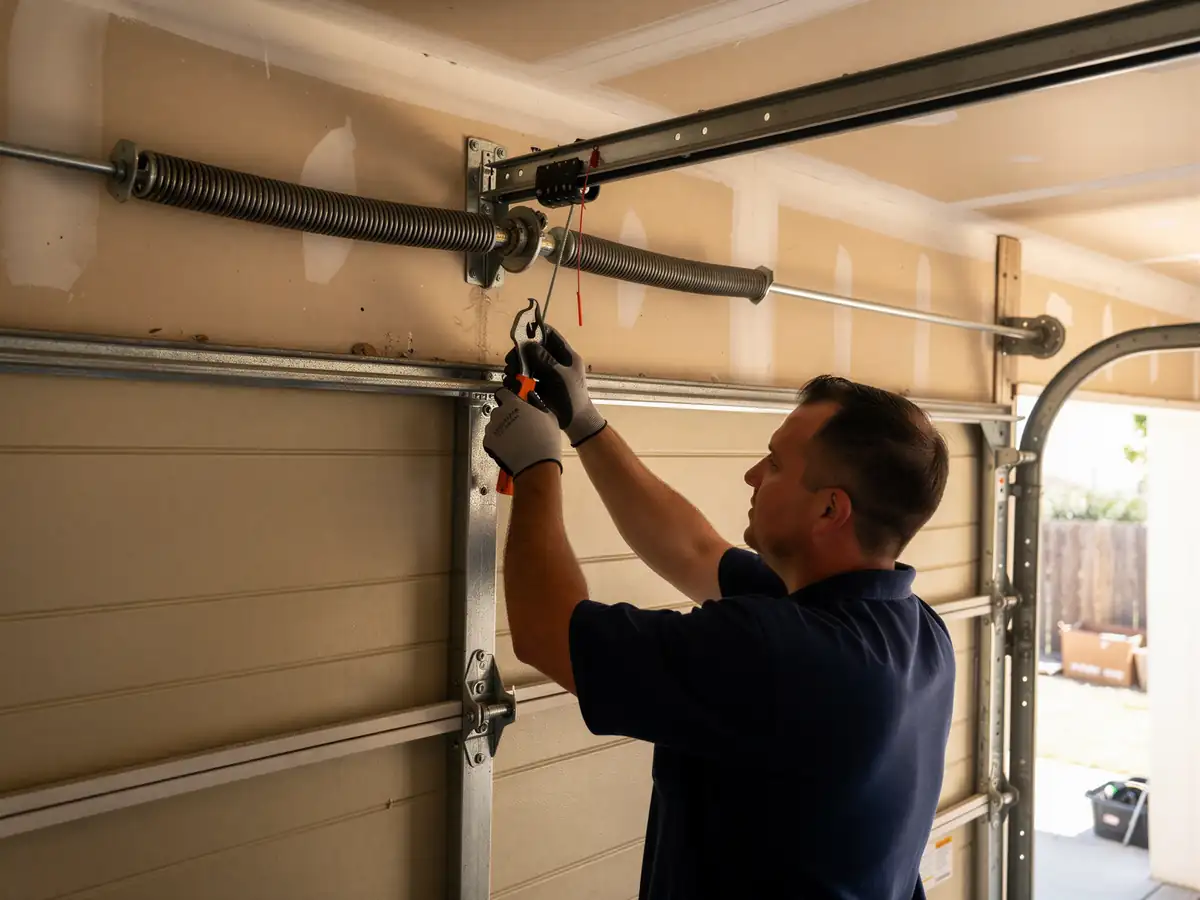
Springs, cables, opener - that's a separate repair conversation, and our general Weddington repair page covers that scope.
What It Costs
We don't have a published price list for roller replacement broken out by town, and jobs vary by how many rollers need replacing and whether the track needs correcting at the same time, so we're not going to put a number here that might not hold on your driveway. What we can say is that a full roller swap is a smaller job than a spring replacement or a new door, and it's usually worth doing before worn rollers start damaging the track itself, which turns a roller job into a track job. We'll give you a firm number after we've looked at the door, not before.