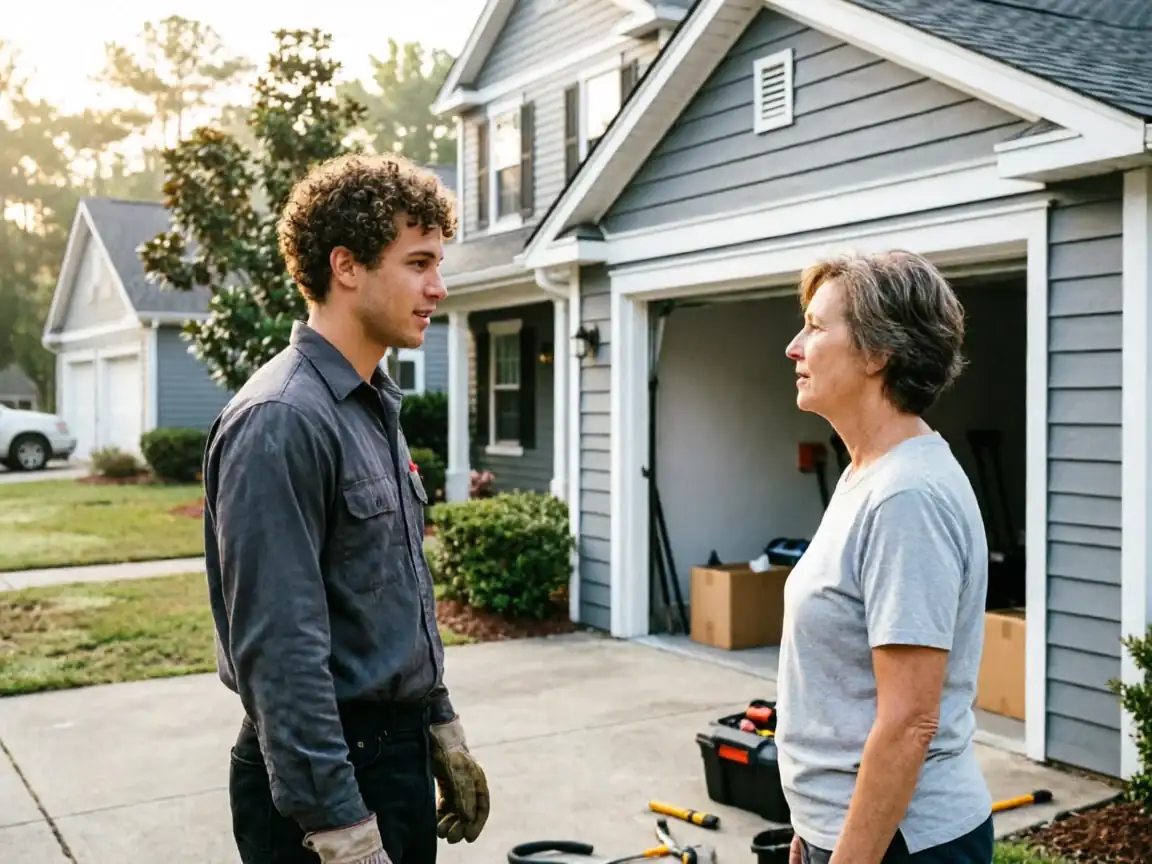
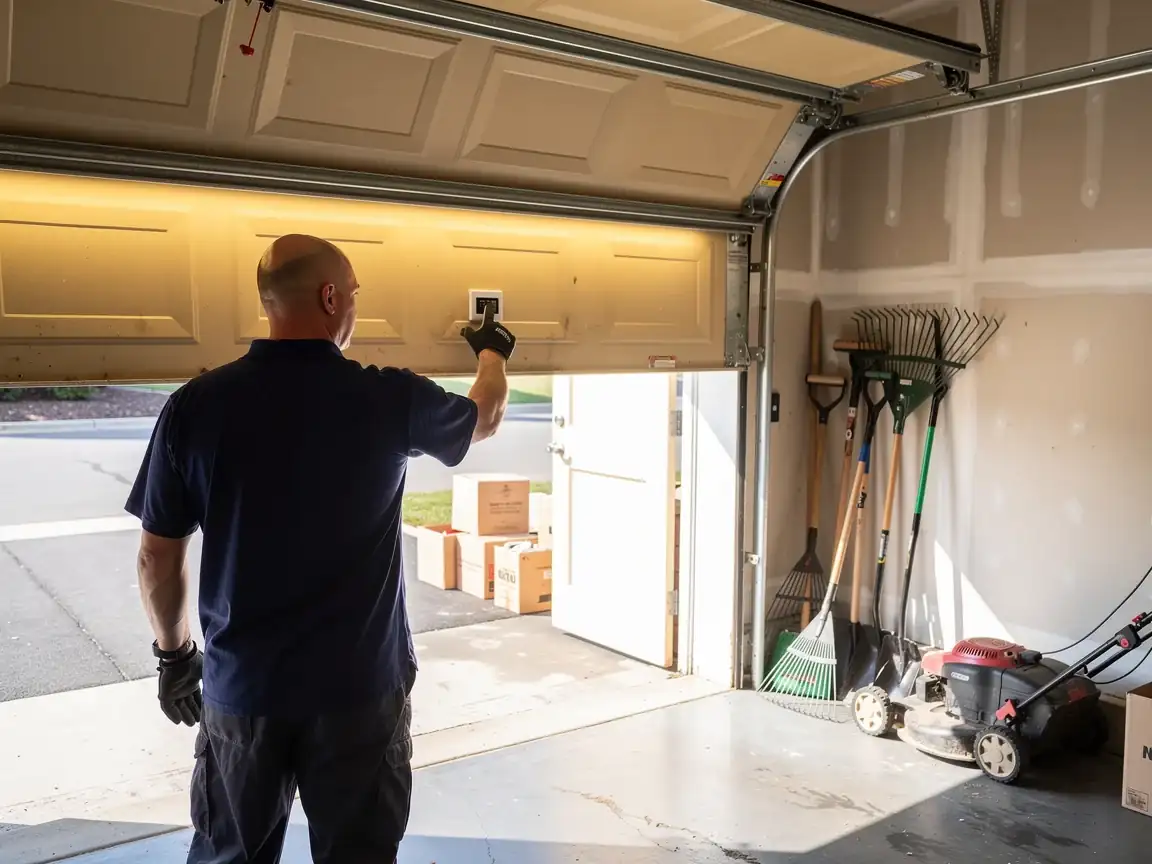
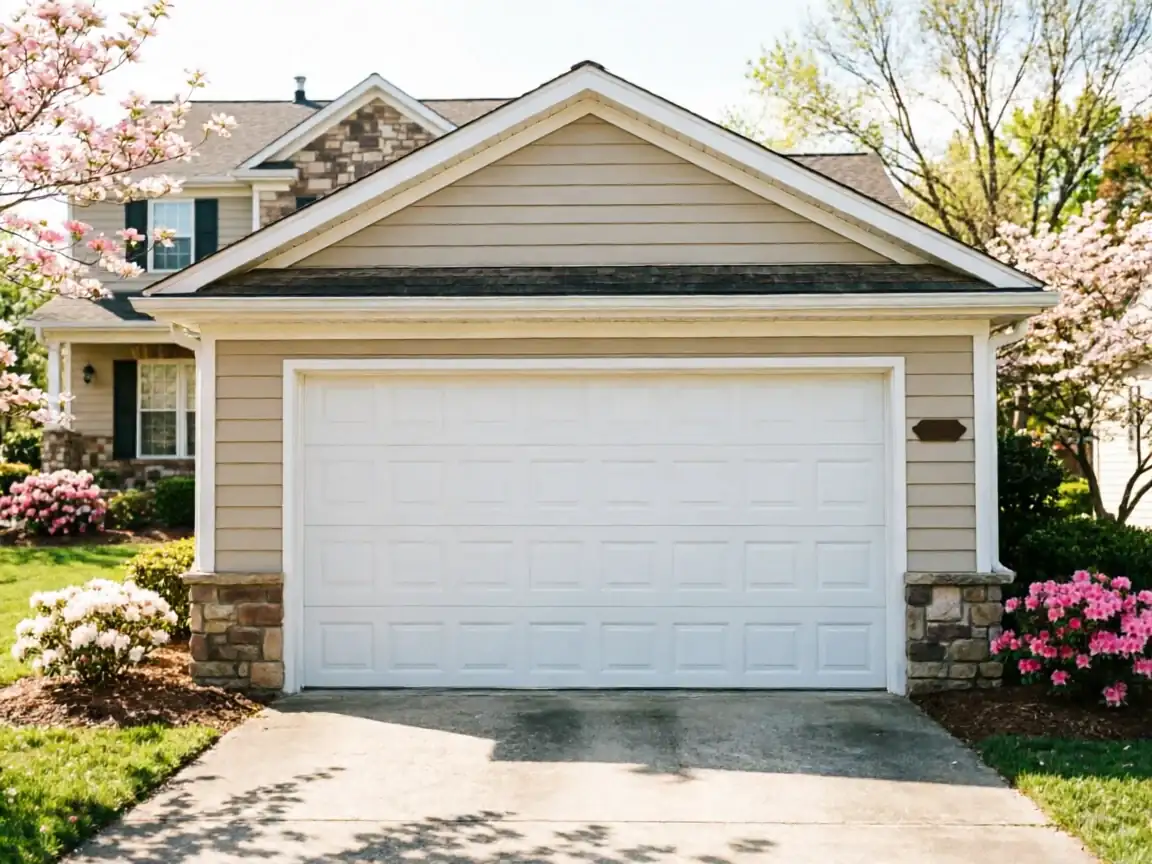
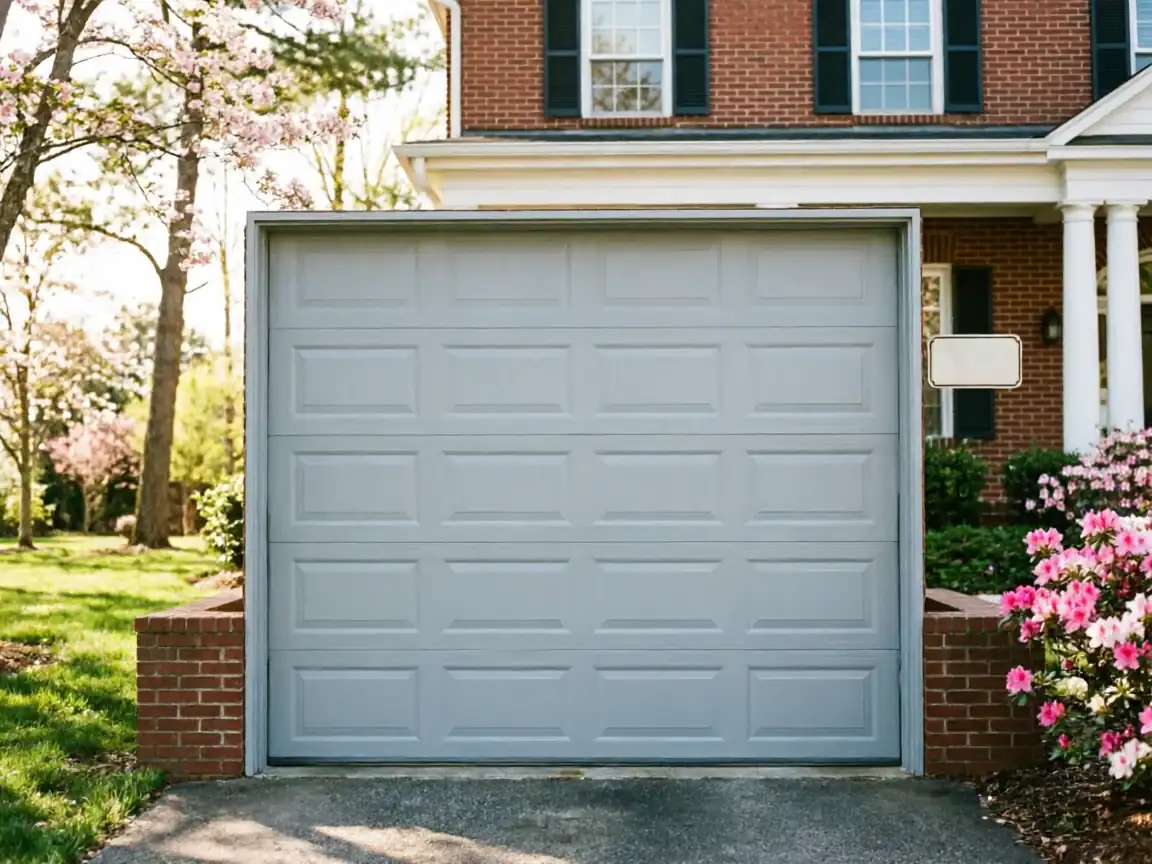
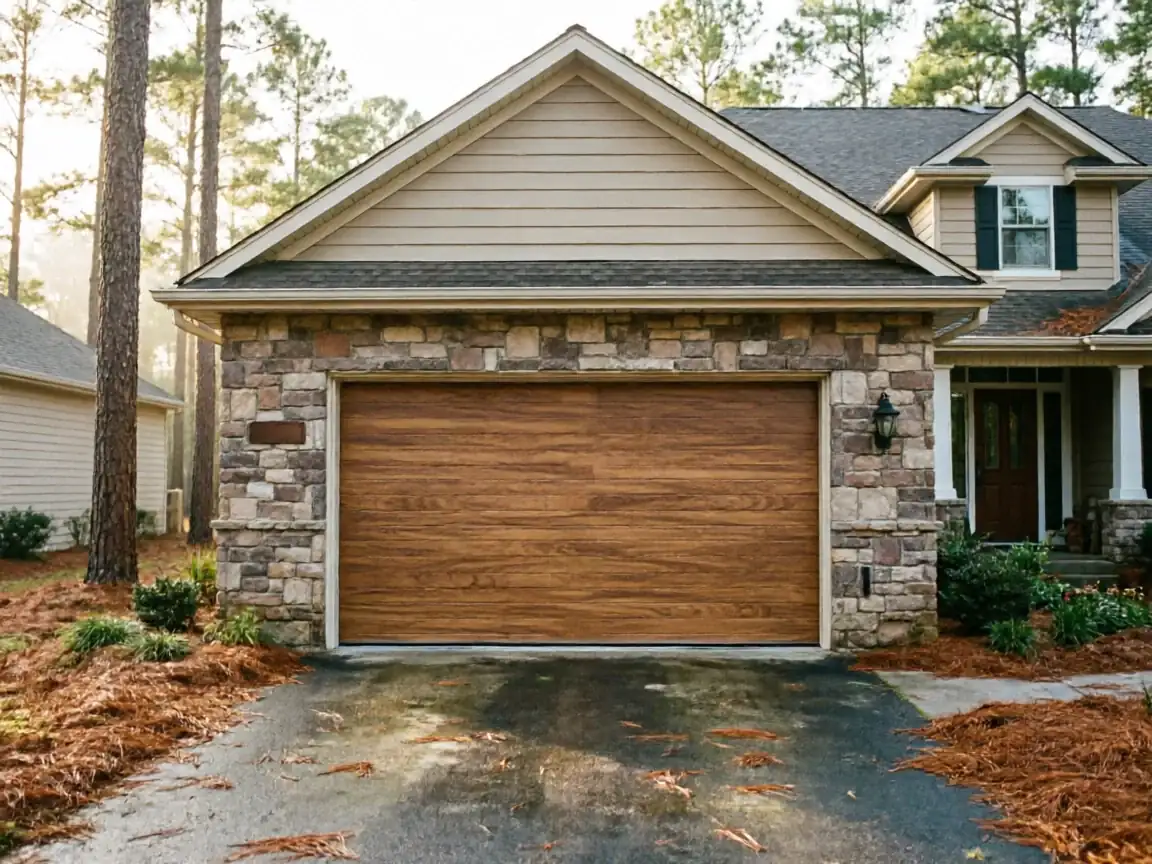
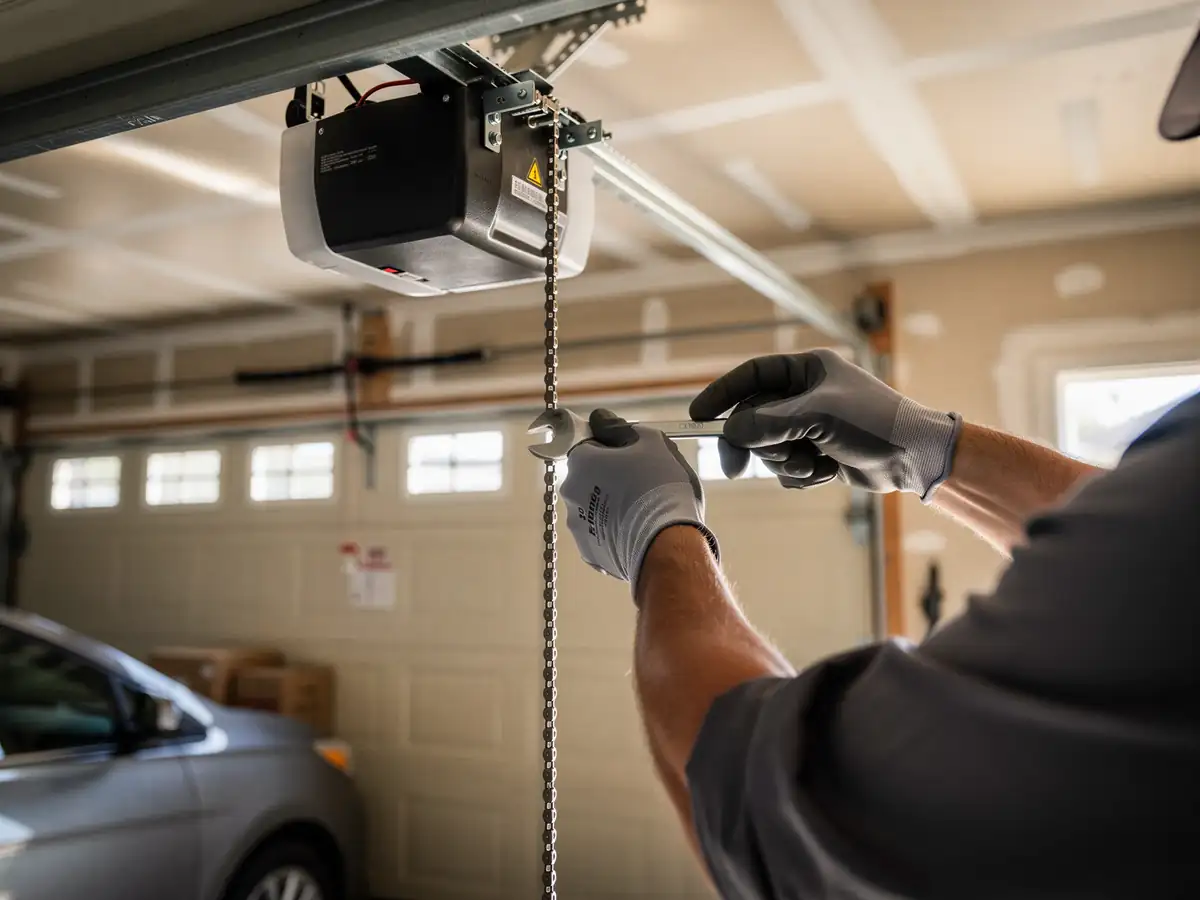
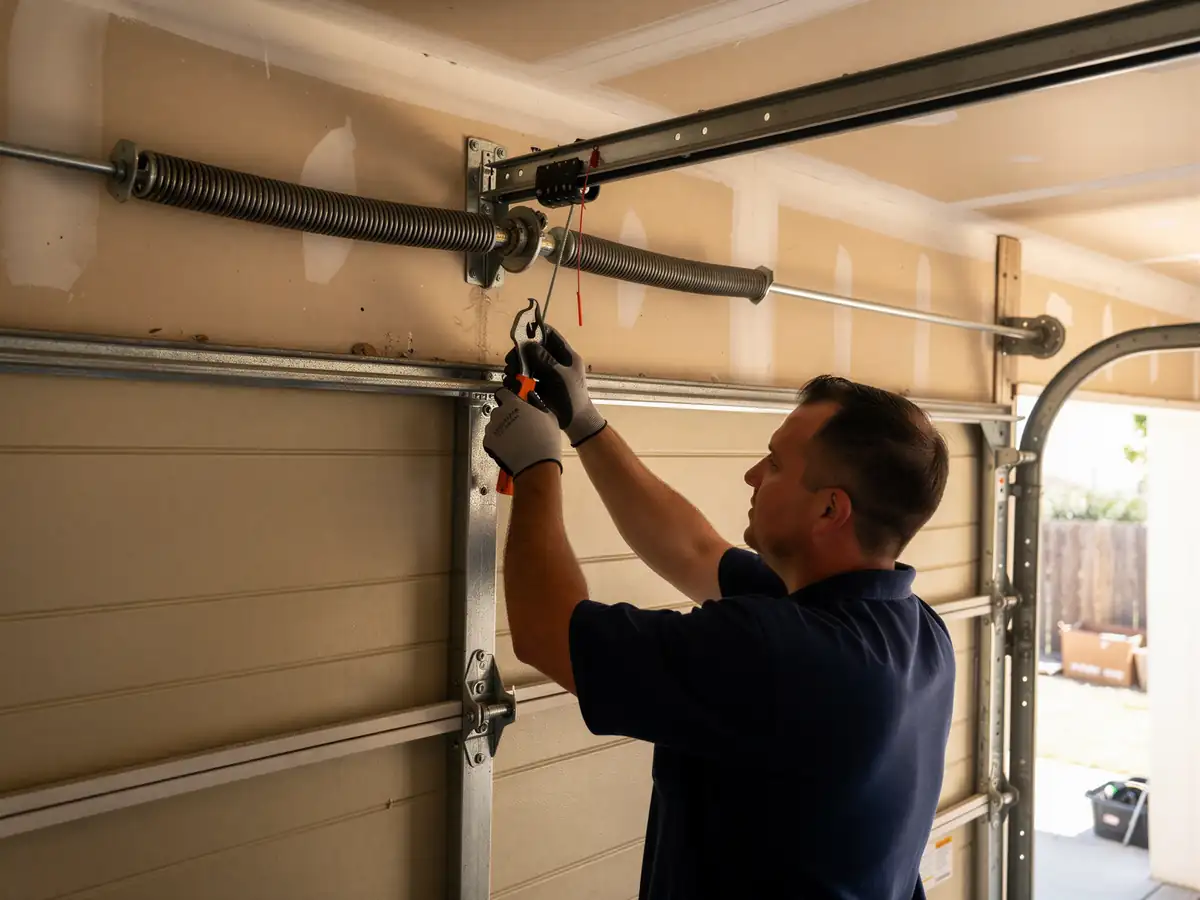
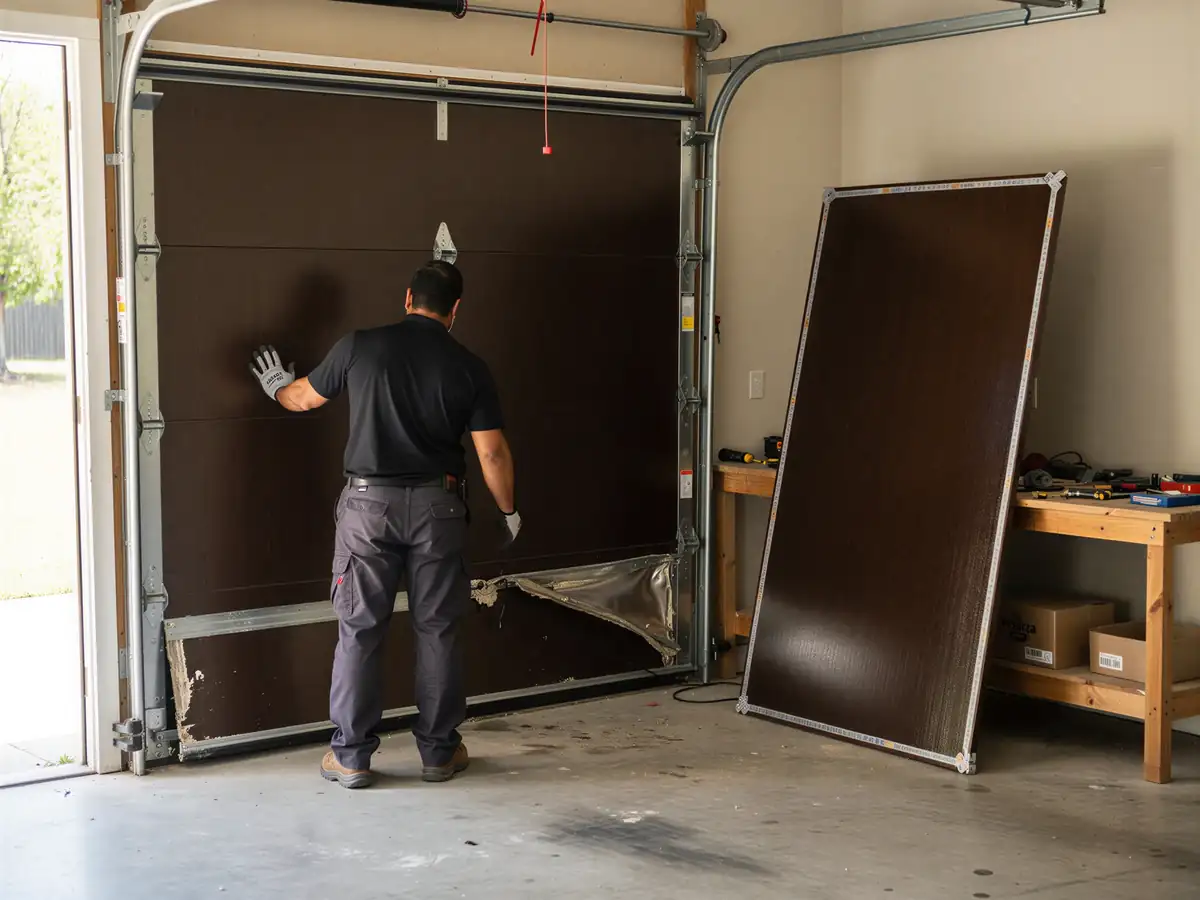
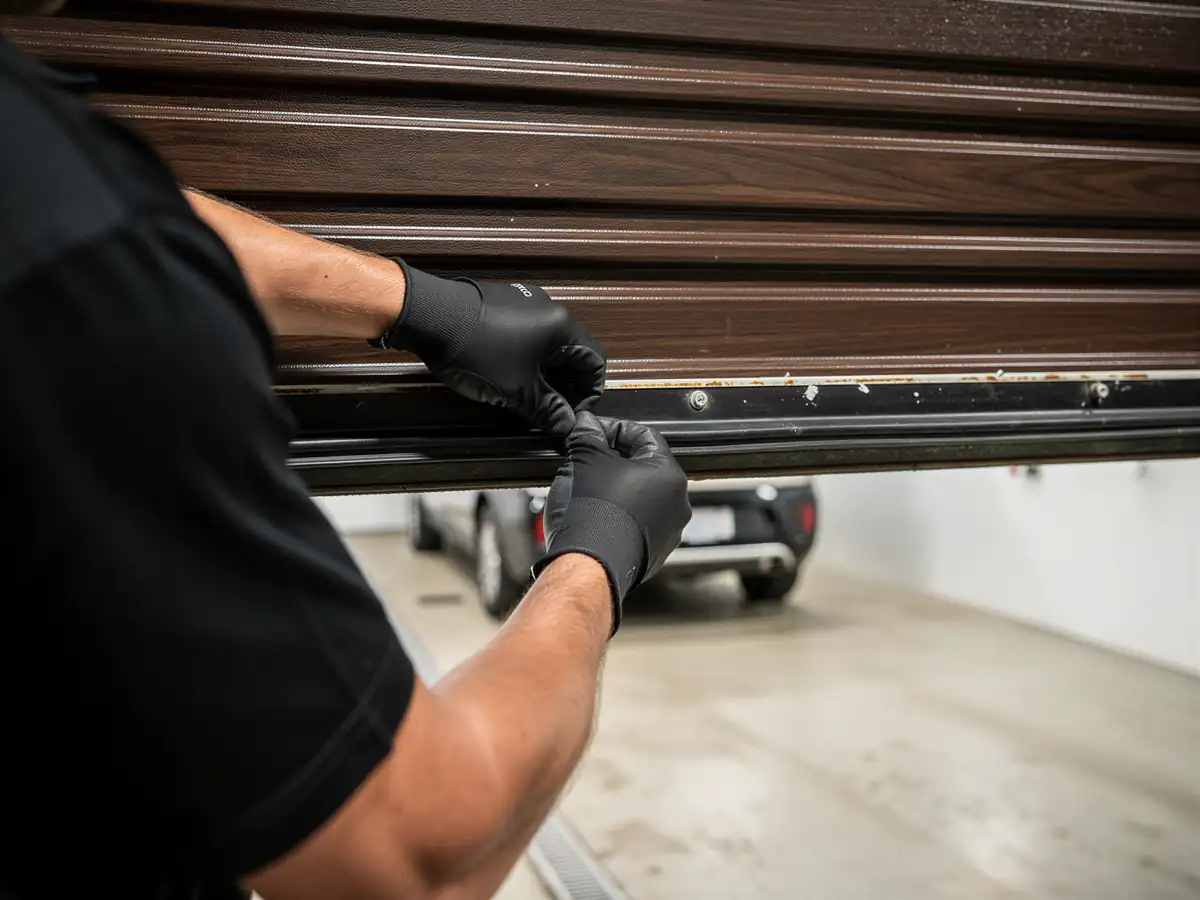
Marvin sits about six miles from our shop in Waxhaw, so when you call about a sticking or grinding roller, we're already working the same stretch of the service area and can usually slot you in without a special trip just for one house. Most of the homes we see out here went up around 2005, newer than a lot of what we work on closer to town, which means you're probably still on the original rollers the builder installed rather than something swapped out twenty years ago. That matters for scheduling because newer doors tend to have one of two roller types - stock nylon or a cheaper plastic that was common on builder-grade doors in that era - and knowing which one is on your track before the truck leaves Waxhaw saves a second visit. Tell us if the door is a double (two-car) or single bay, and whether it's grinding at the top of the track, catching partway down, or just loud all the way through. That's usually enough to bring the right roller stock the first time. We don't keep a branch in Marvin - every job here is a drive from Waxhaw, so booking a specific time window matters more than it would for a same-block call.
What the Fix Involves
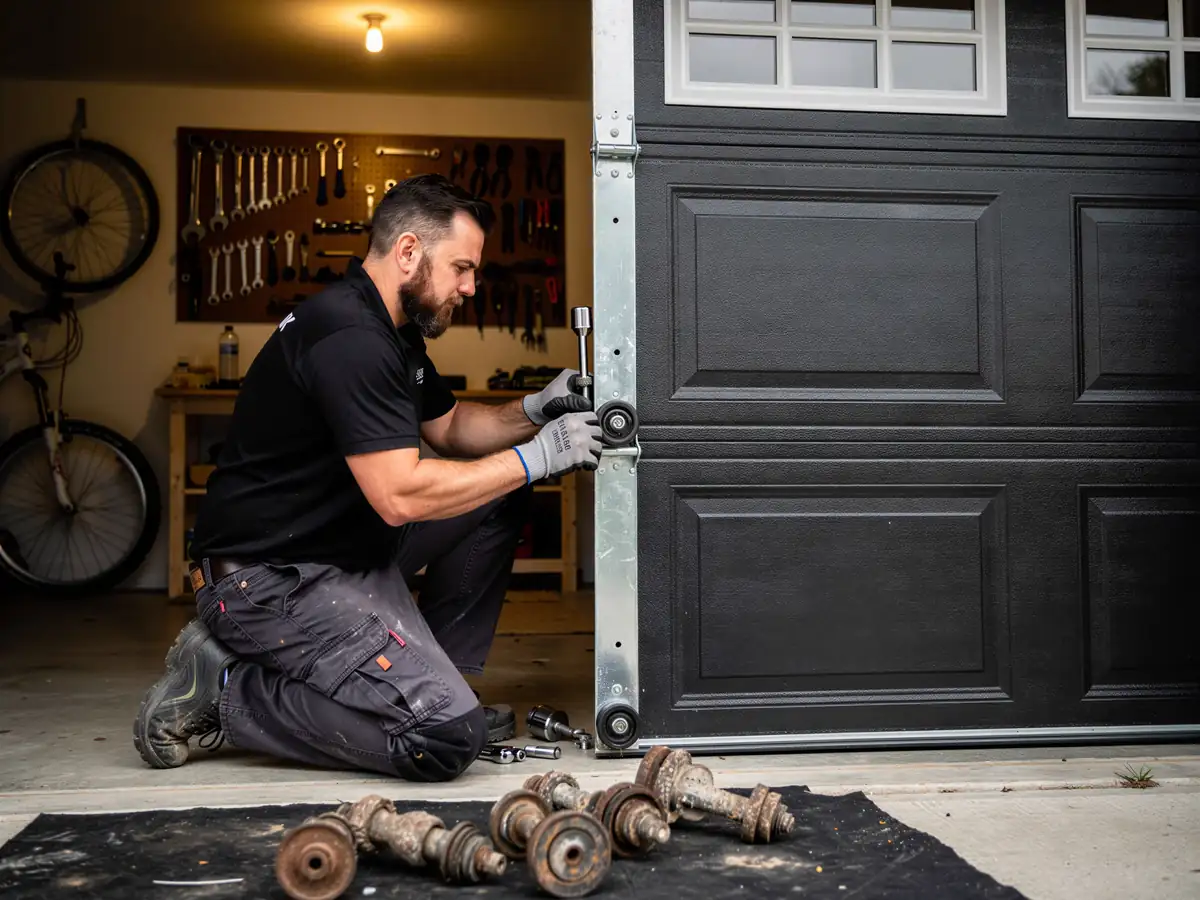
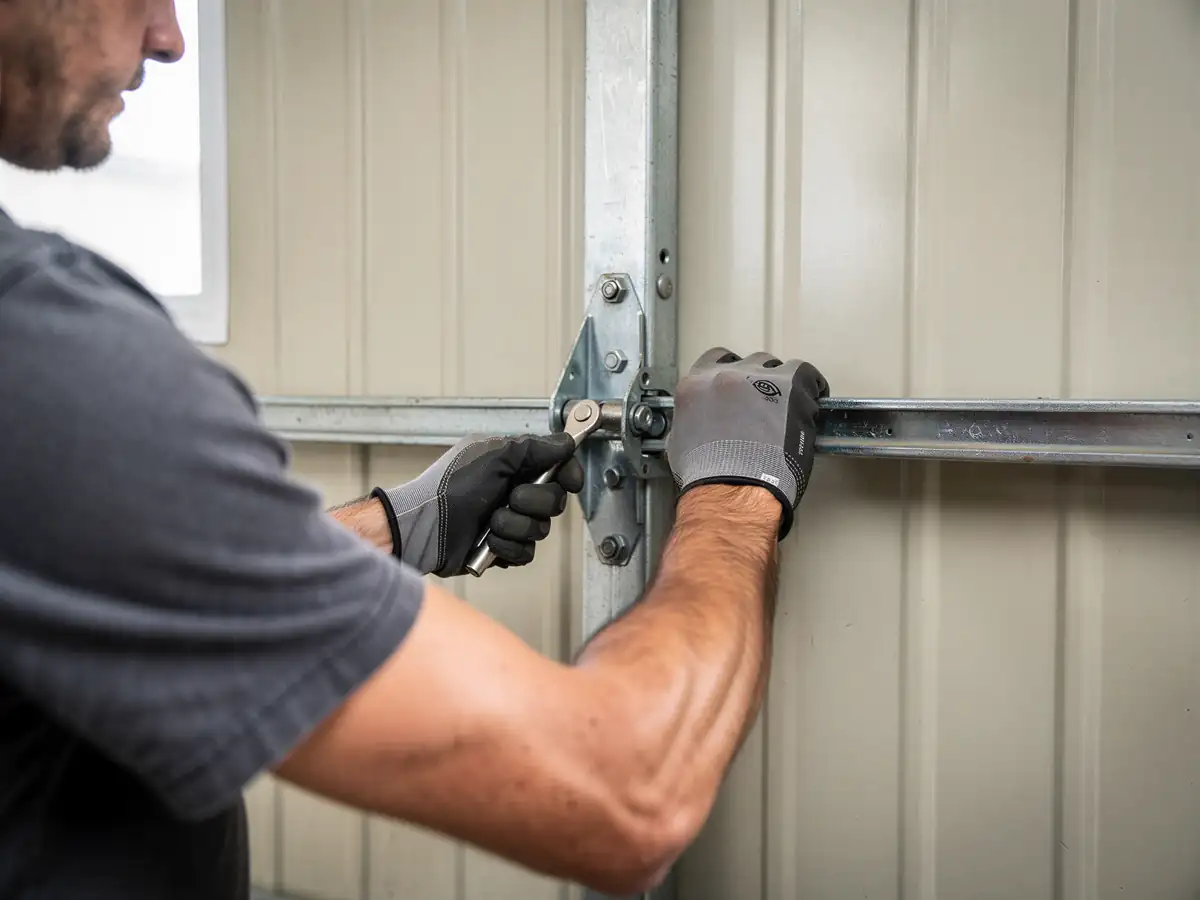
A door built around 2005 almost always runs on a standard galvanized steel track with 2-inch rollers, either 7-ball bearing nylon or, on the cheaper end of that construction boom, a plain plastic roller with no bearing at all. The plastic ones are the ones that fail first - they flat-spot, crack at the stem, or just wear down and let the door chatter in the track. The fix is straightforward: open the track at the bottom, walk the rollers out one at a time starting from the bottom of the door, and set nylon 7-ball rollers in their place. We don't touch the torsion spring or the cables unless something else is clearly wrong, because a roller job and a spring job are different repairs with different risk, and there's no reason to open up more of the door than the complaint calls for. On a steel panel door of this age the hinges and roller stems are usually still true, so it's a swap, not a rebuild. If the track itself is bent or the rollers have been grinding long enough to chew up the rail, that's a separate conversation and a separate cost.
How It Shows Up
In the cold-moderate climate this part of North Carolina sits in, plastic and lower-grade nylon rollers get brittle faster than people expect once temperatures drop into the 30s and 40s for weeks at a stretch - they don't shatter, they just stop rolling smoothly and start dragging. You'll hear it before you see it: a rhythmic clunk as each roller hits the same worn spot in the track, or a steady grinding that gets louder as the door nears the top. On a two-car door in Marvin, that grinding is often uneven - louder on one side - because the rollers on the side that takes more weight wear out first. If the door is hesitating or jerking instead of running smooth, that's the roller catching in the track seam, not the opener struggling. Left alone, a worn roller eventually jumps the track entirely, and at that point you're not calling about a roller anymore, you're calling about a door that won't move.
What It Costs
With a median household income around $250,001 in Marvin, cost isn't usually the deciding factor on this repair - timing is, since it's an easy thing to put off until the grinding gets loud enough to notice. We don't have a flat number to quote without seeing the door, since price depends on how many rollers need replacing and whether it's the full set or just the bottom few that took the weight. What we can say is that a roller swap on a door this age is a small job compared to a spring or full panel replacement, and it's the kind of repair that's worth doing before the track itself gets damaged from the wear. If you want a number specific to your door and roller count, our Marvin repair page has more detail, and the Waxhaw roller page covers what the job looks like for older housing stock closer to town, where the hardware and the price can run differently.
How it works
From “it’s stuck” to “it’s fixed”
01
Tell us what’s wrong
Describe the symptom - won’t open, loud bang, opener runs but the door won’t move.
02
On-site diagnosis
A technician tests the door under power and by hand and finds what actually failed.
03
Clear, up-front plan
You get the fix that’s needed and what drives the cost - before any work starts.
04
Repaired & tested
The repair is done, the door is set true and tested, and the work area left clean.
Not sure which repair your door needs in Waxhaw, NC? Describe what it’s doing - every job starts with a diagnosis.
Are the rollers on a 2005-era house in Marvin different from older doors?
Usually, yes. Houses built around then often came with factory plastic or basic nylon rollers rather than steel ball-bearing ones. They're lighter duty and tend to wear out sooner than hardware on older, heavier doors, so a roller job on a newer Marvin house is common even though the door itself is still young.
Do you have a shop in Marvin?
No. We're based in Waxhaw, about six miles away, and drive out to Marvin for calls. There's no local branch, so booking ahead for a specific window works better than expecting a drop-in visit.
Will cold weather make a bad roller worse?
It can. In this area's cold-moderate winters, worn nylon or plastic rollers stiffen up and drag more once temperatures stay low for a stretch. A roller that's merely noisy in October can start catching and jumping the track by January.
How do I know if it's the roller and not the opener?
If the door jerks or clunks at the same spot in the track every time, that's almost always a roller catching, not the opener. An opener problem usually shows up as the door stalling, reversing, or not responding at all, rather than a rhythmic noise as it travels.