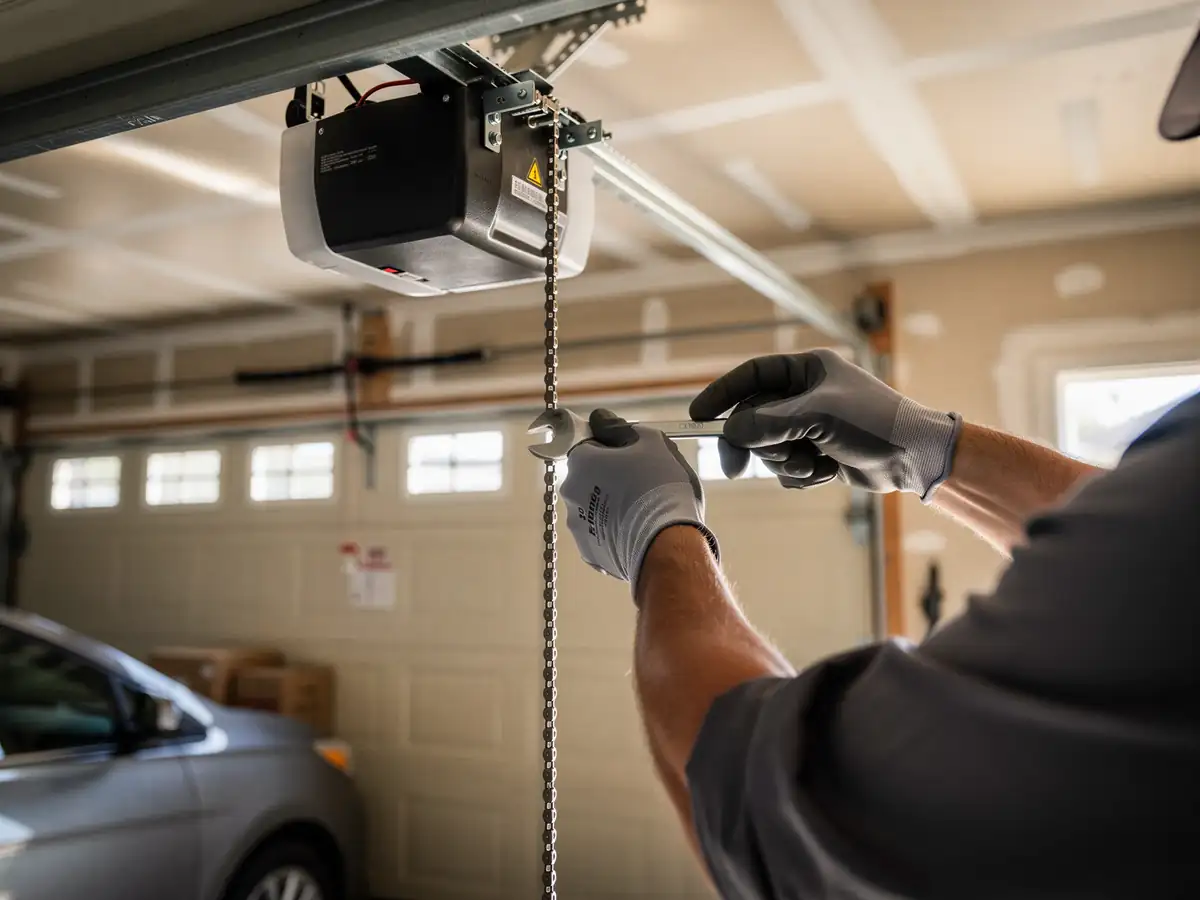
Getting It Booked In
Marvin sits about 6 miles from our Waxhaw shop, close enough that an opener call here doesn't mean a half-day wait
But we're not based in town, so we book the run rather than drop a truck on standby. Tell us what the opener is doing when you call - grinding, clicking, running but not pulling the door, or just dead - and we'll bring the board, capacitor, or sensor stock that fits.
- 6 miles
Most of what we see in Marvin is different from the chain-drive failures common in the area's older 1980s and 90s houses
With a median build year around 2005, Marvin's housing stock came in a full decade after a lot of the surrounding area's, and that decade mattered for openers - belt-drive units, DC motors, and circuit-board logic replaced the older AC chain-drive relay systems. That's the first thing we ask about on the phone, because it changes what's actually broken.
What the Fix Involves
On a house built in 2005 or later, an opener complaint is rarely a worn chain sprocket - it's almost always electronic. We see logic boards that have taken a lightning surge, capacitors that have swollen and quit holding charge, and belt-drive units where the drive gear has stripped teeth from age rather than overuse. Safety sensor photo-eyes - required on every opener of this era - go out of alignment after a bump from a bike or a mower, and the opener refuses to close until that's fixed, which is by design, not a malfunction.
We test the board, the capacitor, the sensor pair, and the wall control before we swap anything. If the motor itself is sound, we replace the board or capacitor and leave the rest alone. If the drive system is stripped, that's a belt or gear kit, not a full unit swap - cheaper and it's the actual failure point. We don't carry every brand's proprietary board on the truck, so a rare model can mean a short return trip once the part's in.
How It Shows Up
The opener runs but the door won't move - that's usually a stripped belt or gear, not the motor. The opener clicks and does nothing - that's often a dead capacitor, a cheap part that fails quietly after years of humidity cycling through our cold-moderate winters and humid summers. The light blinks and the door reverses before it closes - check the sensors first, they're the most common false alarm and the easiest fix we do.
A wall control that's gone dark but the remote still works points to a wiring issue at the button, not the opener itself. None of these point to the motor being worn out the way an older chain-drive unit eventually does - these are component failures in a system that's otherwise still well inside its working life at under 20 years old.
What It Costs
We don't have a flat number to quote without being in front of the unit
Board replacements, capacitor swaps, and sensor realignment all land in different places on cost, and the brand of opener matters too. What we can say is that Marvin's housing, with its higher median income among the area's 1,871 households, more often has mid-to-upper-tier openers with smart features - wifi modules, battery backup - and those parts cost more to replace than a bare-bones chain-drive unit.
- 1,871 households
One honest limit: if a board or module is proprietary to a brand we don't stock
We'll quote the repair but the part may take a few days to arrive, and in that case a straight opener swap is sometimes the faster call. We'll tell you which makes sense once we've seen it, not before.